
Central bankers at Davos brush off stimulus dangers
Sunday, 26 January 2014
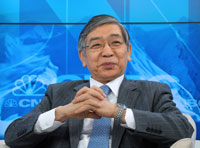
DAVOS, Jan 25 (AFP) : Fears of economic instability due to the slowing of massive monetary stimulus policies are unwarranted, top central bankers said on Friday, amid accusations that the easy money has won only a timid recovery.
"Normalisation from unconventional policy means success in the policy," said Haruhiko Kuroda, Governor of the Bank of Japan at a World Economic Forum panel in Davos.
Kuroda unveiled a vast asset-buying scheme in April as part of a broader plan by Prime Minister Shinzo Abe to reinvigorate the economy and eradicate years of deflation with a policy blitz, dubbed Abenomics.
Kuroda told his Davos listeners that the very fact of worrying about how these policies would finish meant that they worked, but he was careful to add that Japan still had some way to go before the money taps would turn off. In Britain, the BoE has pumped billions of pounds into the British economy and talk of an end to the stimulus scheme has grown since distinct signs of a turnaround emerged late last year.
"Monetary policy works," said British Finance Minister George Osborne. "It has worked and confounded those who said it would never work."
In Britain and Japan, the policy of choice has been quantitive easing in which the central bank creates cash that is used to buy assets such as government and corporate bonds with the aim of boosting lending-and economic activity. But QE is largely unprecedented and the consequences of scaling it back remain highly uncertain.
Last year, many emerging economies were hit hard by market instability when the US Federal Reserve said it was about to abruptly end its stimulus, wreaking havoc on stocks and currencies in several countries.
Brazil's economy was caught in the storm and Brazilian central bank governor Alexandre Tombini warned that surprises from the effects of stimulus withdrawal were to be expected.