
China visit an acid test for Tarique's ‘Bangladesh First’ policy
Mir Mostafizur Rahaman | Tuesday, 23 June 2026
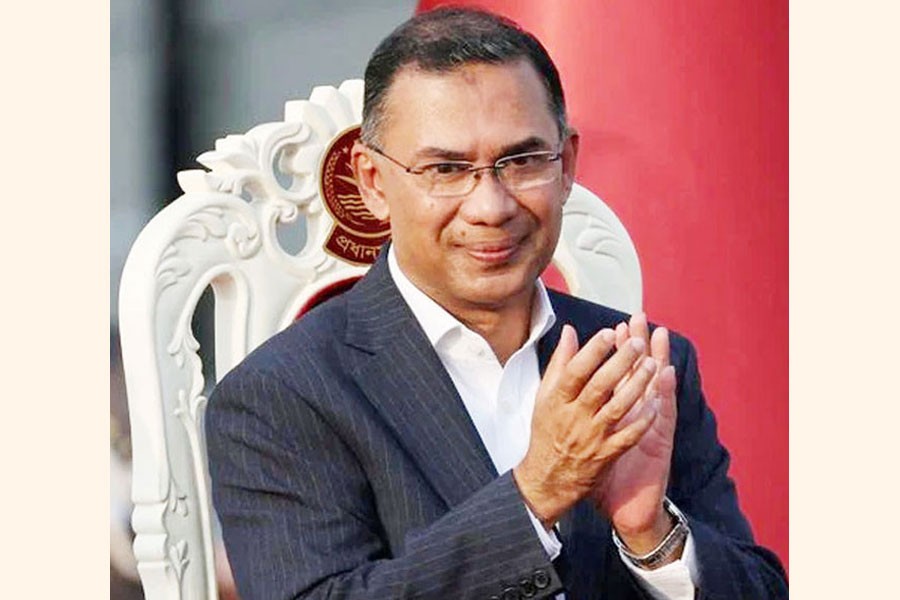
For the third consecutive year, a Bangladeshi head of government is travelling to China. In 2024, it was Sheikh Hasina. In 2025, it was Chief Adviser Muhammad Yunus. In 2026, it is Prime Minister Tarique Rahman.
On the surface, this sequence reflects a simple diplomatic reality: China matters to Bangladesh, and Bangladesh matters to China. Yet the three visits also tell a deeper story about the extraordinary political transformation Bangladesh has undergone in a remarkably short period of time.
When Sheikh Hasina landed in Beijing in July 2024, few could have imagined that within weeks her long political dominance would come to a dramatic end amid a mass uprising that reshaped the country's political landscape. Her visit, which had been billed as a major diplomatic and economic breakthrough, ultimately produced modest results. Expectations of substantial development financing and support for major infrastructure projects were not realised. Officially, the visit was shortened because of a family emergency involving her daughter. Unofficially, many observers concluded that there was little incentive to extend a trip that had failed to deliver the anticipated outcomes.
A year later, Muhammad Yunus arrived in China under very different circumstances. The Nobel laureate and head of the interim administration received an exceptionally warm welcome. Beijing appeared eager to engage with a new Bangladesh emerging from political upheaval. Yet what should have been remembered as a diplomatic success became overshadowed by controversy. Yunus's remarks about economic opportunities involving India's northeastern states were interpreted in New Delhi as insensitive, if not provocative. Indian media reacted sharply, framing the comments as a challenge to India's strategic interests and territorial sensitivities.
Now comes Tarique Rahman's turn.
His visit may prove more consequential than either of the previous two.
Not simply because of the agreements expected to be signed or the billions of dollar in development assistance reportedly under discussion. Rather, because it will offer the first substantive test of the foreign policy doctrine he has repeatedly described as "Bangladesh First".
Like many political slogans, Bangladesh First sounds straightforward. In practice, however, it demands navigating one of the most complex geopolitical environments in the world.
Bangladesh sits at the intersection of competing strategic interests. China sees the country as an important partner in South Asia and a crucial link in regional connectivity initiatives. India views Bangladesh as central to its security and economic interests in the eastern subcontinent. The United States increasingly regards Bangladesh through the prism of Indo-Pacific competition, democratic governance and regional stability.
Each power wants closer relations with Dhaka. Each expects consideration of its interests. Increasingly, those interests do not always align.
The challenge for Tarique Rahman is therefore not whether to deepen relations with China. Bangladesh needs strong relations with China. The challenge is how to do so without creating the perception that Bangladesh is drifting towards any particular geopolitical camp.
History offers useful lessons.
Relations between Bangladesh and China did not begin smoothly. During the Liberation War of 1971, Beijing openly supported Pakistan, creating deep mistrust in the newly independent state. For several years, the relationship remained distant and cautious.
It was President Ziaur Rahman who fundamentally changed that trajectory during the late 1970s. Pursuing a foreign policy that emphasised diversification rather than dependence, he sought to strengthen ties with China while simultaneously maintaining relations with the West and improving ties with the Muslim world. The result was a more balanced diplomatic posture that expanded Bangladesh's strategic options.
This historical legacy matters today because Tarique Rahman inherits not only political leadership but also a diplomatic tradition associated with his father.
China has long viewed the Bangladesh Nationalist Party through a generally positive lens. After Ziaur Rahman's death, Khaleda Zia maintained strong ties with Beijing and enjoyed considerable respect among Chinese policymakers. Nevertheless, relations experienced strains at various moments, including disagreements over issues such as Taiwan's commercial presence in Dhaka during her later tenure.
Those tensions never fundamentally altered the relationship, but they demonstrated an important reality: diplomacy requires constant management. Goodwill accumulated over decades can be weakened by miscalculations, misunderstandings or changing strategic circumstances.
This is why the current visit carries significance beyond economics.
Certainly, economics matters. Bangladesh is seeking development financing, investment commitments and greater market access. The country's growth ambitions require infrastructure, industrial diversification and foreign capital. Chinese companies possess both the resources and experience to contribute significantly in these areas.
The expected discussions on port development, special economic zones, energy infrastructure and industrial investment are therefore important. So too are efforts to attract Chinese manufacturing investment at a time when global supply chains are being reorganised and many companies are seeking alternatives to traditional production hubs.
But economics alone will not determine the success of the visit.
The real measure will be whether Bangladesh can emerge with stronger ties to China while preserving confidence among its other major partners.
That requires strategic discipline.
The temptation in contemporary geopolitics is to view international relations as a zero-sum game. Closer relations with one power are often interpreted as hostility towards another. Such thinking has become increasingly common as competition between Washington and Beijing intensifies and as regional rivalries become more pronounced.
For middle powers such as Bangladesh, however, this approach is neither practical nor desirable.
Bangladesh cannot afford to choose between China and India. Nor can it afford to distance itself from the United States. A successful Bangladesh First policy must therefore reject false choices.
China is a major source of investment, trade and infrastructure financing. India is a neighbour with whom Bangladesh shares history, geography, rivers, energy connections and security concerns. The United States remains one of Bangladesh's most important export destinations and a critical partner in trade, technology and development.
It should be guided by national interests rather than ideological alignments. It should evaluate partnerships according to what they deliver for Bangladesh rather than which geopolitical bloc they represent.
That principle sounds obvious. Yet implementing it becomes increasingly difficult in a world that is steadily polarising.
This is what makes Tarique Rahman's China visit an acid test.
If the visit produces economic gains while reassuring all major partners that Bangladesh remains committed to strategic balance, it will strengthen the credibility of Bangladesh First as a practical governing doctrine rather than merely a political slogan.
If, however, the visit generates perceptions of alignment, exclusion or geopolitical signalling directed at third parties, it could complicate Bangladesh's diplomatic environment and reduce the flexibility that has traditionally served the country well.
The most effective foreign policies are often the least dramatic. They avoid unnecessary provocations. They seek opportunities without creating anxieties. They maximise partnerships while minimising rivalries.
Bangladesh's greatest diplomatic successes have usually emerged from precisely this approach.
As Tarique Rahman prepares to meet Xi Jinping in Beijing, the question is not whether Bangladesh should move closer to China. The question is whether it can deepen that relationship while maintaining equally constructive ties with India, the United States and other partners.
The answer will reveal whether Bangladesh First is simply a slogan designed for domestic audiences, or the foundation of a mature foreign policy capable of navigating an increasingly divided world.
The stakes extend well beyond this single visit. They concern Bangladesh's place in Asia and its ability to preserve strategic autonomy in an era when great powers are once again competing for influence.
For that reason alone, the outcome of the China visit deserves close attention. It may become the clearest indication yet of how Tarique Rahman's government intends to engage with the world.
mirmostafiz@yahoo.com