
CMSME sector a powerful driver of national development
Rupali Bank MD and CEO Kazi Md. Wahidul Islam tells FE
FE Report | Sunday, 28 June 2026
The Cottage, Micro, Small, and Medium Enterprise (CMSME) sector stands as the undisputed backbone of Bangladesh's economy. As the nation navigates a complex macroeconomic landscape in 2026, the resilience of small businesses has become critical to maintaining steady national growth.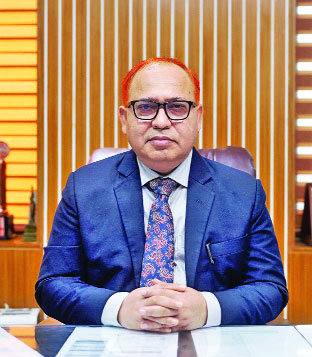 In an exclusive interview with The Financial Express (FE), Kazi Md. Wahidul Islam, Managing Director (MD) and Chief Executive Officer (CEO) of Rupali Bank PLC, shared deep insights on the strategic importance of the CMSME sector, the bank's grassroots initiatives, and how digital banking can unlock potential for rising entrepreneurs.
The sector contributes nearly 25 to 27 per cent to Bangladesh's total GDP (gross domestic product). Recognising its potential, the government has set a target to scale this contribution to 35 per cent by 2030. Furthermore, small and medium enterprises make up roughly 90 to 92 per cent of all industrial units across the country.
"The CMSME sector is a powerful driver of national development, serving as a catalyst for economic growth, poverty reduction, and rapid employment generation at the grassroots level," Mr. Islam said in response to a question about the sector's contribution to the national economy.
He also said that the CMSME sector is a powerful driving force in national development, acting as a catalyst for economic growth, poverty reduction, and rapid employment generation at the grassroots level.
Beyond its economic contribution, the SME sector is the backbone of the country's workforce, Mr. Islam said. He noted that SMEs account for around 80 to 85 per cent of industrial employment and nearly one-quarter of total employment nationwide.
He also said SMEs require relatively lower capital than large industries, making them an effective vehicle for promoting financial independence and economic empowerment among rural communities and women entrepreneurs.
"Beyond its economic contribution, the CMSME sector is a major hub for innovation. From tech startups to traditional industries such as handicrafts, Jamdani weaving, leather goods and agro-processing, CMSMEs not only meet domestic demand but also play an increasingly important role in global supply chains," the experienced banker explained.
Rupali Bank, one of the country's state-owned commercial banks (SoCBs), has been a pioneer in SME financing since establishing its dedicated General Loan and SME Department in 2010.
Asked about the bank's strategic focus, the MD said Rupali Bank considers the CMSME sector a national priority and is committed to expanding access to financial services for marginalised and unbanked communities.
Rupali Bank has introduced collateral-free loan facilities and a range of targeted CMSME products to bridge the financing gap, he said, adding that the SoCB has also established a dedicated Women Entrepreneur Unit to simplify loan processing and improve access to finance for female entrepreneurs.
"We've actively participates in all of the Bangladesh Bank (BB)'s landmark initiatives, including special refinancing schemes, the Startup Fund, Cluster Finance, and the Credit Guarantee Scheme (CGS)," the CEO said while replying to another query.
Highlighting the bank's SME financing performance, Mr. Islam said Rupali Bank has set a CMSME loan disbursement target of Tk 30 billion for 2026. He said the bank had already disbursed more than Tk 9.26 billion in CMSME loans as of June 18, 2026, supported by regular monitoring and close coordination with its branch network.
Replying to a question about how financial institutions can support small businesses amid global inflation and liquidity pressures, Mr. Islam said banks should re-evaluate traditional collateral-based lending frameworks to improve access to finance for SMEs.
He also said banks should introduce greater flexibility in collateral requirements by expanding the use of the Credit Guarantee Scheme (CGS), allowing viable SMEs to access financing through trade licences or group guarantees.
He also stressed the need for affordable financing, saying interest rates for priority SME sectors should remain competitive through the BB's refinance schemes.
Banks should go beyond loan disbursement by providing post-disbursement support, including mentorship and training in digital literacy, regulatory compliance and modern marketing, to help small businesses grow sustainably, according to the MD.
Asked about programmes for youth and women-led enterprises, Mr. Islam said Rupali Bank combines financial support with capacity-building initiatives.
He also said the bank offers flexible financing terms and preferential facilities for women entrepreneurs to help reduce barriers to accessing finance.
Rupali Bank provides project-based financing for young entrepreneurs to help transform innovative ideas into sustainable businesses and employment opportunities, he said, adding that the bank aims to promote financial inclusion across the manufacturing, service and trade sectors by offering advisory support and financial literacy programmes to ensure sustainable business growth.
Asked how technology can make CMSME financing easier, Mr. Islam said digital banking and advanced financial technologies are reducing transaction costs and making financing simpler, faster and more cost-effective for small enterprises.
He also said digital tools, including cloud-based accounting software, payment gateways, supply chain tracking systems and social media platforms, are helping small businesses improve operational efficiency, expand their markets and grow at lower costs.
sajibur@gmail.com and siddique.islam@gmail.com