
CNG-run auto-rickshaw strike continues for 2nd day
Wednesday, 28 May 2014
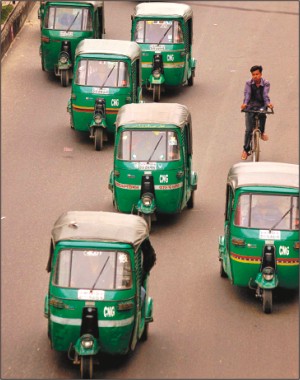
The 72-hour CNG-run auto-rickshaw strike, enforced by Dhaka Metropolitan CNG-run Auto-rickshaw Malik Samity Oikya Parishad, continued for the 2nd day in Dhaka city on Wednesday. The Oikya Parishad called the strike demanding extension of economic lifespan of the vehicle by four years more. The first day of the strike was observed peacefully on Tuesday without any untoward incident. They had announced the 72-hour strike programme from an emergency meeting held at the Oikya Parishad's temporary office in the city on Monday. On the second day of the strike today, no CNG-run auto-rickshaw except those for private use was seen plying on the roads of the city since morning. Member secretary of the Parishad ATM Nazmul Hasan said that BRTA chairman called them in his office on Wednesday to discuss the issues. 'We'll take next steps after holding discussions with the BRTA chairman,' he said. Nazmul Hasan earlier on Monday said the Mechanical Engineering Department of BUET recommended extending the economic lifetime of three-wheelers to 15 years after testing the vehicles six months ago. A nine-member committee formed by the Communications Ministry also suggested extending the economic lifespan of CNG-run auto-rickshaws by another four years, he added. Despite these recommendations, no final decision has been taken in this regard yet due to bureaucratic tangles, he alleged. The lifespan of a CNG-run auto-rickshaw was set at 9 years, but later it was extended by 2 years in two phases. Nearly 13,000 CNG-run three-wheelers now ply the city streets commercially and the economic lifespan of an auto-rickshaw is 11 years, according to UNB.