
Cold wave readiness: Long-term programme needed
Farid Hasan Ahmed | Sunday, 21 December 2014
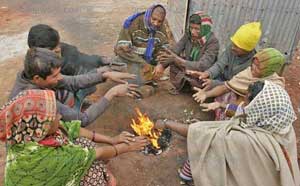
The winter season has started in Bangladesh. The location of Bangladesh is in 20°22'N-26°36'N, 87°48'E-92°41'E.5. It is not a severely cold-prone country. People of Bangladesh are used to face the normal winter season when the average temperature remains 13°C-20°C. But when the temperature slides to a single digit, the hazard of cold wave turns into a disaster-like situation.
A cold wave is a climatic phenomenon that is distinguished by the cooling of the air. It is a rapid fall in temperature within a 24-hour period requiring substantially increased protection to agriculture, commerce, and social activities. The precise parametre of cold wave is determined by the rate at which the temperature falls, and the minimum to which it falls. This minimum temperature is dependent on the geographical region and the time of year. Indication of cold wave is reflected in the fall of temperature by five degree celsius from normal for regions where normal temperature is less than 10.
Recently, cold waves are sweeping across the globe. A whirlpool of frigid, dense air known as a "polar vortex" descended on January 06, 2014 into much of the U.S., pummelling parts of the country with severe cold that could break decades-old records with wind chill warnings stretching from Montana to Alabama. Officials closed schools in cities including Chicago, St. Louis and Milwaukee and warned residents to stay indoors and avoid the frigid cold altogether.
Wintry weather not considered cold in some areas may at times cause temperatures slide significantly below average with accompanying hazards. In such places, plant and animal life are less tolerant to such cold weather. Likewise, unusual cold waves that penetrate into tropical countries in which people do not normally insulate houses or have reliable heating may cause hypothermia.
Occurrences of extreme low temperature in association with incursion of dry cold winds from North into this sub-continent are known as cold waves. The northern parts of India, especially the hilly regions and the adjoining plains, are influenced by transient disturbances in the mid latitude wester, which often have weak frontal characteristics. Bangladesh experiences cold wave in the winter, particularly in the northern region. In December and January, Bangladesh suffers from cold temperature. Northern and southwest parts of the country experience a sudden fall in temperature in these two months. Poor people in the northern parts of the country are the worst affected.
Consequences of cold waves in Bangladesh are reflected in biting cod wind coupled with dense fog that paralyses normal life both in the urban and rural areas (mainly in December and January). Cold wave sometimes claims human lives too. The poor people, particularly the extreme poor in the vulnerable region, are the worst sufferers. Many people, especially children and elderly men and women, are affected by various cold-related diseases. Crops, especially potato, wheat, boro seedling and vegetables are vulnerable to long lasting cold wave. Farmers and day labourers can not work in the field due to cold. Thick fog together with harsh cold disrupts movement of all modes of transport across the country, causing immense suffering to commuters. The cold wave that appeared in January 2013 in Bangladesh took more than 72 lives. Most of the victims were children who suffered from pneumonia, diarrhoea, cough, fever, asthma and other cold-related diseases.
The Ministry of Disaster Management and Relief, political parties, humanitarian organisations, NGOs, banks and well-off individuals normally distribute warm clothes and blankets among the poor in different parts of the country. Distribution of these materials could be done following a proper selection process in advance before the cold wave turns to be severe.
Preparedness to reduce health hazards should be in place so that cold waves are not life threatening. Special care should be taken for the aged people and children-- mainly the patients of asthma. New Born babies need special and appropriate care. Steam inhalation is the best home remedy for a host of cold related ailments, including cough, throat soar etc. Old or second hand clothes should be used after proper laundering. Wearing several layers of loose fitting, lightweight warm clothing is better rather than one layer of heavy clothing. Covering the head, ears, and mouth helps protect the lungs. Precaution should be taken with regard to the symptoms of hypothermia-- uncontrollable shivering, memory loss, disorientation, slurred speech, drowsiness etc. If symptoms of hypothermia are detected, it is always advisable to seek medical help as soon as possible.
As for protecting the winter crops, particularly boro and potatoes, relevant professionals suggest the following: cover the seed bed with polythene sheets; shed the dew drops from seeds by pulling a rope; pour water in the affected seed beds in the afternoon and remove the water the next morning; spray proper quantity of appropriate chemicals to destroy fungus; replace new plants in place of affected plants, if possible; take advise from local agriculture officials.
The cold wave which has the potential to turn into a disaster needs to be brought under a special preparedness programme by the concerned authorities. Cold waves might come again and again in the coming days, particularly in winter season, due to the negative effect of climate change. Blanket distribution among the affected people is an immediate remedy, while steps for long term solution are not being observed. It is necessary for the authorities to undertake long term plans considering the chronic vulnerability and the sufferings of the people, particularly in the most poverty stricken area of the country. Long-term programming is needed to reduce the cold wave vulnerability of the poor through improving livelihoods, increasing income for making better houses and buying blankets and warm clothes, providing soft loans for buying winter clothes and medicines. Inclusion of winter-affected communities with proper vulnerability and capacity analysis in the development programmes of the government and other agencies could be a durable step in mitigating the harshness of the wintry spell.
The writer is with the Swiss Agency for Development and Cooperation (SDC). Views expressed in the article are very much of the writer and has no link with the agency he works for. farid.hasan2008@gmail.com