
Commemorating a great sage
Nilratan Halder | Saturday, 18 October 2025
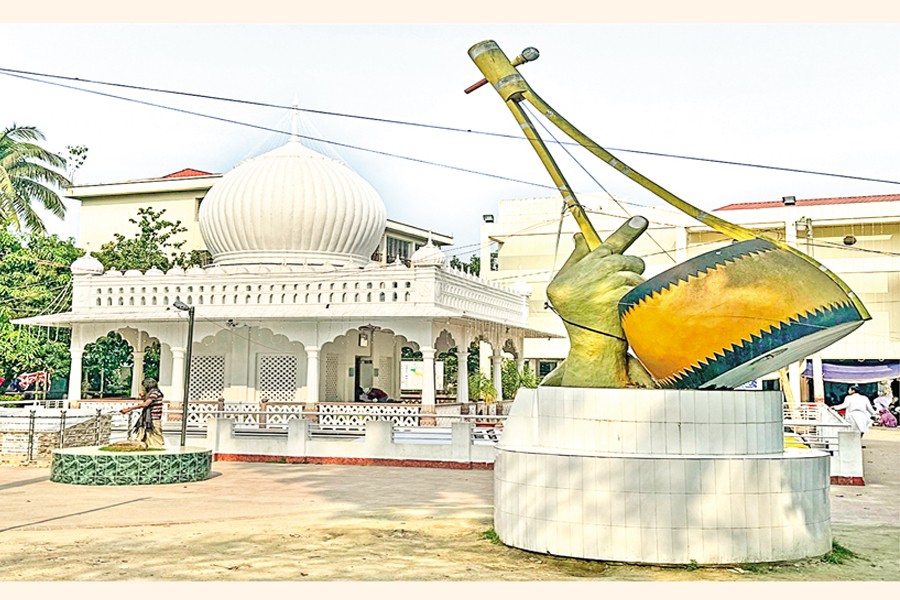
The observance of the135th anniversary of death of Fakir Lalon Shah has a special significance this time. Since the demise of his mortal body on Kartik 1, 1297 Bangla year, the Lalon Academy and the district administration were observing the day until last year but this is for the first time that the three-day memorial is going to be held nationally. The commemoration of the day the great sage left this mundane world is particularly significant because of planned attacks on monasteries of fakirs, bauls and peers.
Clearly, such attacks on Sufism and mysticism have violated the religious tolerance, inclusiveness and diversity of faiths in this land practised for centuries. It is quite unfortunate that the administration did not try to rein in the moral police who claim they have the right to teach the detractors a lesson. Lalon Shah does not fall in the category of a conventional religious sect. Thank God, the moral guardians did not make his centre a target. 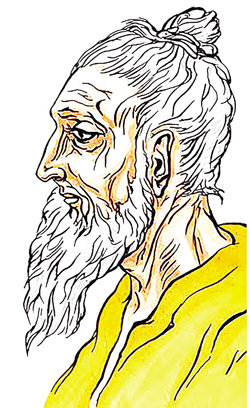 Lalon has transcended the boundary of faiths and his simple and spiritual messages are embedded in mysticism and yet are not far from the real world. A sage of extraordinary feeling and mental power, he makes a bridge between this world and the world after. Introduced to Baul doctrine by his mentor and Guru Siraj Sanyi, he chose an ascetic life of devotion. With no formal education, this poet, philosopher and enlightened mind acquired deep knowledge of both Hinduism and Islam. Credit goes to him for synthesising the two with no contradiction in between.
This is philosophy par excellence no one has ever tried to achieve. In his songs this is expressed so eloquently that the audience not only feel the depth of the feeling but also experience a mental journey within. He composed about 2,500 songs so lucid and simple that they appeal directly to the heart. There lies the specialty of this person extraordinaire. No wonder that he influenced Rabindranath Thakur and Nazrul Islam. Both poets regarded Lalon highly.
After setting up his monastery at Chheunryia on the bank of the Kaliganga, a large following gathered there. His disciples like Kangal Harinath Majumder, Dudu Shah, Pagla Kanai etc were inspired to compose Baul songs and made a mark in their own way. The fact is that this man of extraordinary philosophical knowledge had influenced people looking for an answer to their quest for spiritual salvation. Indeed, his is a most divine insight without making any compromise on sectarian divides or caste system.
His songs like khachar bhitor achin pakhi, Barir kache arshi nagar, Amar gharkhanai ke biraj kore are epitome of theosophical literature. He has immortalised the perception of human stay on this planet in a new look. His is not what is called moral teaching but a journey of the soul from the mundane to the spiritual. If human beings find the temporal world uninspiring, they try to find the freedom of their soul in another or the world after. The sojourn of the soul takes place within where Lalon offers solace for the craving minds.
There is no mistaking that religious devotion is a complete surrender but questioning minds do find enough space for their queries. Lalon's theosophy has no pretension and he takes symbols from the everyday life to guide people on course of spiritual experiences. The narratives are not highly enlightened but the enlightenment that takes place in the process is so deep and comforting that people feel peace in mind.
The great mystic thus helps people overcome their narrow vision of religion and continue their spiritual journey. This is important. People must know about their mission and the vision that unfolds before them courtesy of Lalon's songs is precious indeed. The enlightenment thus achieved can transcend the boundary of conventional beliefs and perception, making way for a transition. Lalon has propagated a philosophical doctrine, a social reform and cultural synthesis capable of making this world a better place to live in. Let the commemoration ceremony help promote this message of social cohesion.