
ROUNDTABLE
Creating a business- enabling environment
Sunday, 16 November 2025
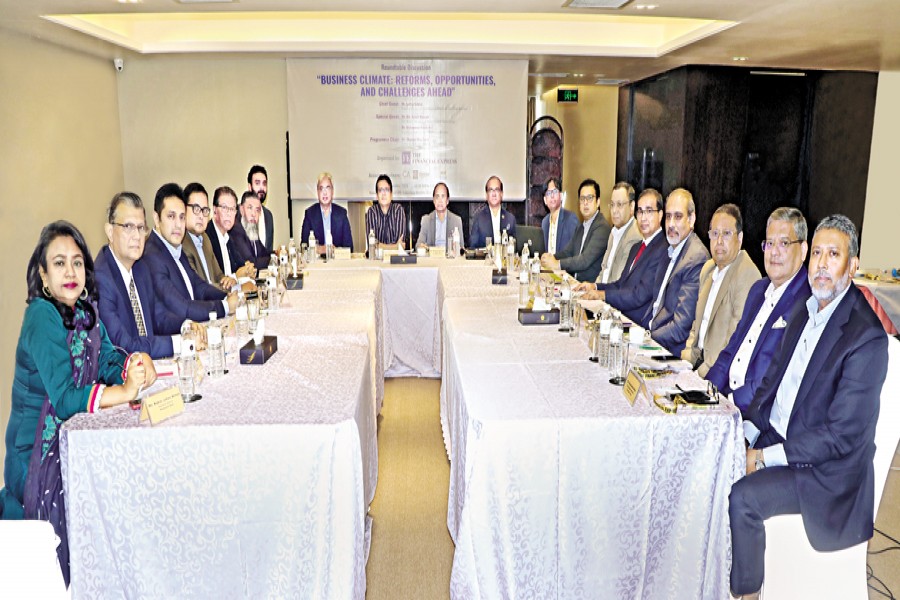
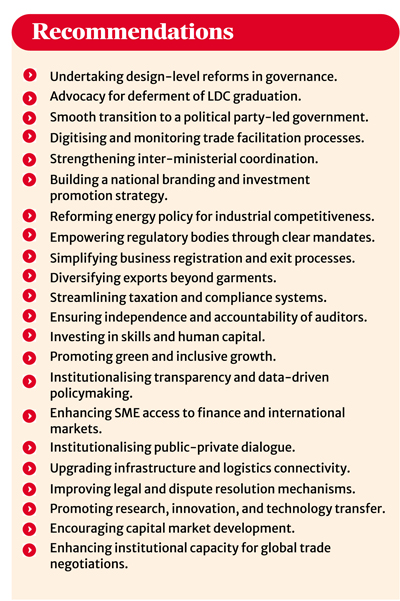
The journey of Bangladesh towards sustainable industrialisation and higher investment growth depends on a stronger and more predictable business environment. At a roundtable titled "Business Climate: Reforms, Opportunities, and Challenges Ahead," organised by The Financial Express, senior policymakers, business leaders, economists, and development experts discussed ways to boost investor confidence and competitiveness amid global economic volatility. Lutfey Siddiqi, Special Envoy on International Affairs to the Chief Adviser, graced the event as the chief guest and Md Anwar Hossain, Secretary at the Ministry of Science and Technology, and Mohammad Hasan Arif, Vice Chairman at EPB as the special guests. ShamsulHuq Zahid, Editor of The Financial Express, presided over the discussion where Hasnat Alam, Economist at Policy Exchange Bangladesh, presented the keynote paper. Shiabur Rahman (Shihab), Head of Online and Digital Content at The Financial Express, moderated the discussion.
Lutfey Siddiqi
Special Envoy on International Affairs
to the Chief Adviser
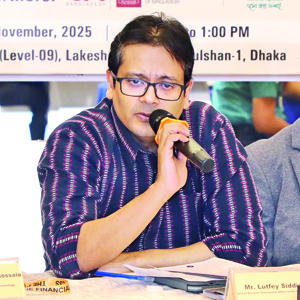
chief adviser's aides, went to Washington DC for the IMF-World Bank annual meetings. Exactly a year earlier we had gone to present Bangladesh's case for the first time. Back then, every macro-indicator-currency, reserves, inflation, growth, non-performing loans - was under pressure. Compared with that, what we have achieved in stabilisation this year is significant.
One lesson I want everyone to remember. That is real reform must happen at the design level. The way our government is structured is a fundamental design flaw. Which minister is responsible for export diversification? For logistics? For multi-fibre issues? None. Because of this, the head of the government has to coordinate among ministries. Countries like Singapore and Indonesia have coordinating ministers in the prime minister's office. Each minister there runs one ministry, acts as second minister in another, and leads a cross-government initiative. We need something similar.We need to reform at the design level.
Political parties must commit to time-bound reform and redesign of the ministerial structure. The private sector is better equipped to map this out.
The real question in Bangladesh is not what needs to be done. We all know that. But why it is not done. Unless we fix the design, reforms will not sustain. Please maintain perspective. Globally, uncertainty is at record levels, yet Bangladesh has stabilised. Let's recognise that progress, gain confidence from it, and move on to the next stage of reform.
Md Anwar Hossain
Secretary
Ministry of Science & Technology
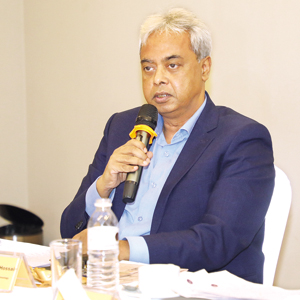
There are many challenges in our business sector, still the sector is highly resilient. Ninety-nine percent of us are local entrepreneurs. We've supported foreign investors and offered them policy advantages, but local entrepreneurs don't get the same treatment. We still don't have an exit policy in Bangladesh. When a business collapses due to an energy or policy shock, the entire family suffers. We need a legal exit mechanism.
Other countries are growing fast, adopting renewable energy, and attracting investors by balancing policy and innovation. We too must reform our policies. When I was in EPB, we worked on three major policy proposals, including the bonded warehouse facility. I personally engaged with NBR officials and commissioners, yet we faced bureaucratic hurdles and delays. We need to ensure mutual accountability between government agencies and business communities. There are problems in bureaucracy and business community too. Many of the problems in the banking sector, including NPLs, have roots in the private sector itself.
Bangladesh needs to introduce a free-of-cost (FOC) model -- importing raw materials duty-free for export production, which minimises risks and promotes technology transfer. NBR agreed in principle, but execution remains slow. We need to act fast. Our agrochemical and pharmaceutical policies are inconsistent. Under WTO TRIPS, both should enjoy equal patent and duty benefits, yet only pharmaceuticals do. This contradiction must end.
We must balance environmental protection with industrial growth.
Mohammad Hasan Arif
Vice Chairman
Export Promotion Bureau
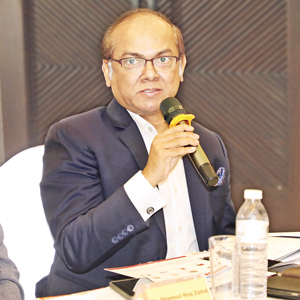
EPB has been working actively not just to promote exports but also to shape business-friendly policy advocacy. We are intensifying efforts for export diversification through fairs and business delegations across different continents. In the current financial year, EPB will facilitate participation of Bangladesh exporters in 46 international trade fairs with government subsidy support. It is also working for sectoral promotion.
Despite many challenges, Bangladesh's business sector is highly resilient. We all need to change mindset. The bureaucracy is yet to have the mindset to listen, let alone solving a problem. This has to be changed.Political leadership, bureaucracy and business should work together to take the country forward.
Bangladesh must create a unified branding strategy to project itself positively to the world. Without a clear brand identity, it's difficult to sustain progress or attract investment. The private sector, regulators, and policymakers must jointly design and execute this national branding strategy.
We, as regulators, should stay in our respective roles and avoid unnecessary interference in business operations. The government's job is not to run business but to enable business through sound policy and predictable regulation. At the same time, energy remains the backbone of economic growth. There can be no expansion of industry or export without ensuring reliable and affordable energy. Energy policy must focus on renewables, diversification, and sustainability through clear principles and institutional commitment.
Shamsul Huq Zahid
Editor & CEO
The Financial Express
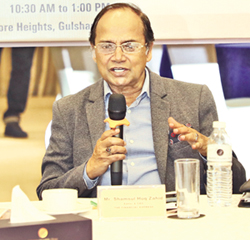
When we talk about the business climate, there is a long list of positives and negatives. We must acknowledge that the present government has managed to stabilise things. Otherwise, it would be difficult to imagine where we would stand today.
If we look back to the days before August 5, 2024 we realise how far we have come. The question now is: what lies ahead? We all know that a political government will eventually take charge, but what matters most is what that government will inherit from the interim administration. The success or failure of the next government will largely depend on this inheritance.
Everyone hopes that when the new government takes over, it will act as a panacea for our challenges. But the truth is, the times are not favourable. Personally, I believe that expecting a quick fix is unrealistic, though they may still be able to offer something valuable.
The new government should be given a time-bound programme to deliver on specific goals. We, at The Financial Express, see ourselves as the mouthpiece of the private sector, which remains the driving force of Bangladesh's economy. From the very beginning, we have aligned ourselves with this sector and will continue to do so.
In conclusion, the way forward, which is theroadmap for progress,willultimately be determined by the next political government. It is up to them to build on the foundation that has been laid and to carry the nation toward a more stable and prosperous future.
Abul Kasem Khan
Chairperson, Business Initiative
Leading Development (BUILD)
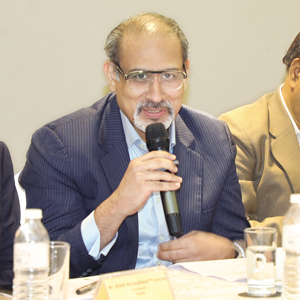
All of us from the private sector have been saying the same things for years - improving competitiveness and the ease of doing business. Yet, if you look at any index, from the passport index to global competitiveness, Bangladesh is among the bottom ten. We keep saying we're doing well, but it's mostly for self-satisfaction. If we compare ourselves with Vietnam, we're far behind. Instead of freeing the economy, we are squeezing it. We need to open it up - let people make money and create wealth legally and compliantly. But there is mistrust between the private sector and policymakers. Why are entrepreneurs treated with suspicion? Our window of opportunity is shrinking. Other countries are moving faster, and we risk falling into the middle-income trap. Whoever forms the next government must take this seriously and commit to a time-bound reform plan - what will be done in one month, in three months, in a year. We must deregulate and simplify licensing. The entire tax ecosystem also needs simplification. We must build policy confidence, strengthen institutions, and ensure accountability of public servants.
Sharif Zahir
Chairman
United Commercial Bank PLC
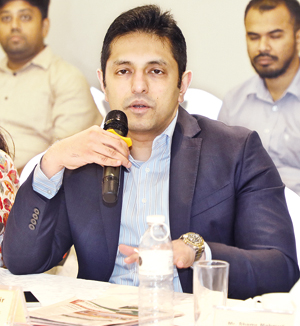
One of the most positive developments in the last year and a half has been the reform of the banking sector. The first step was to gather accurate information about the sector's true condition. That transparency was essential to identify the actual problems and the extent of the damage inflicted during the previous regime. Now, with high ratio of NPLs, panic has spread among both local and international stakeholders. Every bank has foreign lenders, and they are all concerned. So, we must act maturely and responsibly to address this crisis. We know many bad debts originated from boards and owners, not borrowers. Yet we can't trace accountability properly because the law doesn't allow it. We can track accounts through the BFIU, but can't take cases to court effectively. That must change. There are genuine defaulters - people who have fled the country. We need a fast-track judicial process. We must separate genuine businesspeople from criminal defaulters, and ensure that those responsible for financial crimes are not protected by future governments.
Hasnat Alam
Economist
Policy Exchange Bangladesh
Bangladesh's ambition to reach higher middle-income status depends critically on private investment. Manufacturing has grown from 5.5% of GDP in 1971 to 23% in 2023, led by the garment sector. But to sustain momentum, investment must deepen beyond garments and integrate Bangladesh into global value chains. Competitiveness depends on a conducive policy and regulatory environment, sector-specific reforms, efficient infrastructure, skilled labour, and innovation-driven growth. Global investment trends are shifting amid uncertainty. Trade policy volatility has become as damaging as tariffs, and global FDI flows are weakening despite selective upticks. Greenfield investments are slowing while digital and service-oriented sectors are expanding. For Bangladesh, this transition creates both challenges and opportunities. It must strengthen its institutional and policy credibility to attract quality, sustainable investment.The country is well positioned to benefit from global supply chain diversification.
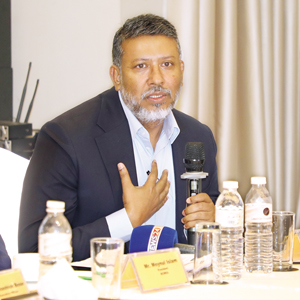
Moynul Islam
President
Bangladesh Ceramic Manufacturers & Exporters Association
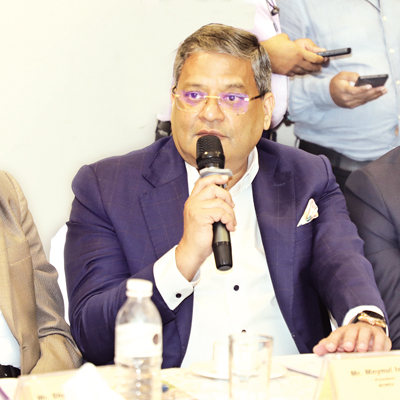
We’re talking about reforms and like everyone else, we are waiting for the next parliamentary election. In my opinion, the most critical reform is governance. Without improving governance, nothing else will improve.
Back in 1985, when we started the ceramics industry, there was an excellent environment between the government, businesspeople, and banks. Everyone supported each other. The policies were well designed - if you set up a factory in a certain area, you received a 10-year tax break. We also enjoyed strong support from the EPB and our embassies abroad for export and GSP facilities. Today, however, the environment is different. Everyone is waiting for the election. That uncertainty has created panic in the market. I'm not involved in politics. I'm just a voter. But over the last 15 years, I've felt unable to speak freely. Anyway, the product we manufacture - ceramics -has seemed to be considered unnecessary or luxury for last couple of years. I sincerely urge EPB, government bureaucrats, and advisers to play a more positive role for businesspeople to help them get over the situation.
Taskeen Ahmed
President, Dhaka Chamber of Commerce & Industry
Right now, the most critical issue is energy security. Without it, everything else fails. We can talk about development, but without predictability and consistency in energy, all our beautiful promises fall flat. We go abroad to attract foreign investors, but before doing that, we should ask our own businessmen what they need.
Local investors contribute 98% of our GDP, while foreign investors account for less than 1%. So before we invite outsiders, let's fix our own environment. We have achieved a lot as a nation, and we will continue to progress. But for long-term growth, we must focus on ease of doing business. The garment sector has done its part, reaching $50 billion in exports. But it cannot carry the economy alone. The STS (Smooth Transition Strategy), the plan for a country to navigate the challenges of graduating from LDC status, has narrated many things that need to be done. The strategy is full of future promises, like we'll do this, we'll do that. The fact is that we rarely do anything on time. We don't know if the government is proceeding with LDC graduation, but we, the private sector, is not going for graduation.
My request is simple - the kind of support that was given to the garment sector for 40 years, give even a quarter of that support to 7 to 10 emerging sectors like electronics, light engineering, pharmaceuticals, and leather goods. There are chances of pilferage in case of such support. But please don't hold the country back in fear of pilferage.We need to work together in a coordinated way. If we can do that Bangladesh will continue to grow.
Inamul Haq Khan
Senior Vice-President, Bangladesh Garment Manufacturers & Exporters Association
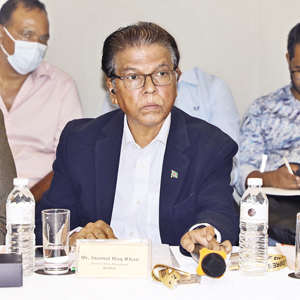
Our GDP growth has slowed sharply mainly due to declining public and private investment. RMG exports have fallen in recent months. The 20% additional US tariff has significantly lowered our export unit price to the US, while China and India are shifting their export focus to the EU, intensifying competition there. As a result, Bangladesh's RMG export to the EU fell.
Private sector credit growth has plummeted to 6.35%, the lowest in over two decades. Tight monetary policy to control inflation has raised lending rates and diverted bank funds to government securities, stalling industrial expansion. Non-performing loans now average 27%, while uncertainty discourages new investment. Capital machinery imports in the textile sector have dropped by 25.42%, signalling reduced industrial confidence. Consequently, unemployment and poverty have surged - poverty rising from 18.7% in 2022 to 28% in 2025.
Energy shortages and rising tariffs have worsened the business climate. Gas prices were increased by 150% in 2023 and again for new connections, while port tariffs rose by 41% despite inefficiency. Chattogram Port ranks 337th among 405 ports globally. Seventy-four percent of Bangladesh's RMG exports depend on LDC market access, which will change after graduation. It is not realist to assume that Bangladesh will be able to continue its zero-duty access to EU market after graduation. Therefore, the BGMEA urges the government to seek at least a three-year deferment from LDC graduation.
Mohammad Hatem
President, Bangladesh Knitwear Manufacturers & Exporters Association
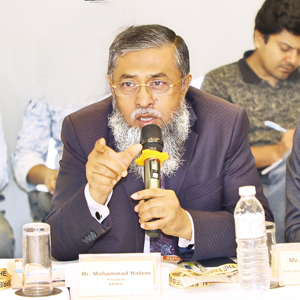
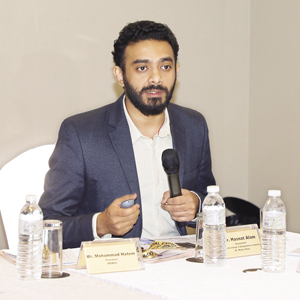
We, the business community, have spoken to government officials on several occasions, and most of them initially agreed on the need for postponing LDC graduation. But suddenly, the government decided to move forward with it. I want to make a sincere request - let’s officially appeal against graduation. Let's urge the United Nations to come and examine the current situation and decide based on ground realities. If they still find we're ready, fine. But let that decision come through discussion. However, I believe that if UN examines our case they will say that Bangladesh needs to wait for another 10 years for graduation.
From my perspective, Bangladesh's industry and economy are in the ICU. We're facing countless problems - from ease of doing business to the NBR's taxation system. For example, under the turnover tax, I pay 1% on my export earnings. But when I file my tax return, NBR calculates corporate tax at 12%, then refuses to refund the excess already paid.
This is the reality of our business environment. I urge government officials concerned to take note of how these issues are suffocating entrepreneurs. I request them to audit the accounts of our industries. You'll find that over 80% of factories are sustaining loss. The private sector is struggling not because of inefficiency but because the system itself is broken. If we want the economy to recover, we must fix the governance, the tax structure, and the business environment before moving forward with any LDC graduation.
Showkat Aziz Russell
President
Bangladesh Textile Mills Association
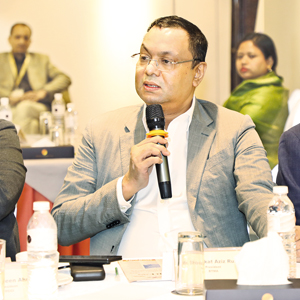
Today, I want to raise a few concerns. Our exports and investments are slowing down, and we aren't seeing the kind of momentum or reflection we expected. In textiles, we are still mostly cotton-based, while man-made fiber now makes up 70% of the global market. Yet Bangladesh has no meaningful tapping into this segment because there's no policy or support for it.
I developed a project to reprocess plastic bottles with three tonnes per-hour capacity. Though the then Commerce Minister appreciated the idea, I haven't received permission to import used plastic bottles, which are my raw material. My factory runs only a day a week because local per capita plastic use is just 10 kgs, while in the US and Europe it's 350 kgs. Waste management is a profitable global business, but our government gives it no attention. We export plastic flakes abroad instead of converting them into resin and producing new bottles locally.Why? Because we lack policy support. For me, waste is not waste; it's raw materials. I could use it to make fibre, geotextile, or new bottles. But instead of regulating quality, the authorities restrict it, effectively stopping a viable business. This kind of red tape affects many sectors. Our banking sector also needs urgent attention. There's a lot of window dressing. Banks hide their real financial condition, and we entrepreneurs are forced to do the same to keep our credit lines open. Please don't make life harder for businesses. Give us space to work. We'll give you taxes, revenue, and employment. We're committed to this country, but we need trust, cooperation, and consistency from policymakers.
KSM Mostafizur Rahman
President, Bangladesh Agrochemical Manufacturers Association
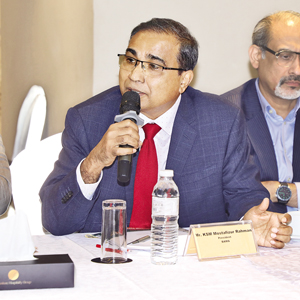
Agrochemicals, or pesticides, are essential for protecting crops from diseases and pests. Without them, at least 30% of crops can be lost, and in severe cases such as the BPH pest in rice, losses can reach 100%. Agriculture remains the backbone of the national economy, employing 44% of the labour force - mostof whom are poor. Yet economic reforms centring agriculture have failed to prioritise them. Even after 54 years of independence, we import over 90% of agrichemicals, which involves very ordinary technology. The Finance Adviser announced in his last budget speech that all components needed to produce agrochemicals locally should be duty-free, raising hopes for industrial growth. However, policy and tariff structures continue to favour importers over local manufacturers. Imported finished pesticides face a mere 5% duty, but domestic producers must pay between 30% and 58% on raw materials, excipients, and equipment. These high duties make local production uncompetitive, and non-tariff barriers further restrict growth.
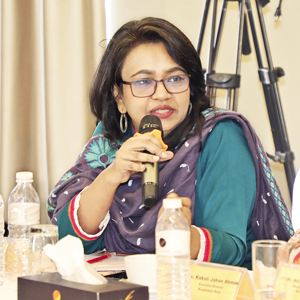
Kakoli Jahan Ahmed
Executive Director
Bangladesh Bank
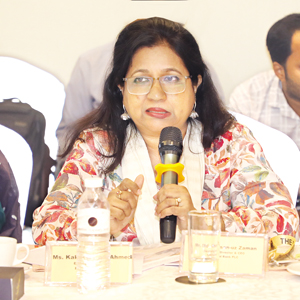
I feel that in terms of banking and regulation, we are still standing in the same place. We keep discussing the same issues without real progress.
One major challenge I see is data accuracy. Without reliable data, promoting overall business becomes difficult. If we can improve data accuracy, it would benefit foreign investors, development partners, and domestic entrepreneurs alike. Accurate information builds confidence and helps decision-making for everyone involved. Another critical area is skill development. This is something that urgently needs attention now. Every individual has potential. Our goal should be to nurture that potential through systematic training and opportunities. The topic of nursing also came up, and I believe it is time we seriously discuss exporting nursing and caregiving services. With our population aging, this sector is both a domestic necessity and an export opportunity.
Many organisations have been created for women entrepreneurs and professionals. The government has been supportive of their initiatives. I hope this support continues and grows in the future.
Md. Ahsan-uz Zaman
Managing Director & CEO
Midland Bank PLC
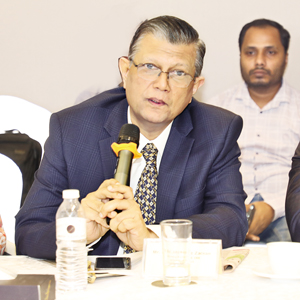
For banks, focus remains on empowering SMEs, the driving force of the economy, by providing more financing. However, private banks are measured by profitability rather than their contribution to SME lending. This imbalance needs to change. The banking sector must do a better job of educating prospective business owners, particularly those with than two years of experience. Financing continues to grow, but the cost of funds remains high because the rate at which banks lend depends on the cost of deposits. Newer banks face lower trust and higher costs, which affects lending rates. SMEs, with their limited shock-absorbing capacity and higher risk exposure, are particularly vulnerable. NPLs remain a major challenge. We, at banks, try to keep loans regularised. Because regularised loans become earning assets. However, many loans turn bad not only because of malicious intent but due to unforeseen circumstances. The lengthy legal process for loan recovery discourages financial discipline and ultimately hurts the economy. Legal reforms are urgently needed to ensure faster realisation of bad loans.
Doulot Akter Mala
President
Economic Reporters' Forum
Chain of command in government, specifically in the tax and customs authority, is not working properly. There are noticeable gaps here.
We want a stable political government, but even that type of government cannot do what an interim government could. Yes, efforts are being made, but results are not visible yet. As a journalist, I see everyday problems - parents cannot get baby food, the elderly cannot get supplies, and markets are running low. Bangladesh Bank has a good reserve, so why are imports of 14 items restricted? Why is the supply chain not smoothed? After we reported on this, baby food arrived, but other restrictions remain. There are issues in the business climate. Chittagong Port tariffs were increased to control inflation, but this is not seen in other countries. Fiscal and monetary policies are inconsistent. In January, tax on 100 products was increased under IMF pressure, but agitation forced backtracking. Such backtracking erodes investors and citizens' confidence. Decisions are made without proper study or stakeholder engagement.
Shubhashish Bose
CEO, Institute of Chartered Accountants of Bangladesh
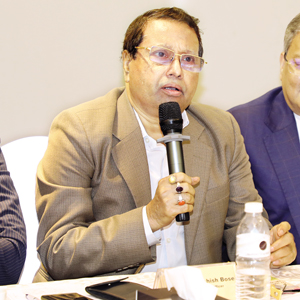
My point is how the Institute of Chartered Accountants of Bangladesh and auditors can support businesses. The first thing is that auditors must be given independence. Statutory audits are mandatory for listed companies, but what about the non-listed ones? If we want a true and accurate picture of the economy, they should also be audited. Let me talk about bank audits. There are so many questions being raised about how these audits are conducted. In many cases, auditors are pressured to change their findings during tripartite meetings among Bangladesh Bank, the auditor, and the concerned bank. When auditors are not allowed independence, they cannot do their duty properly. It's not only the auditor's responsibility to ensure accurate reporting. Those who prepare accounts also play a role. On the issue of taxation, I believe income tax should only apply to income. Turnover tax is a separate matter, and if it's treated as income tax, then companies must receive refunds. Good governance must prevail. We need independent directors, and the corporate governance code issued by BSEC must be properly enforced.
Shams Mahmud
President, Bangladesh-Thai Chamber of Commerce & Industry
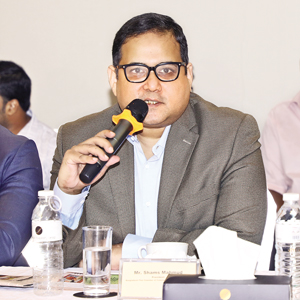
Bangladesh keeps talking about economic partnerships, but nothing is actually happening. FTAs and PTAs remain stalled, even though these should have been completed long before. India has already entered a comprehensive partnership with ASEAN, and the benefits are clear: goods move from Bangladesh to India, get processed there, and then enter the Thai market at low tariffs. But Bangladesh faces a 30% tariff in Thailand, making direct exports uncompetitive. Negotiations on a Bangladesh-Thailand FTA have progressed for years, yet the agreement still hasn't been singed. The trade balance is overwhelmingly in favor of Thailand. As Bangladesh is import-dependent, signing FTAs is essential. Thailand is a low-hanging fruit for Bangladesh. An FTA could help Bangladesh enter ASEAN markets using Thailand as a pressure point.
Policy contradictions are holding industries back. Industries are compelled to pay turnover tax regardless of profit or loss. Gas shortages limit production to 60%, pushing businesses towards loan defaults because banks will not accept government failures as justification. This situation must end.
Shiabur Rahman Shihab
Head, Online & Digital Content
The Financial Express
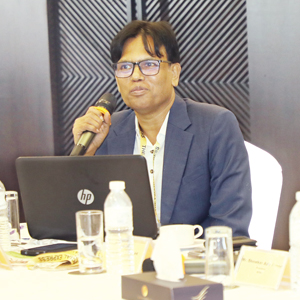
A strong and supportive business environment is essential for attracting investment, enhancing competitiveness, and ensuring sustainable growth. Bangladesh now stands at a crucial crossroads. By the end of next year, the country is set to graduate from LDC status. This transition marks a significant milestone in the country’s development journey. The graduation may help strengthen its global image, improve access to commercial credit, and attract more FDI. However, it also comes with considerable risks and challenges. Bangladesh will lose its preferential market access in many developed countries and face higher tariffs, making its exports less competitive. In this context, the need for strengthening the business climate in Bangladesh has become more relevant than ever. Though the government has already undertaken a number of reforms to improve the investment landscape, structural challenges persist. Weak infrastructure, complex regulatory procedures, limited access to finance, and the uncertain global market continue to constrain business growth and private sector confidence.
Khourshed Alam
COO (Building Materials),
AkijBashir Group
I want to highlight how frequent and inconsistent policy changes are hurting our businesses. The recent change in gas pricing is unfair. I currently buy gas at Tk 30 per unit, but a new investor has to buy at Tk 40. This creates a barrier for new entrants and limits our ability to expand. In the glass industry, where our investments reach up to Tk 2,200 crore, we are now facing rising import costs. We assumed we could source sand, the main raw material locally, but now we have to import it from Egypt, which has increased costsby 4-5 times. Such inconsistency in policy is a huge burden for us.
If you look at the construction materials sector, you will see zero or negative growth. Ceramic tiles should not be treated as a luxury product.They are used in both high-end apartments and village homes. Yet, we face a 15% supplementary duty and 15% VAT, a 30% total burden that encourages unfair competition and malpractice. We have long requested the government to reconsider this, but no one listens.We also pay duty on moisture content in imported clay, which is unreasonable since it is not usable material.