
Dengue deaths cross last year's toll
Use of new larvicide from Sunday
FE REPORT | Friday, 4 August 2023
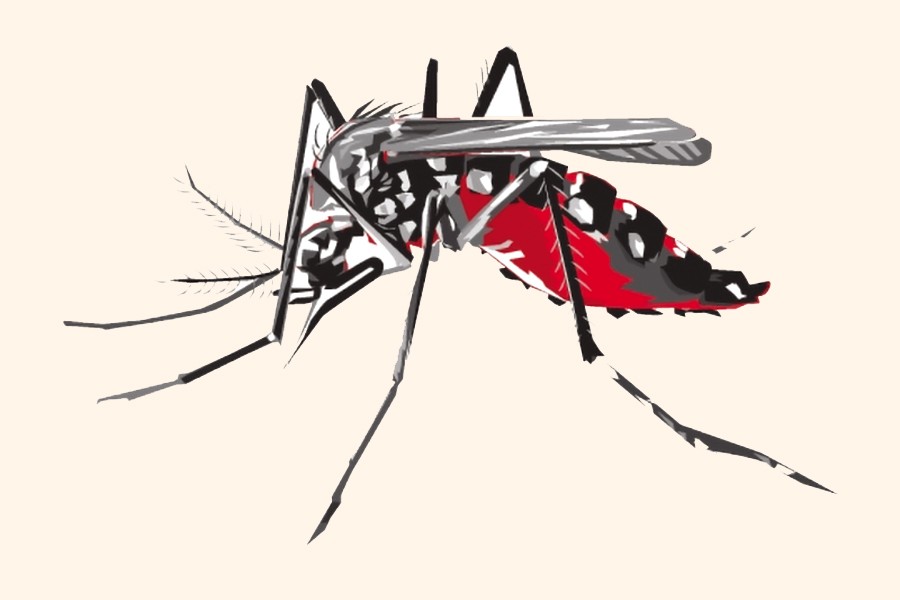
Bangladesh reported 10 more deaths, mostly in Dhaka, from the Aedes-borne dengue fever on Thursday, setting a new record of 283 fatalities in its history.
The highest 281 people died due to dengue last year.
However, Thursday's fatalities superseded all previous records in the country's history.
The total deaths included 226 of Dhaka, according to the Directorate General of Health Services (DGHS).
Besides, 2,589 new cases were hospitalised across the country in the last 24 hours ending at 8:00 am on Thursday. Of the total, 1,101 were from Dhaka.
The dengue situation in Dhaka is "stable", although the rate of dengue cases has increased slightly.
Meanwhile, the total dengue cases rose to 59,716, including Dhaka's 32,562, according to the DGHS.
A total of 9,210 people were being treated in hospitals across the country. Of them, 4,650 were from Dhaka.
Of the total admitted, 50,223 cases made recovery and returned home, Dhaka's 27,686 included.
Meanwhile, the Dhaka North City Corporation (DNCC) on Thursday inaugurated the use of new insecticide 'Bacillus thuringiensis israelensisto' (Bti) to fight the dengue situation here.
Bti is a type of bacteria that kills mosquito larvae.
DNCC mayor Md Atiqul Islam launched the Bti enforcement programme for the first time in Gulshan-02 neighbourhood.
He announced plans to use Bti on all roads under the DNCC's jurisdiction from Sunday (August 06).
LGRD and cooperatives minister Md Tazul Islam attended the event as the chief guest.
When Bti enters a larva, its toxicity destroys the digestive tract of the insect. Then the larva cannot eat anything else and eventually starves to death.
DNCC health officials earlier discussed the use of the Bti insecticide with entomologists.
BSS adds: Experts predicted the dengue situation may deteriorate further in the coming August and September.
According to the DGHS, July alone recorded 43,854 dengue positive cases with 204 deaths while 7,884 dengue positive cases were recorded and 32 people died from the disease in the past three days of August.
Talking to the news agency, several entomologists said that dengue by now emerged as an epidemic as it spread all over the country but observed that the concerned agencies, particularly city corporations could not take required steps to annihilate mosquitoes.
Dr Ayesha Akhtar, assistant director of Shyamali TB Hospital, said, "Dengue was detected in Bangladesh for the first time in 2000 and it has turned into epidemic at the beginning of rainy season this year and the dengue situation will be more severe, if the rising trend continue."
"We have to take preventive steps particularly destroying breeding sources of Aedes mosquito to stop outbreak of dengue disease," she added.
Ayesha urged the city dwellers to remain careful about sources of stagnant water as most of the people in the country have utter negligence to keep their surroundings neat and clean.
Health experts have described community mobilization as the most effective initiative to control dengue outbreak as the country is in the grip of the mosquito-borne disease.
"Community engagement is very crucial to prevent dengue disease, they said adding all relevant organizations should work in a coordinated manner to rein in dengue outbreak.
"City corporations must intensify their efforts at the quickest possible time to kill mosquitoes of all kinds, instead of searching for dengue carrying Aedes breeding grounds alone," entomologist Professor Kabirul Bashar of Jahangirnagar University told BSS.
Unfortunately, he said, the municipal authorities could not do so yet despite being expected, while several Directorate General of Health Services (DGHS) officials echoed him.
"City corporations are tasked to annihilate mosquitoes but their performance is not satisfactory enough, a situation which is increasing our pressures with higher number of patients with not much treatment options," a senior DGHS official said preferring anonymity.
South City Corporation's Chief Health Officer Dr Fazle Shamsul Kabir claimed several tropical countries like the Philippines, Malaysia, Thailand and Indonesia were exposed to higher onslaughts of dengue.
Countries like Brazil, Argentina and Peru in South America were also witnessing an identical scenario, he said, adding currently dengue was being considered as a global health burden.
"The number of dengue patients had been increasing alarmingly since January this year giving a signal of dengue pandemic during rainy season as 566 dengue cases were reported in the first month of the year, which are almost five times higher than that of same period of past three years," a DGHS official added.
nsrafsanju@gmail.com