
Dhaka deserves better treatment from Delhi
Asjadul Kibria | Monday, 3 April 2017
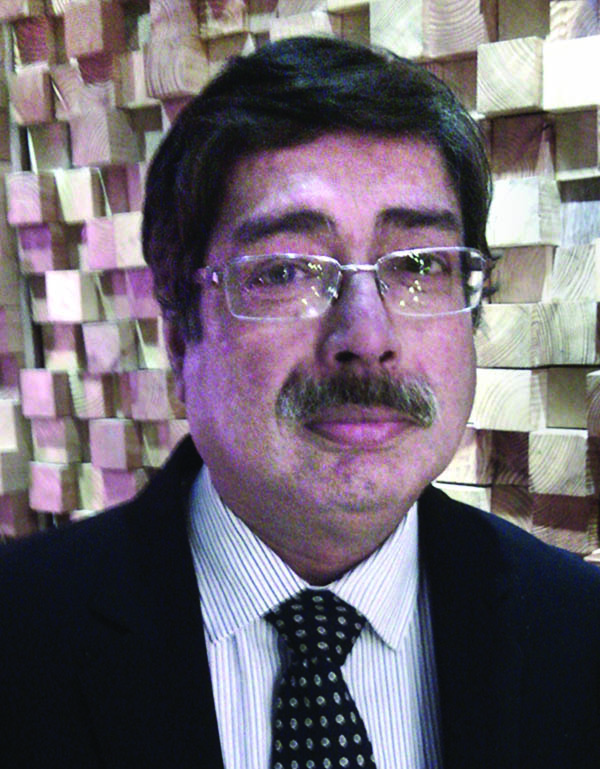
Bangladesh can do no harm for India rather it deserves better treatment from the neighbour, especially in the areas of trade and economy.
Dr Biswajit Dhar, a professor of New Delhi-based Jawaharlal Nehru University, expressed the view while talking to the FE in Dhaka last week. He also stressed on enhancing trusts and cooperation between the two countries for mutual benefits.
"India is not importing enough from Bangladesh," he said. "Why it is not happening? We have to address the issue."
India's import from Bangladesh or Bangladesh's export to India averaged annually at around US$550 million over the last six years while Bangladesh's import from India averaged at $5235 million.
"There are allegations about non-tariff and para-tariff barriers," he said adding that non-tariff barriers need to be identified properly. Both the countries also need to streamline their banking channels and facilities for trade. Raising such complains only will not bring any result," he added.
Dr Dhar said Indian countervailing duty on Bangladeshi apparel items was imposed to offset the excise duties on Indian apparel manufacturers to create level playing field. He, however, expressed the optimism that once India implements the General Sales Tax (GST), such problem would go.
He advised Bangladeshi readymade garments manufacturers to develop their own brands instead of fully depending on global brands.
"Why are you not going directly for marketing? Why Bangladeshi apparel makers are not setting up shops in India to attract consumers?" he added.
The JNU professor also appreciated the effort of PRAN for its strong foot-prints in the North-Eastern states of India.
"PRAN uses Indian farm products and process it in Bangladesh and then export the finished processed foods and drinks in India," he added. "The brand set a model for many others in Bangladesh to trade with India."
Regarding the development path of Bangladesh, Dr Dhar opined that the country should take lesson from Indian experience and avoid over-reliance of service sector.
"In India, once we thought that service sector is generating the continuous growth. Now our policymakers understand the limitation and so start 'Make in India' campaign to promote the manufacturing sector."
Dr Dhar was of the view that manufacturing sector generates more employments and the small and medium enterprises (SMEs) create more jobs then large industries.
He suggested diversification of products in Bangladesh and underscored the need for tapping the potentials of pharmaceuticals, electronics and IT-products.
He also opined that Bangladesh was growing strong in information technology (IT) and IT-related products and the country needed to continue investing in this sector.
To enhance bilateral economic cooperation, Dr Dhar stressed on moving ahead with the regional arrangements.
He was of the view that regional arrangements like SAARC (South Asian Association for Regional Cooperation) and BIMSTEC (Bay of Bengal Initiative for Multi-Sectoral Trade and Economic Cooperation) were important.
He also opined that BIMSTEC could be a strong bridge between SAARC and ASEAN (Association for South East Asian Nations).
In reply to a question about the current global situation, he said globalisation and multilateralism were now under serious threat.
According to Dr Dhar: "If Donald Trump, the President of the United States (US), moves toward protectionism and adopts it fully, then the world is likely to back to the period of 1930's when countries exercised Bagger-Thy Neighbour policy."
It is a trade policy which uses currency devaluations and protective barriers to alleviate a nation's economic difficulties at the expense of trading partners. While the policy may help repair an economic hardship in the nation, it will harm the country's trading partners, worsening its economic status.
Dr Dhar believed that the World Trade Organisation (WTO) would be a very good option for advancing the multilateral trade regime.
"Under the WTO-driven system, different countries are able to address their issues and concerns," he explained. "But big and advanced countries are not ready to open-up and accept the pain of adjustments. That's why the Doha round negotiation has been inconclusive for the last 16 years."
Dr Dhar was of the view that the rich countries did not want to share the benefits of globalisation.
The trade expert opined that China might be considered as a replacement of the US for advancing the multilateralism.
"But, it is not possible to know the Chinese way of thinking and working," he added. "Chinese policies are very non-transparent and unpredictable compare to the US policies that are open. Even, Trump is very open and we all know what he wants to do or not."
The former director general of New Delhi-based think tank Research and Information System for Developing Countries (RIS) also expressed concern over the 11th ministerial conference (MC) of the WTO. The MC11 will take place in Buenos Aires in December this year.
"There is a move to bring e-commerce under the WTO framework to create global binding rules," he explained. "But it will give the few leading multinational companies upper-hand on e-commerce."
To contain such move, he suggested tabling unfinished agendas of the developing countries.
"Bangladesh should list the unfulfilled commitment to the Least Developed Countries (LDCs) and table it in the next ministerial conference," he added.
asjadulk@gmail.com