
Dhaka world's 2nd-largest city with 36.6m population
UN rankings by habitation concentration also predict BD capital to be most crowded by 2050
FE REPORT | Thursday, 27 November 2025
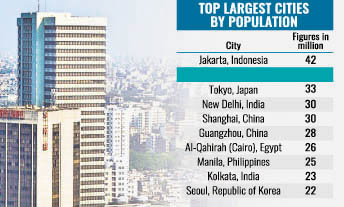
Dhaka currently ranks world's second-largest city with population concentration of 36.6 million in a UN report and stands to become the largest metropolis by 2050.
One of the world's most crowded capitals, Dhaka leaps to second from ninth position in the United Nation's World Urbanization Prospects 2025 report.
Released recently, the report reveals that in 2025, cities are abode of 45 per cent of the global population, while towns host 36 per cent and vast rural areas only 19 per cent-evidently for rapid urbanization. This report presents the results of the official United Nations estimates and projections of urbanization for 237 countries and areas of the world and for over 12,000 urban settlements with 50,000 inhabitants or more in 2025.
The data in this revision are consistent with the total populations of countries and areas estimated and projected according to the medium variant of the World Population Prospects 2024.
This revision updates and supersedes the previous estimates and projections of urbanization and city populations published by the world body of nations.
According to the 2025 report, Dhaka and Shanghai are expected to grow fastest among 2025's ten most populous cities, with projected growth rates close to 5.0 per cent per year between 2025 and 2050.
By mid-century, the Bangladesh capital city, Dhaka, is expected to overtake Jakarta as the world's largest city now, while Shanghai is expected to ascend in rank from fifth to third.
Nine of the ten most populous cities in 2025 are in Asia. Jakarta of Indonesia is world's most populous city with close to 42-million inhabitants, followed by Dhaka with nearly 37 million inhabitants and Tokyo of Japan with 33.4 million, the report shows.
Cairo (Egypt) is the only city among the top ten in 2025 that is not located in Asia. Two Latin American cities, Mexico City (Mexico) and São Paulo of Brazil, were among the ten largest in 2000, but by 2010, they had been displaced in rank by fast-growing Cairo and China's Shanghai.
Projections indicate that two-thirds of the growth of the world's population between now and 2050 will take place in cities, with most of the remainder concentrated in towns. The size of the global rural population is expected to peak sometime during the 2040s and then begin to decline.
Among the 33 megacities with 10 million inhabitants or more in 2025, 19 are in Asia. India alone has five megacities, and China has four. Five of the world's megacities in 2025 were in Latin America, four in Africa, three in Europe, and two in Northern America.
The number of megacities is expected to rise to 37 by 2050, by which time Addis Ababa of Ethiopia, Dar es Salaam (Tanzania), Hajipur (India), and Kuala Lumpur, Malaysia, will have surpassed the 10-million population threshold.
World's city population between now and 2050 will be concentrated in seven countries. Taken together, India, Nigeria, Pakistan, Democratic Republic of the Congo, Egypt, Bangladesh and Ethiopia are expected to add more than 500 million city-dwellers between 2025 and 2050, accounting for over half of the projected 986-million increase in the global number of city-dwellers over that period.
In 1950 when city living was relatively unusual, 20 per cent of the world's 2.5 billion people lived in cities, defined as population centres with at least 50,000 inhabitants and a density of at least 1,500 people per 2.0 km . smunima@yahoo.com