
Diesel shortage in Europe threatens to slow economic growth
Friday, 25 March 2022
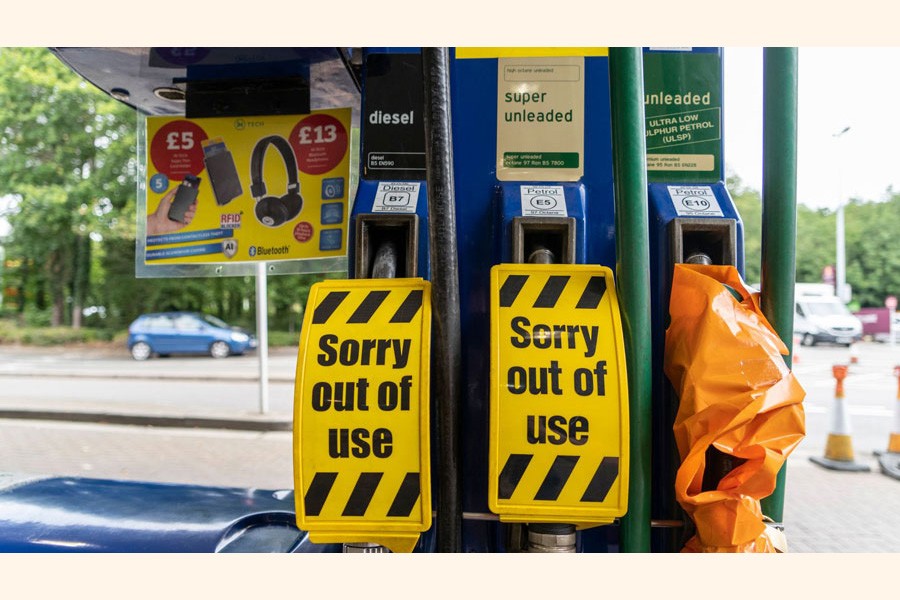
LONDON, Mar 24 (Reuters): European economies face the risk of a shortage of diesel, the preferred fuel for heavy industry, as sanctions on Russian energy threaten to disrupt imports while supply from elsewhere remains limited.
Russia is Europe's largest supplier of diesel and related fuels, sending over three quarters of a million barrels per day for use in European heavy machinery, transportation, farming, fishing and for power and heating.
The surge in diesel prices in Europe has already had an impact on industry by pushing up fuel and transportation costs, which are passed on to consumers through higher costs across the economy.
"Governments have a very clear understanding that there is a clear link between diesel and GDP, because almost everything that goes into and out of a factory goes using diesel," John Cooper director general of Fuels Europe, a division of the European Petroleum Refiners Association.
The United States has banned Russian oil imports in response to Russia's invasion of Ukraine, Britain said it will phase out the import of Russian oil and oil products by the end of 2022, and the European Union is assessing a ban.
Meanwhile, several oil companies have pulled back from buying from Russia because of a fear of public opposition, difficulties in securing financing, insurance and a reluctance of ship owners to load from Russian ports.
Around 760,000 barrels per day of Russian gasoil and diesel flows to Europe would be at risk, needing replacement, if European buyers shun these volumes, according to energy consultancy FGE.
It will be difficult for European refiners to increase output of middle distillates, which include diesel and heating oil, Cooper said, so Europe should find other sources of diesel, probably at higher prices.
Russia accounts for around half of Europe's diesel imports, Russell Hardy and Torbjorn Tornqvist, chief executives of Vitol and Gunvor respectively, told the FT Commodities Global Summit on Tuesday.
Saudi Arabia, the second biggest supplier, accounted for only 12 per cent of the imports in 2021, according to FGE.
France imported 25 million tonnes of diesel in 2020, a quarter of which was Russian, according to the French Association of Petroleum Industry (UFIP).
And France may struggle to find alternative supplies.
"We estimate that 10 to 15 per cent can be found elsewhere," Olivier Gantois, the head of UFIP, said this month.
In the United Kingdom, Russia supplied 18 per cent of the diesel in 2020, official figures show.
A spokesperson for UK Petroleum Industry Association (UKPIA) told Reuters fuel suppliers are working with the government to deliver the fuels the UK needs "while adjusting long-term supply routes to reduce reliance on Russian crude oil and oil products".
For Germany the situation seems to be more complicated as it has fewer options to reduce its deep reliance on Russian diesel, according to trading sources.
Germany relied on Russia for almost 30 per cent of its diesel and gasoil imports in 2020, data from the EU statistics agency show.
Despite the decision by several companies to self sanction, the flow of Russian refined products continues into Germany, according to trading and industrial sources, and it is expected to stay the same in the absence of alternative supplies.
"There just isn't enough diesel around not to take [Russian diesel] at the moment," a trading source said.
"We see some people prefer non-Russian oil, but if there is no alternative, then they will take it," the source added.
Global stocks of diesel and other middle distillates have fallen to the lowest seasonal level since 2008 due to refinery shutdowns during the start of the pandemic and a rise in demand since.
Unlike Europe, which is short of diesel, the Middle East usually has a surplus due to higher refinery runs, with yields largely in favour of diesel.