
Dr A P J Abdul Kalam: An immortal spirit for the youths and generations to come
Suban Kumar Chowdhury | Saturday, 8 August 2015
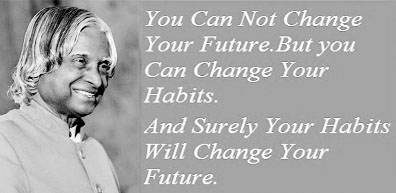
It is best to start with the most memorable quotation of a famous intellectual from India, Dr. A. P. J. Abdul Kalam - "When we tackle obstacles, we find hidden reserves of courage and resilience we did not know we had. And, it is only when we are faced with failure do we realise that these resources were always there within us. We only need to find them and move on with our lives." Really, it is a daunting task to write something about a brilliant scientist like Dr. Abdul Kalam.
However, the entire population of India are still in mourning for their "Missile Man" since he unexpectedly died of a cardiac arrest on July 27 - this will affect millions of Indian youths who optimistically looked on their former president as a pro-active educator and a political role-model. Dr. Kalam's parallel emergence into the uneven spheres of science and politics should be considered a miraculous blessing for mankind. Undoubtedly, his life will remain a wonderful inspiration for the generations to come.
Born into a Tamil Muslim family on October 15 of 1931, Avul Pakir Jainulabdeen Abdul Kalam had served the Indian nation throughout his lifetime. From dealing with the controversial issue of death penalty to the idea of "dreaming big", from inculcating a healthy curiosity towards science to the initiative for reaching out to millions of students, from religion to poetry - President Abdul Kalam was definitely one of India's greatest visionaries who had inspired many people, even outside India, to think positively and act progressively.
To an extent, his scholarly contribution is identical to Abraham Lincoln's From Log Cabin to the White House saga. What makes this scholarly work delightful is the tribute and salute offered to his intellectual contribution and scientific genius by the erratic and defective politicians of India. Despite the political corruption enveloping our lives, President Kalam epitomises the "spiritual technocrat" while his elevation to the Rashtrapati Bhavan is a testimony to the universal admiration we have for spotless integrity in modern times.
His entire lifetime is a glorious allegory of unwavering sincerity, faith and devotion to the great values of human civilisation. In the words of Dr. Kalam, "the young people is to have courage to think differently, courage to invent, to travel the unexplored path, courage to discover the impossible and to conquer the problems and succeed. These are the great quality that they must work together" - the son of a simple, devout and disciplined boat owner had learnt these great lessons primarily from his father whose simplicity and wisdom he admired the most. "I have throughout my life tried to emulate my father in my world of science and technology," says Dr. Abdul Kalam. "I have endeavoured to understand the fundamental truths revealed to me by my father, and feel convinced that there exists a divine power that can lift one from confusion, misery, melancholy and failure, and guide one to one's true place."
Befitting his contribution and stature, Dr. Abdul Kalam had been honoured by his fellow countrymen as they conferred on him India's highest civilian award Bharat Ratna, and later elected him to be the 11th President of the republic. Nevertheless, he is still remembered as the one who turned his audience into a class of inquisitive students, wherever he went. On several occasions, this former President of India addressed his audience and invited people to ask him questions. He would receive great responses and then answered the questions in the fashion of a professor explaining some equations to his students - this image will become a distant but sweet memory for Indians.
Dr. Kalam was a gifted visionary who had prepared a roadmap for India regarding the 21st century. His 'Vision-2020' projects India as a superpower, an economic giant and a great nation in the modern times. For the Indian citizens, the reason to smile with enormous optimism is the outcome of his relentless faith in the future of India. This makes him India's most respected, popular and trusted man. Likewise, we are fascinated by his life - diversely coloured by spirituality, atomic energy, missile technology, the vina (a musical instrument), science, poetry, queries, and by faith. It is interesting to learn that the man whose entire life was devoted to science and technology had found the philosophy of his own life inside the chapters of Holy Quran, and the literary works of Khalil Gibran.
The writer is a lecturer at the Department of International Relations,
University of Rajshahi.
chowdhury.suban@gmail.com