
DUCSU election: a protest vote or a paradigm shift?
Syed Muhammed Showaib | Saturday, 13 September 2025
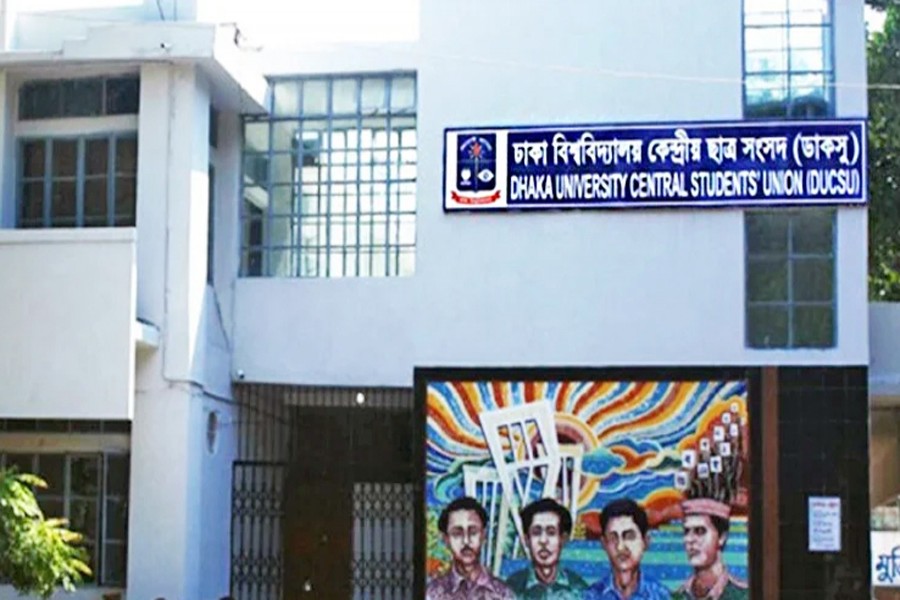
It was nothing short of a tectonic shift in student politics. A student wing of a political party with a controversial past has achieved a landslide victory in a university where it was barred from political activity barely a year ago. The scale of the win stunned both the general public and political analysts alike. Few could have imagined that the Chhatra Shibir, the student wing of Jamaat-e-Islami, would secure 23 out of 28 central committee posts including the key positions of Vice President, General Secretary and Assistant General Secretary in the DUCSU elections.
This landslide victory cannot be simply attributed to the rise of right-wing politics in the country, though it may provide some context. The fact that it was a near clean sweep at the country's premier seat of learning, Dhaka University, and won by such a resounding margin, makes it a uniquely significant event. With observers certifying the election as fair, vote-rigging is out of the question. Voter turnout at the residential halls approached 80 per cent, which is exceptional by any standard. The atmosphere was festive, as seen in viral video clips showing female students in the TV rooms of residential halls erupting in almost deafening celebration when the results were announced. To suggest that this outcome was not a reflection of the sovereign will of the voters would therefore be misplaced.
The importance of this event is magnified by Dhaka University's historic role as a centre for political activism including during the country's independence movement and the ousting of autocratic rulers. Past DUCSU elections have frequently served as a barometer for national political sentiment. Notably, a strong precedent exists where the party, the student wing of which wins the DUCSU election, goes on to win the subsequent national election. For instance, the pro-Awami League victory in 1971 foreshadowed both independence and the party's ascent to power. Similarly, a pro-BNP win in the 1990s preceded the party's national electoral success. Given this history, the DUCSU and other university elections will be a critical gauge of the preferences of first-time, young and student voters across Bangladesh.
Of the university's 37,000 students, it is unthinkable that a full 40 per cent are loyal to the Islamist student body. Yet, Chhatra Shibir candidates secured nearly this share of the vote. Furthermore, since voter turnout was not 100 per cent, the proportion of actual voters who supported Shibir is much higher. This suggests that a significant number of unaffiliated students viewed the candidates of Shibir as the most suitable and voted for them.
The election's campaigning period was free and open, devoid of the typical displays of power, intimidation or attempts to silence opponents. This stood in stark contrast to the last DUCSU election in 2019, which was marred by rampant irregularities and violence. While the victories of candidates like Nurul Haque Nur and Akhtar Hossain remained milestones for student activism, widespread dissatisfaction had persisted over other contested results that installed loyalists of the then-government. This time, with an interim government in power, there was a fairly conducted election.
Why, then, did the Chhatra Dal, the student wing of BNP, failed to win? Its failure may be traced to a damaging perception that emerged after the ouster of the Awami League in a popular mass uprising. BNP supporters were widely perceived to have developed an air of arrogance, operating under the assumption that it was the only viable alternative. On the DU campus, Chhatra Dal supporters adopted the same mindset. However, the very students who had sacrificed lives to combat an oppressive government were alienated by this display of arrogance and entitlement. They saw in Chhatra Dal's dominance a return to the repressive student politics they had revolted against.
This perception was compounded by events across the country, where many BNP affiliates were accused of extortion, land grabbing and looting, the same crimes that the uprising had sought to end. Furthermore, the Chhatra Dal failed to offer a compelling alternative vision, instead mimicking the campaign rhetoric and slogans of the very party they had replaced. Obviously, this wasn't going to sit well with a generation of revolutionary students. This combination of haughtiness, criminal associations and a lack of genuine change led students to reject the Chhatra Dal decisively in the DUCSU election.
An unprecedented development in this election was the strong showing of a left-leaning candidate, Meghmallar Bosu, who garnered nearly five thousand votes without the backing of any mainstream political party. His success demonstrates that candidates who understand and respond to the needs of students can earn substantial support, even in a political environment where leftist parties historically receive little recognition.
On the other hand, the Chhatra Shibir, having never been in power, benefited from the fact that their leaders had not oppressed general students, which worked to their advantage. During the DUCSU election campaign, they sought to present themselves within a liberal democratic framework and successfully projected an image of pluralism and change. It is crucial to recognise that a significant portion of voters in this election are students who experienced the 2018 "Safe Roads" movement, the Covid-19 pandemic and the 2024 uprising. These events have forged a politically aware electorate with distinct expectations. Resilient and politically mature, this generation evaluates candidates with a sharp and discerning eye. Any analysis of the DUCSU result must therefore take the students' new political consciousness seriously.
However, the leaders of the Chhatra Shibir would be wise to remember that their electorate is demanding and evaluative and will not hesitate for a second to vote them out if they fail to meet expectations. They need only to look to Egypt's Muslim Brotherhood, with whom Shibir shares an ideological affinity, for a warning. The party lasted less than a year despite winning election after the 2011 revolution. Attempts at authoritarianism, economic mismanagement and centralisation of power led to their swift downfall. There is a lesson here for pro-Islamist Chhatra Shibir too, if they are willing to listen.
showaib434@gmail.com