
Economic power of faith in Bangladesh
Mohammad Kabir Hassan and Zobayer Ahmed | Thursday, 19 March 2026
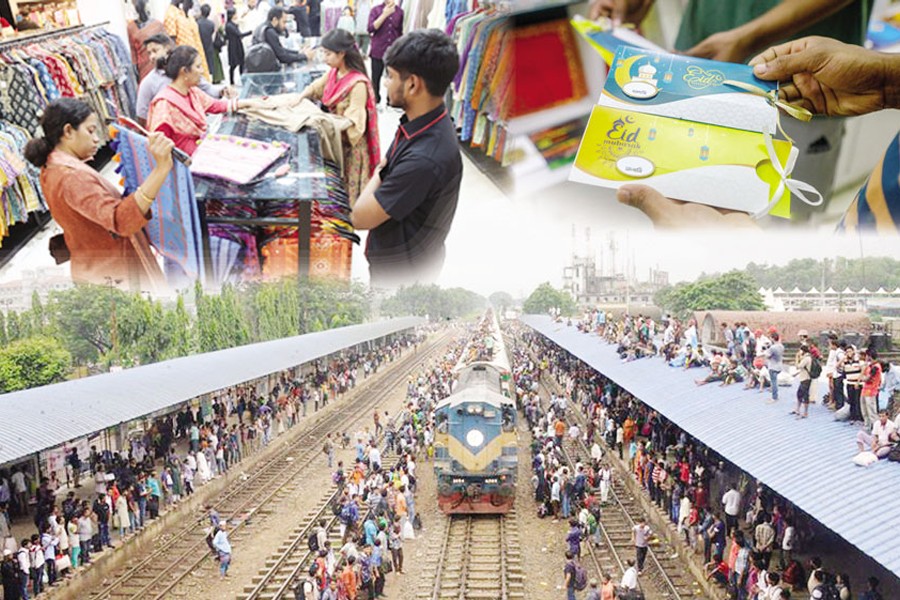
In Bangladesh, many people think of Ramadan as a time for spiritual reflection, self-discipline, and community support. Ramadan is important for religious reasons, but it also creates one of the strongest seasonal economic cycles in the country. Bangladesh’s economy changes significantly over about 30 days due to a rise in consumption, trade, travel, and social redistribution.
Almost 90 per cent of the country’s 170 million people observe Ramadan, which makes this economic change significant. There aren’t many religious events that have such a wide and strong effect on the whole country’s economy. The Ramadan–Eid cycle has become increasingly like a ‘trillion-taka seasonal economy,’ affecting everything from food imports and retail sales to remittances and rural livelihoods.
It’s important to understand this phenomenon for both economic analysis and policy design. When managed well, the economy during Ramadan can help small businesses, strengthen domestic markets, and lower poverty levels.
From Iftar to the Retail Boom: The most obvious effect of Ramadan on the economy is how people spend their money. During this time, families spend much more on food for iftar and Eid celebrations, as well as on clothes for Eid al-Fitr.
There is a significant increase in demand for basic goods such as chickpeas, sugar, edible oil, dates, lentils, and spices. During Ramadan, Bangladesh needs about 300,000 tons of soybean oil and sugar each month, which shows how much people eat. To keep supplies stable during this surge, government agencies, importers, and traders often need to work closely together.
To deal with seasonal demand pressures, policymakers often use temporary trade facilitation measures. These include relaxing import restrictions, lowering tariffs, and increasing supply through state agencies like the Trading Corporation of Bangladesh (TCB). These actions are meant to keep prices stable and prevent inflation from rising too high during the month of fasting.
The Eid shopping season brings in a lot of business, especially in clothing and shoes, as well as food. Traders say that during Ramadan, total Eid-related retail sales in Bangladesh are about Tk 2.5 lakh crore (about US$ 23–25 billion). In many cases, families spend almost 80 per cent of their seasonal budget on clothes and shoes.
Ramadan is also an important time for Bangladesh’s domestic clothing industry, which is already a major exporter. The Bangladesh Shop Owners Association says that some stores make 60–70 per cent of their annual sales in the four weeks leading up to Eid.
It’s important to note that this boom in consumption doesn’t only help big stores in cities. It affects the economy across the country.
Demand for sarees and traditional clothes is rising in the traditional weaving areas of Tangail, Sirajganj, Pabna, and Narsingdi. When city dwellers buy Eid clothes, they help rural artisans, small textile producers, and handloom workers. This shows how Ramadan consumption connects urban demand with rural livelihoods.
The informal sector is also doing well. To get Ramadan shoppers, thousands of street vendors, temporary market stalls, and small businesses pop up in cities. For many low-income families, this short season is a very important time to earn extra money.
The Logistics of the Eid Exodus: During Eid-ul-Fitr, a lot of people move to different places, which is another important part of the Ramadan economy.
Millions of people who live in cities go back to their hometowns every year to celebrate Eid with their families. The Bangladesh Jatri Kalyan Samity says that about 10 to 15 million people leave Dhaka during Eid. Millions more travel from other big cities like Chattogram, Khulna, and Rajshahi.
This big movement gives the transportation and logistics industry a huge boost. Bus companies, railroads, launch services, airlines, and ride-sharing services all have the most customers at this time.
The economic effects go beyond just the money made from transportation. Eid migration moves money from cities to rural areas. People who move to cities and people who live in cities bring gifts, cash, and goods back to their villages, which helps rural economies.
The transportation surge also stimulates related sectors such as: (a) hospitality and roadside restaurants; (b) retail markets in district towns; (c) fuel and energy demand; and (d) mobile financial services.
Ramadan also creates seasonal job openings, especially for temporary workers in retail stores, restaurants, delivery networks, and event planning companies. For thousands of young workers and casual laborers, Ramadan is a short but important time to find work that helps families make ends meet.
Remittances and the Flow of Funds:
The rise in remittances from Bangladeshi migrant workers living abroad is another big factor in the Ramadan economy.
Bangladesh is one of the top countries in the world for receiving remittances. More than 13 million people who live outside of Bangladesh send money home. During Ramadan and before Eid al-Fitr, remittances usually increase significantly because migrants help their families pay for the holidays.
Bangladesh received an impressive $3.29 billion in remittances in March 2025. Early data from March 2026 shows that the amount sent home during the first ten days of the month was 51.7 per cent higher than the same time last year.
This surge provides multiple macroeconomic benefits: (a) strengthening foreign exchange reserves; (b) boosting rural consumption; and (c) supporting financial sector liquidity.
For families in rural areas who rely heavily on remittances, Ramadan is often a time when they can buy more and eat more.In this way, the Ramadan economy isn’t just about the local economy; it’s also connected to international financial flows and labor migration.
Zakat and the Economics of Redistribution: The informal redistribution of wealth through Islamic philanthropy is probably the most distinctive feature of Ramadan’s economy.Muslims are encouraged to give Zakat and voluntary gifts such as Sadaqah and Sadqat al-Fitr (Fitra) during Ramadan. These systems move money from rich people to poor people.
Studies show that the Zakat pool in Bangladesh could be about 4 per cent of gross domestic product (GDP) each year. If done right, this could mean billions of dollars in social transfers every year.
A lot of this redistribution happens informally right now through family networks, mosques, charities, and other charitable groups. The Center for Zakat Management, the Zakat Welfare Foundation, and the As-Sunnah Foundation are examples of organizations that have started to make Zakat collection and distribution more formal and professional. Some of their programs are: help for small businesses; scholarships for schools; help with healthcare; and programs to help the poor get housing.
These activities get much more intense during Ramadan, which temporarily helps low-income families buy more things.
From an economic perspective, Zakat is a grassroots social safety net that complements government welfare programs.If Zakat is used alongside formal poverty-alleviation programs, it could be a powerful way to reduce inequality and encourage development that includes everyone in Bangladesh.
Economic Challenges Behind the Surge: The Ramadan-Eid economy has its pros and cons, even though it helps the economy.
One big worry is that prices are always changing. When demand for food products rises quickly, it can lead to market manipulation, hoarding, and price spikes that hurt low-income families more than others.
Another problem is that we depend on imports. Bangladesh buys a lot of sugar, edible oil, and other goods from other countries. When demand rises at certain times of the year, it can put pressure on foreign exchange reserves.
Also, some industries slow down after Ramadan. Retail clothing markets and other businesses that do well during Eid often see a drop in demand afterward, leading to short-term economic fluctuations.
To deal with these problems, policies need to be coordinated ahead of time, which includes: (a) strengthening market monitoring systems; (b) expanding subsidised food distribution programme; (c) supporting domestic agricultural production; and (d) encouraging digital payment systems for Zakat and charity.
Faith as an Economic Engine: Ramadan and Eid in Bangladesh illustrates how religious customs can affect a country’s economy. What starts as a spiritual practice turns into a powerful force for consumption, redistribution, and social solidarity.
The Ramadan-Eid cycle shows how closely faith, markets, and social welfare are linked. It moves billions of takas in consumption, strengthens economic ties between cities and rural areas, and directs charitable funds toward reducing poverty.
Policymakers, economists, and development practitioners must understand that religious practices should not be seen only through cultural or spiritual lenses. They are also important economic institutions that affect the flow of resources, social behaviour, and the country’s growth.
Bangladesh could turn this yearly surge into a long-term tool for inclusive economic growth and social resilience by making better use of the positive aspects of the Ramadan economy, especially by improving Zakat management and market governance.
In that way, the Ramadan-Eid economy is much more than just a temporary increase in spending. It is a strong reminder that faith can be a key part of national development when combined with sound policy and social responsibility.
Dr Mohammad Kabir Hassan is a professor of finance in the Department of Economics and Finance at the University of New Orleans. mhassan@uno.edu. Dr Zobayer Ahmed is an associate professor at the Bangladesh Institute of Governance and Management (BIGM).