
Egypt president-elect Sisi faces tough task to restore stability
Thursday, 5 June 2014
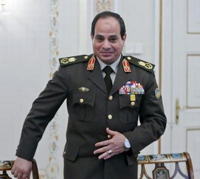
CAIRO, June 4 (AFP): Abdel Fattah al-Sisi, who romped home in Egypt's presidential election after crushing Islamists, faces a tough task to restore stability and revive a battered economy amid fears of a return to autocracy.
On Tuesday, the electoral commission declared Sisi won 96.91 percent of the vote on turnout of 47.5 percent, nearly a year after he toppled the country's first freely elected leader, Islamist Mohamed Morsi.
The crushing victory over leftist leader Hamdeen Sabbahi had never been in doubt, with many lauding the retired field marshal as a hero for ending Morsi's year of divisive rule 11 months ago.
But global rights watchdogs, international leaders and experts have warned that real challenges now face Sisi as he inherits a deeply polarised country.
The United States said it looks forward to working with Sisi but expressed concerns about the "restrictive political environment" in which last week's vote took place.
The May 26-28 election was boycotted by Morsi's Muslim Brotherhood and youth groups of the 2011 popular uprising, after both were targeted in a withering crackdown on dissent.
"We urge the president-elect and the government to adopt the reforms that are needed to govern with accountability and transparency, ensure justice for every individual, and demonstrate a commitment to the protection of the universal rights of all Egyptians," said the White House.
It was only in April that Washington partially lifted its annual aid to Egypt worth around $1.5 billion, which it had frozen after the military deposed Morsi.
Ahead of the presidential election, rights group Amnesty International had said the vote did not mean the slate would be wiped "clean... of gross human rights violations".
Since Morsi's ouster in July 2013, a government crackdown targeting the Brotherhood has killed more than 1,400 people and jailed over 15,000.
The authorities have also sentenced hundreds of Morsi supporters to death after speedy trials which United Nations Secretary General Ban Ki-moon expressed "alarm" over.
Several of the revolutionary youth leaders who spearheaded the 2011 revolt against longtime autocrat Hosni Mubarak have also been jailed for breaking what the authorities say was a law banning all but police-sanctioned protests.
Analysts say it will be tough for the Egyptian authorities to restore stability amid the prevailing polarisation across the country.
"The Brotherhood and the revolutionaries consider him (Sisi) as an enemy," said Ahmed Abd Rabou, political science professor at Cairo University, indicating that there was little hope of dialogue with youth movements.