
Empowering the farmers—reading the rural lips
Shykh Seraj | Thursday, 15 May 2014
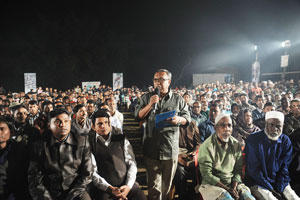
Farmers' Voices in Budget (FVB) is the leading role player to empower farmers across the country and influence the policy makers to make better policy interventions in the farming sector.
Hridoye Mati O Manush (Soil & Men in Heart), the popular agro-based news-feature aired on Channel I, is bringing the media closer to development. It has emerged as the most intensive agricultural development programme. It helps raise mass awareness about the need for reforms and institutional improvements in the agricultural sector.
National Budget 2014-15 is scheduled to be announced on June 05, 2014. Since 2005, Hridoye Mati O Manush has been organising Krishi Budget, Krishoker Budget (Farmers' Voices in Budget), a pre-budget dialogue sessions between farmers and policymakers, at the remote villages of country. This special programme has been able to mainstream the farmers in the overall development process through collating their experiences and views. With media support, farmers' views are duly reflected in the country's annual budget presentations and overall national development policies. The whole process is based on regular and periodic consultations, publications on priorities of the farmers and agriculture sector and presenting those before key policymakers in the government, the academic community, the private and corporate sector as well as all segments of society.
Farmers' Voices in Budget (FVB) has been held for the tenth consecutive year. More than 200 thousand (2 lakh 22 thousand) farmers and key policymakers have so far been involved in 40 different places in the country. This year, the sessions were held during February-March in five locations, Bhola, Sylhet, Brahmanbaria, Ishwardi, and Jamalpur where Commerce Minister Tofail Ahmed, Finance Minister Abul Maal Abdul Muhith, Food Minister Advocate Qamrul Islam, Land Minister Shamsur Rahaman Sherif, State Minister for Textile & Jute Mirza Azam and former Food Minister Abdur Razzak were respectively present. About 20 thousand farmers attended the sessions.
FVB has generated tremendous interest among farmers and citizens interested in agriculture. This has given the media the opportunity to serve the interests of the most important sector of development in the country. This has resulted in the empowerment of the farmers by offering them an opportunity to analyse and assess their own priorities and requirements for overall agricultural efficiency. The pre-budget discussions has mainstreamed farmers in the core development process and facilitated their direct interaction with policymakers on interventions and programmes to support agricultural development.
Like previous years, Hridoye Mati O Manush has already prepared a 58-point recommendation which will be submitted to the Finance Minister. The recommendations focus on agriculture, poultry, fisheries, livestock and dairy sectors.
THE FINDINGS OF THE FIVE SESSIONS OF FVB THIS YEAR: Land-owners and their family members are stepping away from farming. The farming pattern is changing to 'sharecropping'. The owners are just taking the profit or the agricultural goods that the sharecroppers are producing. Farming is getting more and more commercial as the real owners of land are now city-centric. Besides, many of them live abroad and the lands they have back home, remain uncultivated. This is a great concern for a country like Bangladesh where we have too many mouths to feed.
Bangladesh has successfully achieved food security but to accomplish this, soil has been affected by harmful chemicals. We haven't seen any government initiative to revive the soil quality with organic farming. For example, 'vermicomposting' can be a very effective technology to revive the soil quality. The government is too sluggish in sending the right technologies to the field for farmers.
Hridoye Mati O Manush has started its 'Grow Green' (A soil quality revival and organic farming initiative) project. Many farmers (stakeholders) are joining the project to bring back the quality of soil through 'vermicomposting' technology.
FAIR PRICE: It is very frustrating that the farmers are not getting fair price for their produce and are throwing away their crops on roads as they don't want to take the humiliating price for their products. When they have already produced in plenty they find that the same crop is being imported from neighbouring countries. For example, the great crisis on potato during February (2014) is still unresolved. There is no permanent solution that we've seen from the government and the farmers are still waiting to hear something in favour of them.
Moreover, farmers have complained about river navigability, building infrastructures over arable lands, desertification of rivers, waterlogging, non implementation of zoning agriculture, uncertain state of the poultry sector and also lack of facilities for the livestock sector.
Meanwhile, the government has taken some of our recommendations very seriously. These are: more emphasis on agricultural research, introducing agricultural input assistance card, Observance of national agriculture day, piloting a crop insurance project, availability of easy loan, ensuring loans for the sharecroppers, regional farming methods etc. Loan for beekeeping is now under the credit structure of the Bangladesh Bank.
Bangladesh is most vulnerable to natural disasters and the population is ever increasing. The policymakers and the people have to grant better facilities to the farmers in the budget so that they can produce more.
Farmers' Voices in Budget is like a 'need assessment' venture. The government has to prove that it is actually supporting the real farmers, not the people who are taking the produce of the farmers without paying for their sweat and toil. The national budget should assist the peasants who are truly our national heroes.
The writer, an Ashoka Fellow, Ekushey Padak recipient and FAO A.H. Boerma awardee, is Director & Head of News, Channel i. ss@channeli.com.bd