
Energy or environment: Tough choice
Shihab Sarkar | Friday, 24 October 2014
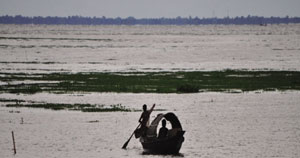
Many were bracing for bad news about yet another blow dealt to the efforts to protect the country's ecological balance or biodiversity. They did not have to wait for long.
Brisk activities to turn the offshore region close to the Sundarbans mangrove forest into an energy hub were going on for some time. Environmentalists could hardly overcome their jitters over the venture, when the news about the country's vast water body Hakaluki Haor gave them a fresh jolt.
The report carried by a local news agency says the Geological Survey of Bangladesh (GSB) authorities have recently discovered that the natural wetland (locally called haor) in Moulvibazar and Sylhet districts in Sylhet division is the site of a large storehouse of pet coal. GSB has located the massive mine beneath the haor's underwater land surface, at a depth of 0.5 metres to 5 metres. It covers an area of 90 square kilometres in the country's eastern region bordering the Indian state of Assam.
Although the energy-hungry nation's development enthusiasts will be delighted by the news of this 'great' discovery, it is apprehended to spawn bouts of dread for the country's environmental activists. The Hakaluki shallow water body in the Sylhet region is one of the country's large wetlands. Apart from being a tourist attraction, it has long been home to 558 species of animals, birds and amphibians that include many endangered ones. Flocks of migratory birds from the Himalayan region and far-away Siberia descend on the haor during winter. It has been declared a Protected Ramsar Site of International Importance and also an Ecologically Critical Area. The wetland's importance to the ecological balance of a vast region can by no means be undermined.
Since the newly explored pet coal reportedly has the potential to be used for producing electricity that can enable a 50mw power plant to run for at least 30-40 years, there are reasons for green campaigners to feel distressed. In spite of the initial quiet for now, they have apparently started feeling wary of the future turn of events.
Terming Hakaluki's pet coal reserve the largest in the country, GSB has disclosed that it holds around 112 million tonnes of coal. The quantity may eventually rise to 282 million tonnes. It is beyond doubt that the massive size and volume of the reserve could be a great boon to the country's energy prospects. But at stake here is a major ecological treasure.
To speak without mincing words, the discovery of coal beneath its bottom layer makes Hakaluki vulnerable to official encroachment. As has been observed by some experts, extraction of coal from the underwater layer of Hakaluki will veritably spell doom for its biodiversity. They feel a thorough environmental study on the area is imperative before the authorities concerned go for implementing any project there. The water body has already lost much of its ecological lustre owing to activities detrimental to the smooth survival of the site.
Hakaluki Haor aside, a lot of other major wetlands in the country have also started witnessing the environmental impact of human excesses. Those include Tanguar Haor, Chalan Beel, Baikka Beel etc.
Like in many developing countries, including the energy-starved ones, Bangladesh has destroyed a lot of its environmentally critical sites mindlessly. Vested interest groups with the blessings of the powers that be have long been engaged in these acts. On occasions, the recklessness demonstrated by the greedy and unscrupulous people in ruining the bounties of nature appears to be orgiastic. Ranging from tree-felling, hill-levelling to encroachment of rivers, these practices have slowly begun showing signs of an approaching environmental catastrophe. We like to be conveniently oblivious of the hazards being brewed by our brutal tampering with nature. Despite repeated warnings from ecologists about the consequences of the man-made havocs wrought on the environment, the floodplains near Dhaka and other big cities are land-filled non-stop to turn those into commercial real estate business hubs. Brickfields have been set up by clearing croplands and forests. Short-term material gains overshadow concerns for the future.
Coming back to Hakaluki -- it is, however, too early to feel edgy about the news of the coalmine. Following the initiatives to set up power plants near the Sundarbans amid alarms raised by green activists, the government would most likely proceed cautiously with any venture that will cause damage to this magnificent water body.
There is a dichotomy over the preferences that we cannot put aside. It's a hard choice. Take the case of South American country Brazil. It possesses the world's largest rainforest in its vast Amazon swathe. The Brazilian environment police have long been trying relentlessly to conserve the pristine character of the Amazon rainforest. Time and again, they have proved themselves to be uncompromising crusaders as they carried out full-scale raids on loggers, poachers and encroachers -- and illegal miners. They lodge case against the law-breakers and impose hefty fines on the culprits. Yet to their utter chagrin, they have to throw in the towel as they discover deep in the dense forest the brisk preparations for setting up a much-needed power plant in a segment of the mighty, yet serpentine, river Amazon. The long-term requirement of environmental protection is kept aside for the time being.
Remotely, this typical dilemma plagues the authorities in Bangladesh, too. Like Brazil, Bangladesh at times finds itself in a quandary while giving nod to an energy project in an environmentally susceptible area, because it has also to be mindful of the need for ecological balance.
But considering the country's smaller size, compared to Brazil, and a vast population, we ought to be more careful and pragmatic in order to pick the right option.
shihabskr@ymail.com