
EPB seeks govt, BB help to unlock Tk 1.8b in FDRs
Deposits stuck in 10 banks strain projects, cash flow amid sector reforms
FE REPORT | Thursday, 22 January 2026
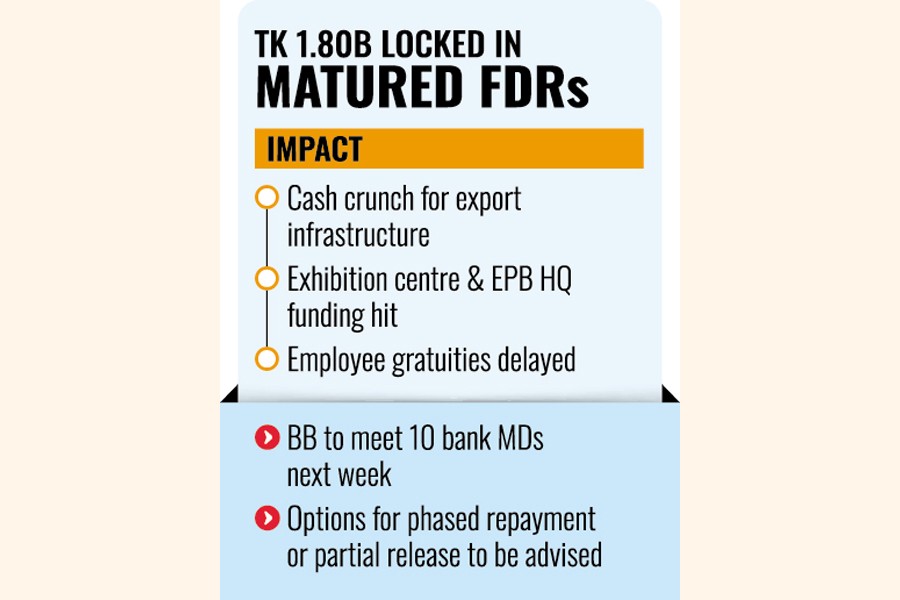
The Export Promotion Bureau (EPB) has turned to the government and the central bank for urgent help after nearly Tk 1.8 billion of its funds got trapped in fixed deposit receipts (FDRs) with 10 banks, raising concerns over stalled projects and mounting cash-flow stress.
Despite the deposits having matured, prolonged delays in releasing the money have left the export watchdog struggling to meet both development and operational commitments.
The episode highlights the unintended fallout of ongoing banking-sector reforms, as liquidity-starved lenders prioritise balance-sheet repair while institutional depositors face uncertainty over access to their own funds.
Several banks have allegedly declined to release the funds, citing acute liquidity stress and ongoing internal restructuring.
EPB officials said the impasse has constrained the bureau's ability to finance key infrastructure projects, including the Bangabandhu Bangladesh-China Friendship Exhibition Centre and the construction of its own headquarters.
In a letter sent earlier this week, the EPB urged the Financial Institutions Division of the Ministry of Finance and the central bank to facilitate either immediate or phased withdrawal of the principal amounts.
A mix of private commercial banks and a few Shariah-based institutions holding the deposits have recently undergone mergers or state-led resolution processes.
The delays are also affecting routine expenditures, including gratuity payments to retired employees, according to EPB officials.
The move comes amid sweeping reforms in the banking sector.
Bangladesh Bank has recently rolled out a resolution framework for five troubled lenders, which includes freezing certain institutional deposits or converting them into equity to shore up balance sheets.
Earlier, the EPB had resisted placing surplus funds in the government exchequer, maintaining that the money was earmarked for self-financed development schemes.
The bank regulator is expected to convene a meeting with managing directors of the 10 banks next week to chart a possible repayment schedule.
Experts say that while retail depositors are being prioritised under the central bank's new directives, state entities such as the EPB may be asked to accept staggered repayments to avoid adding pressure on already fragile bank balance sheets.
rezamumu@gmail.com