
Eurogroup head proposes new growth deal for Europe
Jan Strupczewski of Reuters in Washington | Tuesday, 14 October 2014
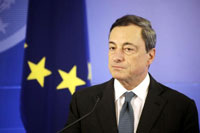
The chairman of euro zone finance ministers proposed on Friday a new growth deal for Europe which would reward governments reforming their economies with cheap European funds for investment and leeway on budget deficit targets.
Europe is on the brink of recession and is desperate to boost economic growth to reduce almost record-high unemployment and huge public debts.
The European Central Bank has already cut its interest rates to almost zero and will soon start asset purchases to inject cash into the moribund economy and reduce the risk of deflation.
"We should try to formulate a new Growth Deal for Europe," Jeroen Dijsselbloem told Reuters in an interview.
The plan would link the ECB's monetary policy, the evaluation of budget policy of euro zone governments, progress on structural reforms and investment plans.
"We look at budgets, reforms, what the ECB is doing, we are thinking how to strengthen investments. Now these policies are separate; I would like to link them," Dijsselbloem said. "It would be worthwhile to bring those four strands together and have a political agreement on how they interconnect."
Dijsselbloem, who is the Dutch finance minister, chairs monthly meetings of the so-called Eurogroup of euro zone finance ministers, which sets economic policy for the 18 countries that share the single euro currency.
"It is going to take a political breakthrough to look at these strands together," he said. "Some say let's do more investment, others let's do more budget discipline and structural reforms are left in the middle. If we connect these three, it could be a strong mechanism."
He said governments that embark on reforms that bring back trust in the economy, make it more competitive, attract investors, and raise the level of research and development and the quality of the workforce should be rewarded with more wiggle room to meet budget deficit targets.
They should also be given access to cheaper funds for investment, for example from the European Investment Bank, for concrete projects that would help economic recovery.
Because of weak growth in France and a recession in Italy, the euro zone's second and third-largest economies have been pushing hard for more leeway on the budget targets set by EU finance ministers, arguing that cutting government spending would hurt growth even further.
But Dijsselbloem defended the rules.
"They become an important political reflection of trust, not just the trust of the outside world in the euro zone, but the trust between countries," Dijsselbloem said. "Many countries have invested heavily in this monetary union. My role is to make sure we do not damage that trust."
Speaking later at an event on the sidelines of the International Monetary Fund and World Bank's fall meetings, he said explicitly that France should not be given more time to reach the target.
France was to reduce its budget shortfall below the EU ceiling of 3 percent of GDP by the end of 2013, but in June 2013 EU ministers granted it an extra two years.
"How was that time used? It was not used. So we should not do this again," Dijsselbloem told the Atlantic Council.
In the interview, he said more government spending now would not fix the problems France and Italy were facing.
"If governments spend more, most of the time it has a positive short-term effect on growth, no doubt. The question is does it last?," he said. "If you don't deal with some of the structural issues in your economy, it will not have a lasting effect."
He praised Italy, which passed a major labour reform law this week. "In France the government will have to do the same," he said. "They have a lot of plans outlined, still not enough, but a lot outlined, and they should get it done."