
Exodus of Ukrainian workers hits Europe's emerging economies
Tuesday, 26 July 2022
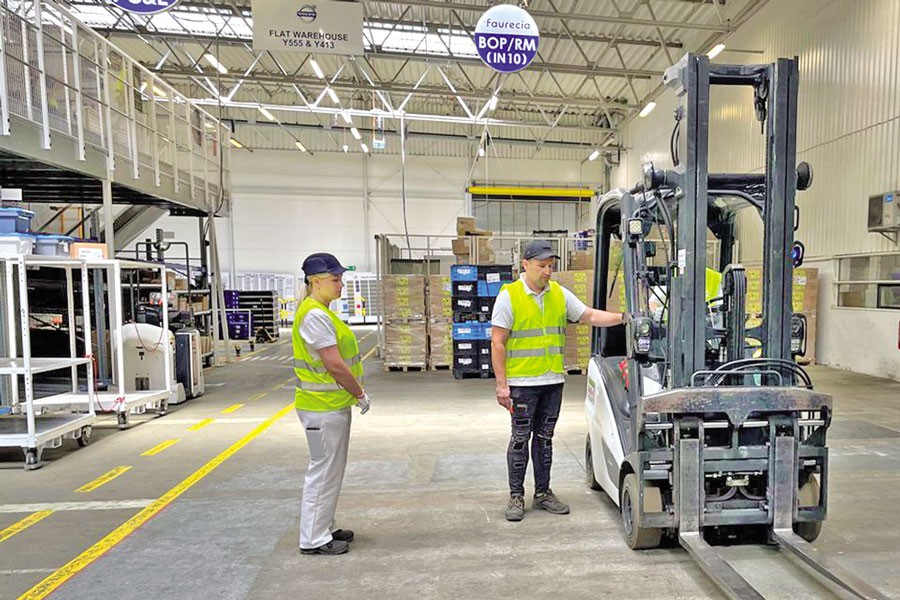
KYIV, July 25 (Reuters): Construction sites, factory assembly lines and warehouses across central Europe are scrambling to fill vacancies after tens of thousands of Ukrainian men left their blue-collar jobs to return home after Russia invaded their country.
Ukrainian workers had flocked to central Europe in the past decade - drawn by higher wages and aided by an easing of visa requirements - filling jobs that weren't highly paid enough for local workers in construction, the automotive sector, and heavy industry.
Many of these workers have returned home to help the war effort since Russia invaded on February 24, abruptly worsening labour shortages in some of Europe's most industrialised economies.
Reuters spoke to 14 company executives, recruiters, industry bodies and economists in Poland and the Czech Republic who said the departure of Ukrainian workers was leading to rising costs and delays in manufacturing orders and construction work.
Before the Russian invasion, Ukrainians were the largest group of foreign workers in central Europe. Poland and the Czech Republic hosted Ukrainian workforces of around 600,000 and more than 200,000 respectively, according to industry trade groups.
The Employers of Poland trade group, which represents 19,000 companies, estimates that around 150,000 Ukrainian workers, mainly men, have left Poland since the start of the war.
Wieslaw Nowak, chief executive of Polish tram and railway line builder ZUE Group, said one of its sub-contractors recently failed to complete work related to laying tracks because nearly all of its 30 Ukrainian workers had left.
"Many companies are looking for employees on a massive scale at various construction sites due to large outflows," he told Reuters.
"It certainly affects the cost and pace of work because if someone loses several dozen employees at the same time rebuilding a team takes far more than a matter of a few days."
While the European Central Bank said in June an influx of Ukrainian refugees was expected to ease a euro zone labour shortage, the opposite seems to be happening in Europe's industrialised economies outside the currency bloc.
Hundreds of thousands of Ukrainian refugees, mainly women and children, who arrived in the region are not an easy fit for many of the vacant positions. Often the jobs are in physically demanding sectors such as construction, manufacturing or foundries where legal limits apply on how much female workers are allowed to lift.
From training female refugees to operate forklift trucks to recruiting new workers in Asia, companies are scrambling to find innovative ways to plug the gaps in their workforces, the company executives told Reuters.
But for many firms struggling to recover from the economic impact of the Covid pandemic, and now facing sharp rises in energy costs and inflation following the war, the sudden scarcity of labour poses a severe challenge.