
Experts fear Bangladesh to be a plastic hub
SM NAJMUS SAKIB | Friday, 8 July 2022
 Experts fear that increased plastic sachets or mini packs of wastes apart from the unabated use of polythene and single-use plastic will turn Bangladesh into a plastic hub very soon.
Worries arise as India bans production and sale of single-use plastic products and Bangladesh reduces tax on polythene instead of executing a legal ban on plastic which can woo cross-border illicit trade.
A recent study earlier this week showed that Bangladesh produces 192,104 tonnes of sachet mini-pack waste per year which indicates 129-million sachets are used by Bangladeshis on a daily basis.
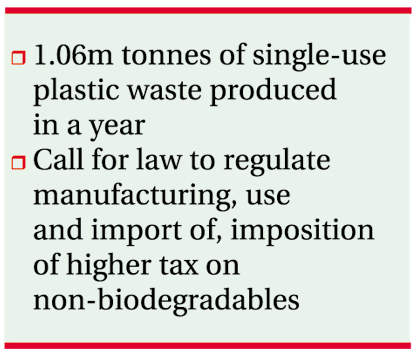
A 1.06-million tonnes of single-use plastic waste have been produced in Bangladesh during the 2021-2022 period (June 21-May 22), according to the Environment and Social Development Organisation (ESDO) study.
ESDO secretary general Dr Shahriar Hossain, also the team leader of the study, in an interview with the FE highlighted these worrying signs.
"Neighbouring India is banning production and sale of single-use plastic products, there is a possibility of increasing cross-border illicit trade and Bangladesh may become a plastic hub," he says.
"So, it's high time we take all the necessary steps possible," Mr Hossain adds.
Bangladesh along with other South Asian countries should work alongside India to reduce plastic pollution as well as sachet usage from this region.
"For starters, we can ban the sachets as these non-recyclable multilayered packets are used only once," Mr Hossain underlines.
"To end single-use plastic pollution," he suggests, "we need to move back to the time when there were no sachets available in the market and people used the refill system for shopping."
According to the ESDO study, these sachet products are divided into four categories -- food sachets (40 per cent), medicine (8.0 per cent), cosmetics (24 per cent) and stationeries.
Here tomato sauce, juice and powdered drinks like milk, chips and coffee are food sachets.
"We need a higher tax on single-use plastic products, including raw material, production, manufacturing and
distribution as these plastic sachets pollute both terrestrial and aquatic environment by remaining in their original chemical form," Mr Hossain continues.
He refers to a new study by McGill University that finds a single plastic-based teabag releases 11.6-billion microplastic particles and 3.1-billion nanoplastics (even smaller particles) into your mug.
"As many as 83 per cent of our respondents agreed to ban sachet products and 65 per cent of them were willing to pay high tax for using such products."
"So, we can deduce that our people will cooperate if the ban is imposed," cites Mr Hossain.
He urges a law to regulate manufacturing, use and import of all forms of single-use plastics.