
Falling freight income taking heavy toll on local shippers
Jasim Uddin Haroon | Saturday, 9 August 2014
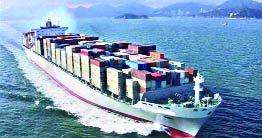
Bangladeshi ship owners are now losing interest in shipping business mainly due to the fall in freight charges on international routes, stirring up worries among the circles concerned in the government, according to people familiar with the business.
A good number of local ship owners have already sold out their vessels.
According to the government agency concerned, local ship owners have sold out 12 ocean-going vessels worth US$200 million over the last one year, thus downsizing the country's shipping fleet to 63 from 75.
Of the remaining 63, 20 vessels have been declared 'unfit' to ply on international routes.
At least, three more -Momota, Ghulam-E-Mustafa and Brave Royal- are on the sales chart, according to the Mercantile Marine Department (MMD), the government agency concerned.
But, people familiar with the development told the FE that two more vessels would be sold shortly.
Bangladeshi entrepreneurs have stopped procuring ships since March, 2013.
However, the Ministry of Shipping (MoS) will sit with the stakeholders and officials concerned tomorrow (Sunday) with Shipping Minister Shajahan Khan in the chair on the issue.
The MoS has already expressed its concern over the falling number of ships owned by the Bangladeshi businesses.
Ocean-going vessels earn foreign exchange for the country and also help stabilise its balance of payments (BoP).
Ship-owners said many have been losing out money in the business. Others are still hoping the freight charges will rise to help them survive in the trade.
The freight rates have remained low since financial meltdown in 2008 despite the spike in demand for transportation of goods through the international routes.
Mehrul Karim, general manager of the largest ship owning company SR Shipping, said: "Each ship needs at least $7,000 a day to remain operational but earnings from the freights are only around $4,500."
He said vessels need some sort of fixed cost involving insurance, payment for crew and bank instalments.
"We are really struggling to survive," Mr Karim said.
Md Shah Alam, vice chairman of the Ocean-going Ship Owners Association of Bangladesh told the FE that many joined the business with limited knowledge on the trade.
"Many inexperienced people with resources bought vessels with the expectation of moping up higher returns from the trade, but, low earnings shattered their expectations," Mr Alam said.
He also said many commodity importers bought ships for carrying their goods but this type of one-way voyage is not feasible for shipping business.
Almost all big groups including Meghna Group of Companies, Akiz group, Bashundhara Group, Deshbandhu Group, RSRM and East-Coast Group bought their own vessels.
Local companies started buying ships mainly from 2009.
During the period, local companies bought 51 vessels with different capacities for plying on the international routes.
They bought the vessels at prices varying between $15 million and $18 million each.
Captain Habibur Rahman, former chief at the MMD said shipping business has become expensive following higher cost of bunkers, crew and costs associated with maintenance.
Mr Rahman said the MoS has invited all ship owning companies to know from them the exact reasons behind the fast drop in the number of ships.
Shafiul Alam, chief of the MMD said: "I did not get any proposal relating to new purchase of vessels over the last one year."
The MMD is a government agency from where Bangladeshi companies have to take mandatory registration for plying their vessels on the international routes.