
Family Card: from political promise to national social contract
Golam Rasul | Tuesday, 24 February 2026
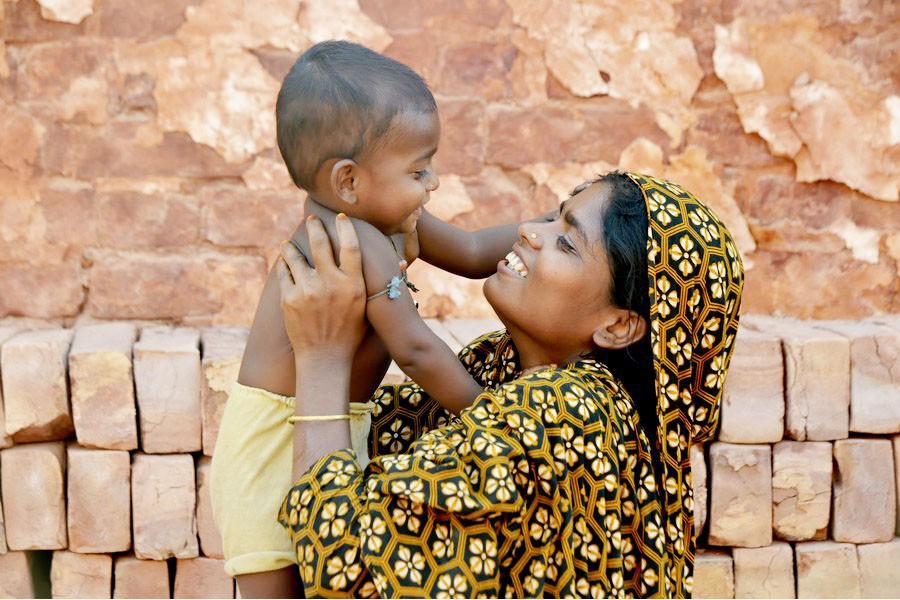
In Bangladesh today, countless mothers skip meals so their children can eat-a quiet sacrifice that reflects a deeper crisis of poverty, inflation, and insecurity. Nearly 28 per cent of the population now live below the poverty line, with about 9 per cent in extreme poverty. Food inflation has hovered above 10 per cent, eroding household purchasing power, while 16 million people face acute food insecurity and more than 1.6 million children suffer from malnutrition. This is not only a moral concern, it is a policy failure. Against this backdrop, the Family Card is not merely another welfare scheme-it is a structural reform with the potential to unify fragmented safety nets into a sustainable pillar of social justice.
Bangladesh's development narrative is under strain. While the country has achieved notable progress in rice production and gross domestic product (GDP) growth in the past decades, poverty indicators are once again worsening. Poverty today is not only about deprivation but about insecurity. A family may eat today and go hungry tomorrow; a worker may earn this month and lose everything the next. Inflation, climate shocks, and precarious employment have made economic stability fragile, even for those just above the poverty line.
In this context, the proposed Family Card is not just welfare-it is a test of whether Bangladesh can build a resilient social contract in the face of poverty, inflation, and climate shocks. The central policy challenge is not only to reduce poverty, but to prevent households from falling into it, and to enable them to climb out of it sustainably. The real challenge is not simply to distribute cash, but to design a system that converts short-term relief into long-term poverty reduction.
WHY FAMILY CARD MATTERS: Bangladesh's social protection system has expanded, but not necessarily strengthened. Dozens of programmes-old age allowances, VGD, VGF, and others-operate in parallel, often with overlapping beneficiaries, uneven coverage, and administrative inefficiencies. The result is not the absence of support, but its unpredictability.
The Family Card offers an opportunity to move from fragmentation to coherence. By consolidating programmes into a unified platform, it can improve targeting, reduce leakage, and ensure more consistent support. More importantly, it can shift social protection from discretionary distribution to rule based entitlement-where access to minimum economic security is not a favour, but a guarantee. Discretionary systems treat social assistance as patronage, distributed unevenly and often influenced by local power structures. Entitlement based systems, by contrast, establish predictable and enforceable guarantees. They signal that minimum economic security is a basic function of the state, not a gift.
This shift-from discretionary distribution to rules-based entitlement-redefines the relationship between citizen and state, transforming social assistance from patronage into a guarantee of minimum economic security.
OPERATIONAL PILLARS -- TARGETING, IDENTOIFICATION, DELIVERY, M0NITORING: The success of the Family Card will depend less on scale than on the strength of its implementation. Bangladesh's past experience shows that social protection programmes often falter not for lack of resources, but due to weak targeting, political capture, and administrative fragmentation. Avoiding these pitfalls requires a system built on four interdependent pillars.
Targeting is the foundation. Without accurate targeting, resources leak to the non-poor while vulnerable households are excluded. Targeting must be multidimensional-capturing income, assets, employment, geography, and food insecurity-and dynamic, with regular updates and community validation to reflect shifting vulnerability.
Identification underpins targeting. Fragmentation across programmes has led to duplication and inefficiency. A unified social registry, linked to national identification systems, can improve accuracy and coordination. But digital integration must remain inclusive, supported by offline verification, assisted enrolment, and accessible grievance mechanisms to prevent exclusion.
Delivery determines credibility. Even well-targeted programmes fail if benefits do not reach recipients reliably. Transfers must be predictable, transparent, and timely. Digital payments can reduce leakage and improve efficiency, while directing transfers to women strengthens household welfare. At the same time, multiple delivery channels-mobile, banking, and local payment points-are essential to ensure access and system resilience.
Monitoring ensures accountability. Real-time tracking, independent audits, and transparent reporting are critical to limit leakage and political interference. Effective grievance redress mechanisms allow beneficiaries to challenge errors, strengthening trust and system integrity.
These pillars are mutually reinforcing. Weak targeting undermines delivery; poor identification fuels duplication; and without monitoring, even well-designed systems lose credibility. Together, they form the operational backbone of the Family Card, transforming it from a fragmented welfare scheme into a coherent and accountable system.
Operational excellence, however, is not sufficient. Effective administration must be matched by a clear strategic vision if the programme is to deliver lasting poverty reduction.
TRANSFORMATIVE FRAMEWORK: Operational design alone is not enough. To be transformative, the Family Card must embody a broader framework that moves households from survival to resilience and mobility.
Protection provides the foundation by ensuring households meet basic needs. Predictable cash transfers stabilise consumption, reduce deprivation, and prevent harmful coping strategies such as selling assets, withdrawing children from school, or cutting food intake. Without this, families remain trapped in cycles of insecurity.
Promotion moves beyond survival to livelihoods. Cash transfers can unlock risk taking capacity, enabling households to invest in small enterprises, agriculture, or skills. When linked to credit, training, and market access, transfers become catalysts for productivity and income generation rather than mere consumption support.
Prevention safeguards households against repeated shocks-climate events, illness, job loss, or economic crises-that drive families back into poverty. Scalable programmes, integration with disaster risk management, and access to insurance are essential in a climate vulnerable country like Bangladesh, where resilience must be built into the system.
Transformation addresses the deeper structural drivers of poverty. By confronting gender inequality, regional disparities, and barriers to education, health, and labour market participation, transformative social protection seeks not only to support the poor but to reshape the conditions that produce poverty.
Together, these four pillars form a coherent framework. Protection stabilises households, promotion builds livelihoods, prevention secures resilience, and transformation tackles inequality. Their interaction shifts cash transfers from short-term relief to long-term strategy-moving families from vulnerability to resilience, and ultimately toward sustainable mobility. Aligned with the Sustainable Development Goals (SDGs), this integrated approach reflects global experience: cash transfers are most effective when embedded within broader systems of human capital, livelihoods, and resilience building policies.
GLOBAL LESSONS: Over the past three decades, cash transfer programmes have become a central instrument of social policy across the developing world. From Latin America to East Asia, governments have increasingly used direct income support to reduce poverty and vulnerability.
In Latin America, programmes such as Brazil's Bolsa Família and Mexico's Prospera showed that modest, predictable transfers can improve school attendance, health outcomes, and short-term poverty indicators. Yet their impact on sustained income mobility has been more limited, as they focused primarily on human capital rather than productive transformation.
China offers a contrasting experience. Its rapid poverty reduction was not driven by cash transfers alone, but by a state-led, multi-dimensional strategy combining targeted support with rural industrialisation, infrastructure, labour mobility, and local economic development. Income support was embedded within a broader system designed to generate livelihoods, not merely sustain consumption.
Across South Asia, social protection has played a critical role in reducing extreme deprivation. India's large-scale cash and food programmes have expanded coverage, while Pakistan's Benazir Income Support Programme demonstrates how directing transfers to women can strengthen household welfare and agency. However, fragmentation, weak targeting, and limited links to labour markets have constrained their transformative impact.
The overarching lesson is that cash transfers can reduce poverty, but only integrated strategies-linking income support with jobs, assets, and human capital-enable households to exit poverty permanently.
STRATEGY AND SAFEGUARDS: Designing the Family Card requires foresight and well-designed strategies. Bangladesh's past welfare programmes have faltered not for lack of resources, but due to weak design, political capture, and administrative inefficiency. The lesson is clear: without robust safeguards, even well-funded programmes can become inefficient or politicised. Ultimately, success will depend less on budget size than on institutional design.
Fiscal sustainability is the starting point. A programme of this scale could cost thousands of crores annually, and rapid expansion risks straining budgets and fuelling inflation. Phased rollout and capped allocations are therefore not just technical choices, but signals of credibility-ensuring that ambition is matched by fiscal discipline.
Political integrity is equally critical. Social protection in Bangladesh has often been distorted by partisan allocation and elite capture. Embedding the programme in legislation, strengthening independent audits, and ensuring transparent oversight can shift it from discretionary distribution to rules-based entitlement-transforming a political pledge into a durable social contract.
Administrative capacity is the backbone of delivery. Without trained officials, reliable data, and robust digital systems, leakage, duplication, and ghost beneficiaries will persist. Investment in implementation-particularly in digital platforms and local capacity-is essential to ensure that policy design translates into effective service delivery.
Social inclusion must be built-in from the outset. Households without identification, digital access, or literacy risk exclusion, while intra-household dynamics may limit the impact of transfers. Prioritising women as recipients, maintaining offline access, and strengthening grievance redress mechanisms are critical to ensuring equity.
At the same time, transfers must be linked to pathways out of poverty. Connecting beneficiaries to skills, employment, and local economic opportunities will be essential if the programme is to support graduation rather than long-term dependence.
Finally, climate resilience must be integral to the scheme. In a country highly exposed to floods, cyclones, and economic shocks, social protection cannot remain static. Adaptive transfers that scale during crises, integration with disaster response systems, and fiscal buffers are necessary to ensure continuity when support is needed most.
The Family Card is not simply a welfare initiative; it is a structural reform that must be implemented with precision and foresight. The government must adopt a phased implementation strategy: immediate priority should be given to the extreme poor through unconditional transfers that secure basic needs, while conditional support for education, health, and resilience can be introduced as administrative capacity strengthens.
Financing must be embedded in the national budget and anchored in domestic resources, ensuring sustainability beyond donor cycles. Digital delivery systems linked to NID can reduce leakage and improve targeting, but must be complemented by offline options to guarantee inclusion. Transparent beneficiary registries, grievance mechanisms, and independent audits will be essential to build public trust and shield the programme from political capture.
Equally important is legal entrenchment. Without legislation, even well funded programmes risk politicisation; with it, the Family Card can endure beyond electoral cycles as a durable institution. Finally, integration with nutrition, climate resilience, and the SDGs will align the initiative with national priorities and global commitments.
The choice is therefore between managing poverty and ending it. The Family Card offers a pathway to do the latter-by linking protection with productivity, resilience, and opportunity. If implemented with discipline, transparency, and long-term vision, it can become more than a welfare programme: it can redefine the social contract between state and citizen. In that sense, the success of the Family Card will not be measured by how much it distributes, but by whether it enables households to stand on their own-secure, resilient, and no longer dependent on it.
Dr. Golam Rasul, Professor, Department of Economics, International University of Business Agriculture and Technology (IUBAT), Dhaka.
golam.grasul@gmail.com