
Farm size getting smaller
Abdul Bayes | Saturday, 29 April 2017
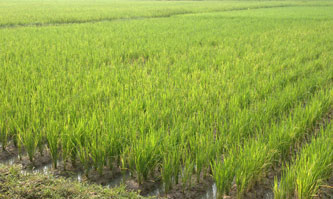
Statistics reveal that the average farm size declined from 1.4 ha to 0.3 ha in the last few decades. This is also the scenario throughout Asia - 2.3 to 1.3 in India; 1.8 to 0.8 in Indonesia and from 3.6 to 2.0 in the Philippines. Japan, however, witnessed a rise in farm size from 1.0 to 1.8 ha. Researchers reckon that family farms dominate agricultural operations almost throughout the world due mainly to the difficulty in monitoring hired labour. This is also possibly the reason for a non-functioning labour market in low-income (wage) economy where small farms with family labour- intensive production method is optimum, as opposed to high-income (wage) economy with large farm having optimum labour-saving, capital and land-using production method. In other words, as economists argue, the long-run average cost curve of a low wage economy would turn flatter to steeper with the passage of time while that of the high wage economy would run steeper to flatter. As output increases, average cost would rise fast in a low wage economy and vice versa. Now the question is whether small farm is more efficient that larger one?
In fact, it all started with Amartya Sen's seminal work on farm size and productivity. Possibly in the 1960s, in Indian context, his observations sparked debate relating to efficiency of small versus large farms. He observed an inverse relationship between farm size and productivity implying that the yield rate of small farms was higher than larger ones. In the context of Bangladesh, late Dr Mahabub Hossain's findings corroborated the observations of Sen. It may be recapitulated that the proponents of a drastic and redistributive land reforms continue to pin their points on these empirics.
However, of late, Keijiro Otsuka, Yanyan Liu and Futoshi Yamauchi seem to invoke lively debate in this regard. They argue that it is not the inverse but a positive correlation that exists between farm size and productivity. In a presentation in the recently-held Conference of the Asian Society of Agricultural Economists (ASAE) held in Dhaka, the authors opined that in the light of declining farm size, Asia is faced with weakened inverse relationship between farm size and productivity or the emergence of a positive relationship. This would mean an increasing advantage of large farms. In order to maintain efficiency of agriculture in Asia, so runs the recipe by Keijiro et al., farm size expansion must take place notwithstanding distorted land markets in many Asian countries including Japan, China and India.
The inverse relationship tends to be observed in low-wage economies when efficient small farms and inefficient large farms coexist. The positive relationship tends to be observed in high-wage economies when inefficient small farms and efficient large farms coexist. "It is worth emphasising that when land markets function efficiently, only efficient farms exist so that neither inverse nor positive relationship is observed. Indeed, the inverse relationship was often observed in South Asia but not in Southeast Asia except in the Philippines. This argument is particularly valid for grain production. Since the main reason for the inverse relationship between farm size and yield per hectare is the higher labour intensity of smaller farms, the inverse relationship will be lessened if profit per hectare is used in lieu of yield per hectare."
Keijiro et al drives us to a few case studies where the possibility of a positive relationship looms large. In Indonesia, for example, wage increase resulted in substitution of labour by machines particularly by large farmers. This has led to farm size expansion by renting in land. This has contributed to higher growth of income by large mechanised farms, and pointed to emergence of positive relationship between farm size and crop yield per hectare. Almost a similar trend is seen in Vietnam. The wage growth led to increased machine renting particularly by large farms at the behest of farm size expansion by land renting (e..g. from 1 ha to 1.4 ha in South). All these have lessened the inverse relationship between farm size and rice yield; the elasticity of crop yield with respect to farm size changed from -0.16 in 1992/98 to -0.06 in 2006/08. In China, average farm size is only 0.6 ha and it increased by only 0.05 ha per year in the recent decade. There also wage increase resulted in out-migration plus land renting plus machine rental. The higher growth in income among large farms in the 2000s speaks of the emergence of scale advantages; consequently, this points to the emergence of positive relationship between farm size and productivity. The development of active machine rental markets in China, however, helps reduce handicap for small farms. The authors were of the view that the efficiency of large farms will continue to increase in India in coming years.
Despite the emergence of scale economies due to mechanisation, small farms continue to dominate due to imperfect and regulated land markets. The implications are far-reaching: cost of food production increases due to continued rise of wage rate, leading to the loss of comparative advantage in agriculture. Food demand exceeds food supply, resulting in massive import of food grains in Asia as a whole and the hike of world food prices. It is thus no wonder that the poor throughout the world will starve if Asia as a whole becomes a massive importer of food grains as food prices would shoot up. In order to reduce undue reliance on grain imports, institutional innovations are needed in India, China and other Asian countries to facilitate farm size expansion.
We can perhaps relate those researches to Bangladesh also. In rural areas, the wage rate is rising, mechanisation is taking place very fast (mostly two-wheeler), and the farm size is declining. About 90 per cent of the tillage is done by machines as opposed to draft animals few years back. Yet, till now, there is little indication that small farms lead to more productivity at least in terms of yield per unit of land. Whether increase in farm size is needed to arrest declining productivity or ways and means to increase farm size is a new hypothesis that requires to be tested on an empirical plane.
The writer is a former Professor of Economics at Jahangirnagar University and currently Chair, Department of Economics and Social Science, BRAC University. Abdul.bayes@brac.net/
abdulbayes@yahoo.com