
Fears of global grain price inflation
Muhammad Mahmood | Sunday, 13 August 2023
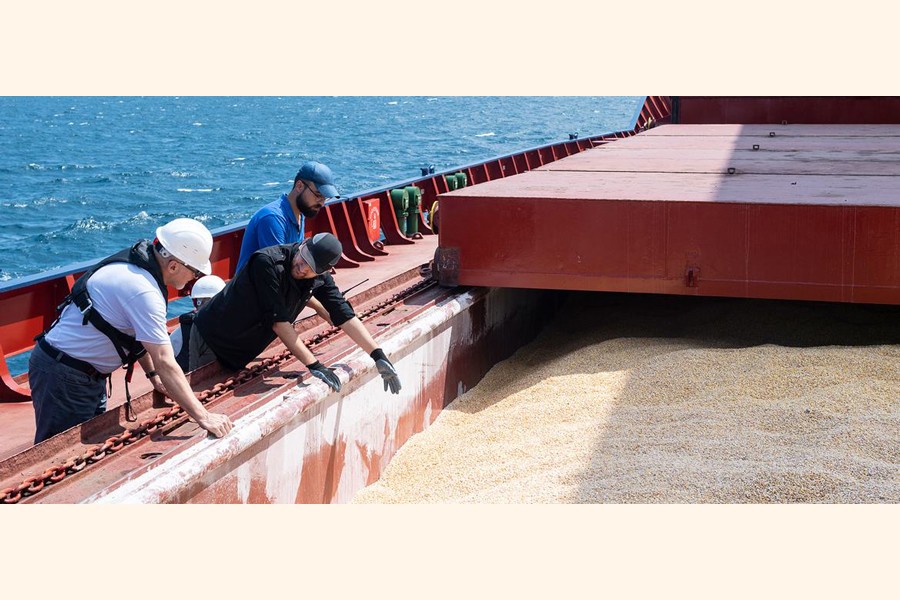
The termination of the Black Sea Grain Initiative (BSGI) with Ukraine by Russia on July 17 was followed by the Russian Ministry of Defence announcement that any ship under any flag going to the seaports of Ukraine would be considered as a potential carrier of military aid and countries under whose flags these ships would sail would be considered as allies of Ukraine.
With the decision to terminate the Black Sea Initiative, Russia also terminated the commitment to facilitate the unimpeded exports of food, sunflower oil and fertilisers from Ukrain controlled Black Sea ports.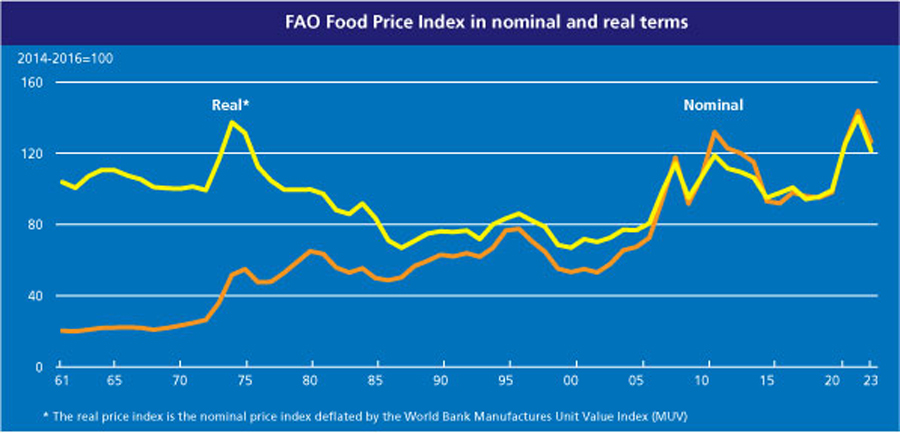 According to S&P Global Market Intelligence, Ukraine is one of the main world exporters of grains as well as vegetable oils. The main agriculture export products are corn and wheat. In 2021 Ukraine was the second largest supplier of grains for the European Union (EU) and a large food supplier for low and middle-income countries in Asia and Africa.
Ukraine is also one of the world's biggest suppliers of sunflower oil and barley. According to the United Nations (UN), Ukraine is by far the biggest exporter of sunflower oil, accounting for 46 per cent of world exports. The Organisation for Economic Cooperation and Development (OECD) indicated that before the Russia-Ukraine conflict, Ukraine was the fifth largest wheat exporting country in the world accounting for 10 per cent of exports.
The ending of the Black Sea Initiative has already had a severe effect on international food markets, with wheat prices rising sharply on both European and US wholesale markets. The global food price index compiled by the UN's Food and Agriculture Organisation (FAO) hit an all-time high in March 2022, but has fallen steadily since then. A drop in food exports caused by Russia's withdrawal from the deal could now put that trend into reverse. On August 4, the FAO said that its global food price Index rose 1.3 per cent in July compared to the month before.
IMF Chief Economist Pierre-Olivier Gourinchas told reporters on July 27 that the Grain Initiative was "very instrumental" in ensuring ample grain supply in the last year, and the termination of the Initiative is "likely to put upward pressure on food prices". Bloomberg citing Gourinchas reported that global grain prices could jump by as much as 15 per cent after Russia declined to renew the BSGI last month.
The agreement was brokered by Turkey and the United Nations in July last year following the Russia-Ukraine conflict that started in February 2022. The deal was considered as a rare diplomatic breakthrough designed to avert a global food crisis. The deal has been very significant in stabilising global food markets since the Russia-Ukraine conflict began in February last year.
In fact, the deal was initially touted as a humanitarian initiative aimed at helping the poorest countries to avoid a food crisis, but Russia warned that the agreement had de-facto been commercialised by the West to reap profits from cheap Ukrainian food grain exports.
Immediately after the termination of the deal on July 17, the price of wheat per tonne on the Chicago Board of Trade jumped from US$654 to US$728 per tonne by close of business on July 19. That represents an increase of 11.3 per cent in two days' time. This has made many deeply worried in developing countries, particularly in net food grain importing countries that they will have to pay higher prices triggering higher inflation in these countries. In fact, grain prices have fallen 35 per cent under the deal but now grain prices have started to rise.
UN Secretary General Antonio Guterres has said that he deeply regrets Russia's decision to terminate the BSGI because hundreds of millions of people are now facing hunger and hard-pressed consumers will have to look for the decision taken by Russia.
But it is to be noted that while Russia and Ukraine account for 24 per cent of world wheat market, Australia, Canada, France and the US account for 45 per cent of the same market. So, these four are the main beneficiaries of the Russian move and will divide the market shares of Russia and Ukraine among themselves.
The Black Sea deal was originally concluded for a period of 120 days, but the deal has been renewed three times. But Russia had repeatedly threatened to pull out claiming that it has been hampered exporting its own products.
Russia has also criticised the deal for not living up to its humanitarian justifications. Most of the Ukrainian products were sent to wealthy nations rather than poor countries most threatened by food insecurity. Anuradha Mittal, founder and executive director of the Oakland Institute told Afshin Rattansi of RT (July 31) that the UN data clearly demonstrated, under the Black Sea grain deal less than 3 per cent of food commodities from Ukraine had gone to food insecure countries. She further added most of the grain went to the EU and the second destination was China.
Since leaving the BSGI on July 17, Russia also struck grain storage and export facilities in Odessa in Ukraine. One-way drones have struck the docks on the Danube river. These strikes caused thousands of tonnes of grain destroyed leading to hike in grain prices. The destruction of grain is not only a blow to Ukraine but also to the fortunes of Turkey which benefited from the grain deal.
Despite financial setbacks suffered by Turkey, according to the Turkish media citing government sources, Turkey is now seeking to restore the BSGI in its original form and will not support alternative proposals for grain exports from the Black Sea region. Turkey is also reported to be in talks with representatives of the UN, Russia and Ukraine in a bid to resume Ukrainian grain exports on humanitarian grounds.
But Moscow also does not seem to have any alternative plan if something goes wrong, and a lot can go wrong. If Turkey fails to secure the resumption of the deal or an agreement, it may shift its position that will not be favourable to Russia. So, Turkey's current position as a mediator in the conflict despite being a member of NATO may change in a more favourable direction towards Ukraine.
Meanwhile, to further complicate the global food grain supply, the Indian government banned export of non-basmati white rice until further notice on July 20. The government maintains that it had to restrict rice exports because domestic rice prices were showing "an increasing trend". Rice is the staple in the diet of about half of India's population. So, it is argued that India has restricted exports of non-basmati rice in a bid to boost domestic supply to keep inflation under control.
While Indian government officials claim that they are just following the "India first' policy at a time when food prices are showing an increasing trend, many others believe that the decision is more politically motivated than economic in view of the elections next year.
India accounted for over 40 percent of globally traded rice last year and that makes India the largest exporter of rice in the world with implications for major net rice importing countries such as Bangladesh and Nepal in South Asia and many other countries in Africa.
The International Monetary Fund (IMF) has asked India to reconsider the decision because India's move is likely to exacerbate volatility in food prices globally and adversely affect poorer countries and can cause food insecurity.
It is well recognised that conflicts remain the key driver of food insecurity in the world. The ongoing Russia-Ukraine conflict has destabilised commodity markets and threatened global food security. It is estimated that a 1 per cent decrease in global wheat trade can increase producer's price of wheat by 1.1 per cent. At the same time, a 1 per cent increase in producer's price can reduce wheat consumption by 0.6 per cent.
Therefore, any reduction in wheat exports from Russia or Ukraine and rice exports from India can exacerbate the hunger situation in many developing countries. These countries' decision to restrict food grain exports could push up the already-high food price inflation, and have serious consequences for low income net food importing countries. Many of these countries have already seen an increase in malnutrition rates over the past few years in the face of pandemic disruptions.
muhammad.mahmood47@gmail.com