
Fed fears risks posed by exit tools
Saturday, 12 July 2014
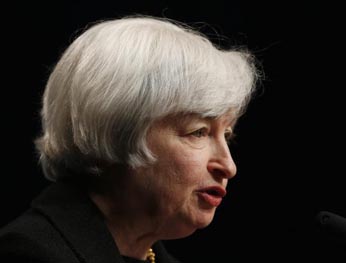
Federal Reserve officials are cautiously nearing completion of a new plan for managing interest rates, concerned that some of the new tools they are likely to rely on could pose unintended risks in a crisis. The central bank has devoted extensive debate to the matter over the past two months and officials ‘have made a lot of progress’ on a strategy to return monetary policy to a more normal footing after years of coping with crisis, Chicago Federal Reserve Bank President Charles Evans said on the sidelines of an economic conference here. However, the sheer magnitude of the amounts of money used to combat the crisis - $2.6 trillion sitting at the Fed as bank reserves and $4.2 trillion held by the Fed in various securities - may complicate the US central bank's ability to control its target interest rate once the decision is made that it should be raised. A decision to begin increasing interest rates is expected in the middle of next year. In recent weeks, the Fed has neared consensus that its workhorse tool will be the interest it pays banks on excess reserves on deposit at the Fed - giving the central bank a direct way to encourage banks to take money out of circulation and leave it at the Fed, or lend it elsewhere. Another tool would have a similar impact but apply more broadly, using overnight repurchase agreements that would let money market funds and other institutions as well as banks essentially make short-term deposits at the Fed. The worry is that if financial conditions tighten, those large funds of money would flee to the repo facility as a safe haven, depriving the economy of credit and making a potential crisis even worse. The concern is apparently widespread at the central bank. Minutes of the Fed's June policy committee meeting said that ‘most participants’ shared worries about the ‘unintended consequences’ of the repo facility and its potential to be used as a shelter from risk, according to Reuters.