
First things first: Investing in urban toilets
Thursday, 24 July 2014
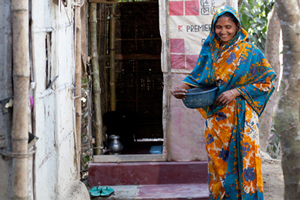
Bangladesh has more than seven million workers employed overseas, sending about 14 billion dollars home annually. Many economists have often lamented the fact that migrant families neither save nor invest much; that a great deal of the money is spent on "unproductive expenditure"-in consumption, buying land, or building or sprucing up the house. However, unbeknownst to most of these economists is the fact that the so-called unproductive expenditures of migrant workers have had a tremendous social payoff in improving the sanitary standards in rural Bangladesh.
Currently, of about one billion people in the world who practise open defecation (without using a toilet or latrine), a large majority of them -about 60 per cent- call India home. India has more than twice the number of open defecators than the next 18 countries combined, according to a report by WHO-UNICEF. While India remains resolute in its quest for economic grandeur, its progress in achieving basic sanitation-so eloquently preached as well as practised by Mahatma Gandhi-has so far been dismal.
Many countries have made great strides in tackling open defecation, including Vietnam and Bangladesh, the two countries which have virtually stamped out the practice within a short span of time. Beginning with a 30 per cent of the population practising open defecation in 1990, Bangladesh has all but eliminated this by 2010. A good deal of this success is due to the quiet revolution in rural home improvements, largely fuelled by overseas remittance inflows, and to the helping hands of NGOs in popularising low-cost sanitary innovations, among others.
Recent research studies by Princeton Professor Angus Deaton and his collaborators have established a strong causal relationship between open defecation and poor health outcomes such as child mortality, children's height and childhood stunting. They have also found that for a given level of economic status, children in Bangladesh are taller than those in Paschimbanga because of the lower incidence of open defecation in Bangladesh. What is the causal mechanism? They argue that differences in the disease environment matter. In India, with high population density, open defecation occurs near where children live; children who grow up in these high population density settings without sanitation are exposed to more fecal pathogensthan children who do not; this, in turn, leads to easy intestinal infections and poor health outcomes such as low height and stunting.
While Bangladesh has done well in rural sanitation, urban sanitation is, however, altogether a different story-it is an unmitigated disaster. Consider the case of Dhaka, which has over 16 million residents, with more than one million people commuting into the city every day. It is one of the fastest growing-as well as the least liveable-of megacities in the world, whose population would exceed 23 million in a decade, if the current trend continues. About a third of the population is poor and mostly inhabits the slums. Almost two-thirds of Dhaka's sewage is untreated- and trickles into waterways. A common type of toilet in the slums is the hanging ones that dump waste directly into waterways. Finally, the city has precious few public toilets, even those that exist are neither functioning nor hygienic enough for people to use. This creates for the poor subhuman conditions, where waterborne diseases-such as cholera, diarrhea, dysentery and typhoid-abound.
Why is the picture of urban sanitation so dramatically different from that of rural sanitation? Why a country that is so successful in villages is such a disgraceful failure in cities? The answer is not far to seek. Rural sanitation, at the basic level, is more of a private good, which is individually provided. Thus, the issue of rural sanitation can be essentially addressed by individual efforts at improving sanitation. On the other hand, much of urban sanitation is a public good, which has to be provided publicly: the so-called free rider problem largely precludes markets from providing public toilets anywhere in the world. This, if the success of rural sanitation is testament to our rural folks' quick receptiveness to ideas, the disaster in urban sanitation is exhibit A of the enduring failure of the government.
Why does the government show so little sensitivity to these issues, while it spends wads of money on things that have little value beyond recreation? Some argue this reflects the elite-bias in planning, others attribute this to leaders' lack of exposure to these problems in their quotidian existence; still others reason -somewhat more cynically-that it is myopic economic self-interest: it is the abject conditions of the slums or near-slums that compel an assured supply of domestic workforce, at depressed wages, for ensuring daily comfort. While the correct answer may be 'all of the above', the sad fact is that the two worlds are inextricably linked: contrary to what many leaders in government like to believe, there is no cordon sanitaire between their world of luxury and the nether world of slums and near-slums. If there is an outbreak of epidemic, it percolates from one world to the other easily and effortlessly. Given this inexorable link, political leaders should take the issue of urban sanitation seriously, if for nothing else, at least for reasons of enlightened self-interest.
This effort may begin with constructing public toilets-many, many more, and hygienic and functioning ones. The success the country has achieved in villages, it can also achieve in cities-and be a model for South Asia-with a relatively modest investment. Cross-country experiences suggest several successful investing and operating modalities for urban sanitation. However, no matter what, it is one endeavour where the government must take the lead. And this should be done sooner rather than later-before the great urban sanitation disaster happens.
M.G. Quibria, Professor of Economics, Morgan State University, US, is currently Senior Fulbright Visiting Fellow at Bangladesh Institute of Development Studies (BIDS). mgquibria.morgan@gmail.com