
For Bangladesh, a weak WTO is not an option
M G Quibria | Thursday, 4 December 2025
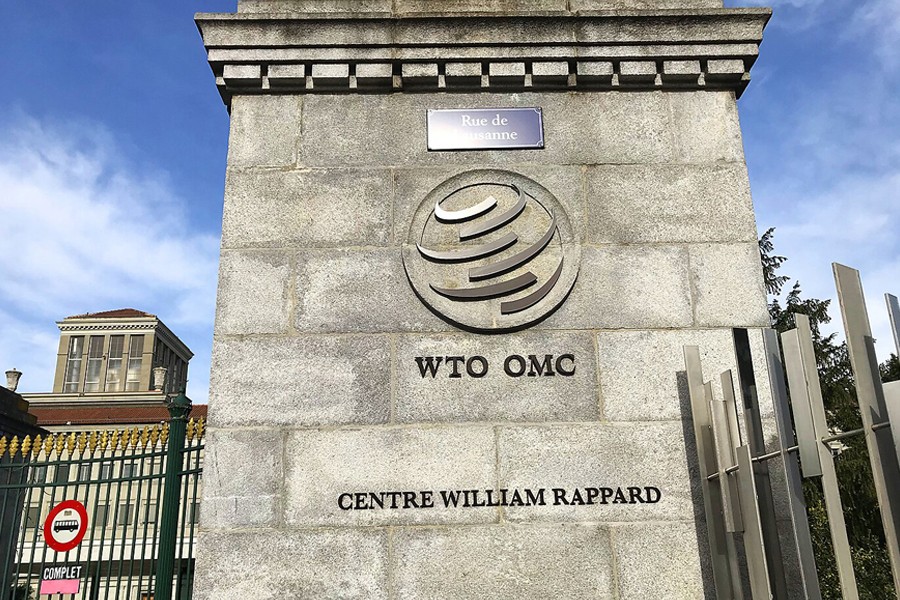
Bangladesh owes much of its economic rise to the predictability and stability of global trade rules. For decades, the World Trade Organization (WTO) provided exactly that: a system where a young, export-driven country could trust that its garments, pharmaceuticals, and services would be traded on terms no single power could unilaterally rewrite. That foundation is now cracking. And for countries like Bangladesh—whose future depends on a fair, open global marketplace—the consequences could be profound.
The WTO Is Drifting: The truth is uncomfortable: the WTO is drifting toward irrelevance. The institution built to govern global trade is increasingly unable to deliver on its most basic promises—not because the world no longer needs multilateralism, but because the WTO’s own structures have grown brittle.
Consensus Has Become a Cage. At the heart of the problem is the way the WTO makes decisions. Consensus, once a symbol of equality, now functions as a veto for any member willing to wield it. When General Agreement on Tariffs and Trade (GATT) had 23 members, unanimity was difficult. With 166, it is nearly impossible. A single dissent can halt the appointment of judges, block negotiations, or stall incremental reforms.
The result is paralysis. Countries frustrated by gridlock now gravitate toward regional trade blocs or informal groupings where deals can be struck more quickly. Efficiency has migrated outward, and the center has been left hollow.
For a country like Bangladesh, without the geopolitical heft to shape these exclusive clubs, that drift is worrisome.
Negotiations Are No Longer Negotiations. The collapse of the Doha Round marked a turning point. Since then, the WTO has not produced meaningful liberalisation. The ‘single undertaking’ principle—nothing agreed unless everything is agreed—proved incompatible with a diverse membership divided over agriculture, subsidies, and services.
The negotiating forum has evolved into a theater of speeches rather than a venue for compromise. The organisation that once expanded global trade now struggles simply to keep pace with it.
A Court Without Judges Cannot Uphold the Law. Perhaps the most visible symbol of the WTO’s decline is the breakdown of its dispute-settlement system. Because the United States blocked new appointments to the Appellate Body, the very mechanism responsible for enforcing trade rules has been suspended.
Members have resorted to improvised alternatives like the EU-led Multi-Party Interim Appeal Arbitration Arrangement (MPIA). But a patchwork is not a system. Without credible enforcement, compliance becomes voluntary—and in trade, voluntary rules are no rules at all.
Bangladesh’s exporters, who depend on stable dispute resolution, face a world where outcomes may hinge less on law and more on leverage.
A Rulebook Frozen in Time. The WTO’s legal framework still imagines a world of manufactured goods, tariffs, and quotas. But today’s global economy is defined by data flows, artificial intelligence, cross-border digital services, and climate-linked trade measures like carbon border adjustments. On these issues, the WTO is nearly silent.
This silence encourages unilateralism. Countries legislate individually, set their own standards, and negotiate regional agreements that often exclude or disadvantage developing nations. Without a modern rulebook, the global economy becomes a patchwork of incompatible regimes.
Bangladesh, entering middle-income status and aiming to expand beyond garments, needs rules—not vacuums.
A Crisis of Trust. The institutional stagnation is compounded by a legitimacy problem. In the global South, the WTO is often viewed as serving powerful nations. In advanced economies, it is blamed for inequality and job displacement. Both narratives feed nationalism and erode support for multilateralism.
Yet the alternative is worse: a world where trade norms are written by a handful of powerful actors and imposed on everyone else.
Reform Proposals — Paths Forward or New Divides: Many are offering ideas—some promising, some perilous.
Michael Froman’s ‘open plurilateralism’ would allow coalitions of willing countries to move forward on issues such as digital trade or supply-chain security. It is pragmatic, but risks leaving developing countries on the sidelines, unable to meet high regulatory standards and locked out of new rulemaking.
Emily Kilcrease and Geoffrey Gertz’s ‘concentric circles’ model would formalise a U.S.-anchored hierarchy: an inner circle of allies, a middle circle of neutral partners, and an outer circle of strategic competitors. The model moves away from the WTO principle of ‘Most Favored Nation (MFN) treatment, which requires countries to treat all trade partners equally. This approach may appeal to Washington, but it institutionalises exclusion. For countries outside the inner ring, including many in the South, it would reinforce the feeling of being perpetual outsiders to the global economy.
Lee Hsien Loong’s ‘World minus one’ approach offers a more constructive vision: don’t let one spoiler paralyse the system. If a major power refuses to join, let the rest press ahead. Mega-regional agreements like Comprehensive and Progressive Agreement for Trans-Pacific Partnership (CPTPP) and Regional Comprehensive Economic Partnership (RCEP) already reflect this logic.
Anne Krueger goes further. If the WTO cannot reform itself, she suggests a coalition of reform-minded countries build a new organisation grounded in the WTO’s original Articles—essentially a controlled institutional reboot.
Meanwhile, within the WTO, members push disparate agendas that include the following: India defends policy space and digital sovereignty; South Africa seeks equitable TRIPS reforms; China demands clearer subsidy rules while protecting its state-led model; and the European Union wants (EU) climate-aligned trade and a double-majority voting system to replace the consensus rule.
Diverse as they are, these proposals share one theme: the system must balance efficiency with legitimacy. Fast decisions mean little if half the world sees them as exclusionary; inclusive processes mean little if they produce no outcomes.
What the WTO Must Do to Survive: A viable reform agenda rests on three pillars: First, rebuild dispute settlement with a depoliticised appellate mechanism. The WTO cannot function without neutral, credible enforcement. Second, modernise the rulebook. Digital trade, data governance, carbon border adjustments, and AI-driven commerce must move from the periphery to the core. Third, elevate developing-country capacity. Participation must be substantive, not ceremonial. Without support, the rules will reflect only the interests of the technologically advanced.
This is not idealism. It is the pragmatic foundation of a stable global trading order.
The Stakes for Bangladesh—and Beyond: For Bangladesh, WTO reform is not an abstract debate among diplomats. It is a question of economic destiny. As the country navigates Least Developed Country (LDC) graduation, diversifies its exports, and confronts new barriers—from carbon tariffs to digital standards—it needs a global system that is predictable, fair, and inclusive.
The WTO was built to offer precisely that. But unless it adapts, it will not be able to. And if the WTO fails, Bangladesh will not find refuge in exclusive trade clubs or geopolitical ‘circles.’ It will face a world where power, not rules, determines market access.
A young, aspiring nation needs a global trading system that gives it space to rise. The world needs that system too.
The question is whether governments and the WTO itself can summon the imagination to rebuild the multilateral order before countries like Bangladesh are left navigating a world without one.
Dr M.G. Quibria is an economist whose career bridges international development and academia. He is currently a Distinguished Fellow at the Policy Research Institute of Bangladesh (PRI) and has held senior leadership positions at both the Asian Development Bank and the Asian Development Bank Institute. mgquibria.morgan@gmail.com