
Fuel panic reveals Bangladesh's energy governance gap
Ahamedul Karim Chowdhury | Sunday, 15 March 2026
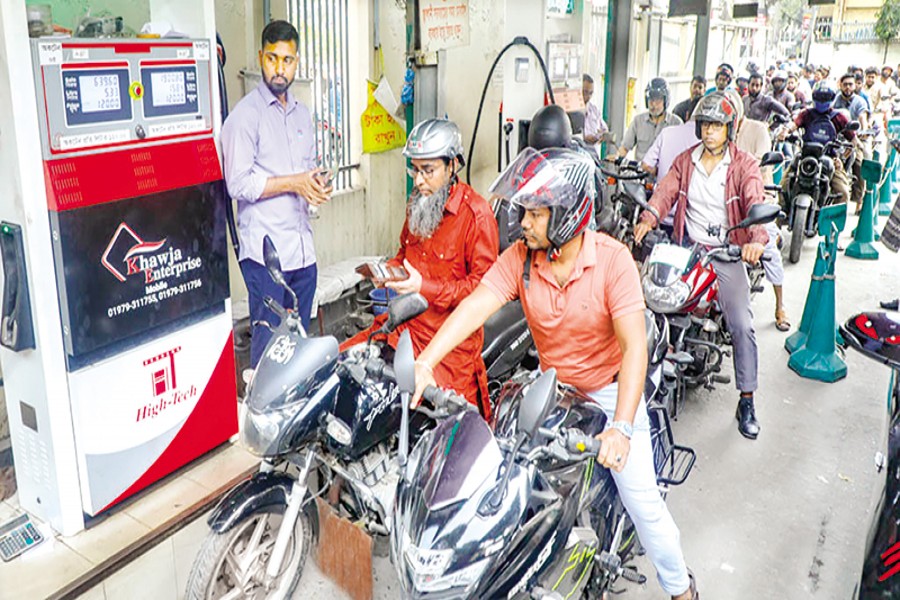
Energy crises rarely arrive without warning. They usually begin with geopolitical tension, rising oil prices or disruptions in global shipping routes. Yet the real impact of such crises is often determined by how governments manage domestic markets. Recent developments in Bangladesh's fuel market show how quickly uncertainty can spread through the economy when policy coordination is not strong enough.
The government initially restricted motorcycle fuel purchases to two litres per customer in order to discourage hoarding and maintain supply stability. The measure followed reports of panic-buying triggered by fears of energy supply disruption linked to tensions in the Middle East. However, the restriction quickly highlighted a deeper issue. Many Bangladeshis depend on motorcycles for their livelihoods. Delivery riders, ride-sharing drivers and small traders require fuel throughout the day to maintain their income. For them, the two-litre limit was impractical.
Authorities later revised the ceiling to five litres for ride-sharing motorcycles, demonstrating the importance of flexible policy adjustments during crises.
The episode illustrates a broader challenge in Bangladesh's energy governance: balancing market stability with economic realities. Energy security is often discussed primarily in terms of fuel supply. But modern energy systems depend equally on demand management, distribution logistics and public communication. When these elements are not coordinated effectively, even minor disruptions can trigger public anxiety.
Bangladesh relies heavily on imported energy. Petroleum products and liquefied natural gas account for a large share of the country's commercial energy supply. This dependence exposes the economy to global price volatility and geopolitical tensions.
In such circumstances, panic-buying becomes a predictable risk. Consumers tend to react strongly when they believe fuel supplies may become limited.
In energy markets, expectations often move faster than actual shortages. When people believe supplies may run out, they rush to secure fuel for themselves. Ironically, this behaviour can create the very shortages they fear.
Effective crisis communication, therefore, becomes a critical component of energy management. Governments must regularly inform the public about fuel stocks, shipment schedules and contingency plans. Transparency helps stabilise expectations and reduce unnecessary demand.
At the same time, demand management policies must consider the economic structure of the country. Bangladesh's urban economy increasingly depends on small-scale transport and delivery services. Ride-sharing drivers and delivery workers form a growing part of urban logistics networks. Policies that unintentionally disrupt these activities can slow the broader economy.
This reality highlights the need for more nuanced demand management strategies. Instead of uniform restrictions, policymakers could consider differentiated fuel access for essential economic activities. Such an approach would maintain market discipline while protecting the functioning of urban supply chains.
Supply resilience also deserves greater policy attention. Bangladesh currently maintains limited strategic fuel reserves. Expanding storage capacity would allow the country to absorb temporary disruptions in global supply without immediate domestic shortages.
Strategic reserves serve as an insurance mechanism during international crises. Many countries maintain emergency stockpiles precisely to protect their economies from geopolitical shocks.
Another important area is energy diversification. Bangladesh has made progress in expanding electricity generation capacity over the past decade, but the energy mix remains heavily dependent on fossil fuels. Increasing renewable energy generation would reduce exposure to international fuel markets.
Rooftop solar power offers a practical starting point. Residential buildings, factories and commercial complexes across urban areas possess large rooftop spaces that remain unused. With appropriate incentives and financing mechanisms, these spaces could generate a meaningful share of urban electricity demand. Decentralised solar generation would not only reduce pressure on the national grid but also strengthen resilience during future energy shocks.
Energy crises ultimately reveal the strengths and weaknesses of governance systems. They test how effectively governments can balance market stability, economic activity and public confidence.
Bangladesh's recent experience shows that energy management cannot rely solely on supply measures. It requires coordinated policies that address demand behaviour, logistics networks and communication strategies. If these lessons are taken seriously, the current challenges could help strengthen the country's long-term energy governance framework.
Ahamedul Karim Chowdhury, port shipping & logistics strategist, | adjunct faculty, Bangladesh Maritime University. akccpa@gmail.com