
Fungal attack worries cabbage farmers in Doulatpur
Our Correspondent | Friday, 26 September 2014
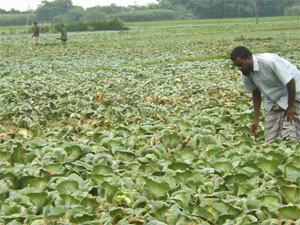
JHENIDAH, Sept 25: Cabbage farmers are exposed to a lot of trouble as their vegetables have been attacked by fungus due to recurrence of downpours this year in Doulatpur upazila under Kushtia district.
Upazila Agriculture Extension Officer of Doulatpur Rezaul Karim told this correspondent around 700 peasants have brought nearly 50 hectares of land under hybrid white cabbage cultivation this year, mainly in Garurha and Dhomradah unions of the upazila ahead of the season that starts in winter.
Farmer Milon Hossain at Gorurha village said, "We have been growing advance cabbage in this area for 15-16 years."
A Sub-Assistant Agriculture Officer (SAAO) of Gorurha block Fazlul Haque said, "Plantation of cabbage usually starts in June, and the vegetables are available until January every year. It takes 70-90 days from plantation before beginning of harvesting."
Farmer Md. Sohrab Hossain (54) of Gorurha area told this correspondent, "Tk 30,000-1,50,000 can be earned from cultivation of cabbage on one acre of land while Tk 45,000-60,000 including seed, fertiliser, irrigation, labour and cutting cost is needed as production cost on the same amount of land."
Cultivator-cum-trader Kamal Hossain at Gorura bazaar said, "We are supplying cabbages produced in the area, mostly to Kawran Bazar in Dhaka, Chittagong and Sylhet 'mocam' (wholesale agriculture centre) by pickup and truck."
A piece of cabbage weighing 700-900 gm is being sold for Tk 10-13 in wholesale markets, Kamal added.
Doulatpur Department of Agricultural Extension (DAE) field-level officers are suggesting use of fungicide like Admire, Rediomil Gold but nothing proves effective in significant reduction of fungus in cabbage fields, said Sohag Mia, a farmer.
"Ignoring our suggestion to use fungicide in limited quantity only three times on a cabbage field with 10-day intervals, farmers are applying it in excess quantity every alternative day to gain more money, posing serious health hazards to eaters," opined Rezaul Karim.
"The poison enters inside the vegetables, and it has a residual effect on human body. Symptoms are experienced after a long time of consumption. It may damage vital organs, including kidney," Mr. Karim added.
Affected farmers urged the DAE to find out a solution to address the crisis they are facing; otherwise, they will have to continue incurring huge losses.
aminul104060@gmail.com