
Going beyond consensus will lead to political division: Khasru
Liberation War only freed AL, not the nation: Rizvi
Saturday, 8 November 2025
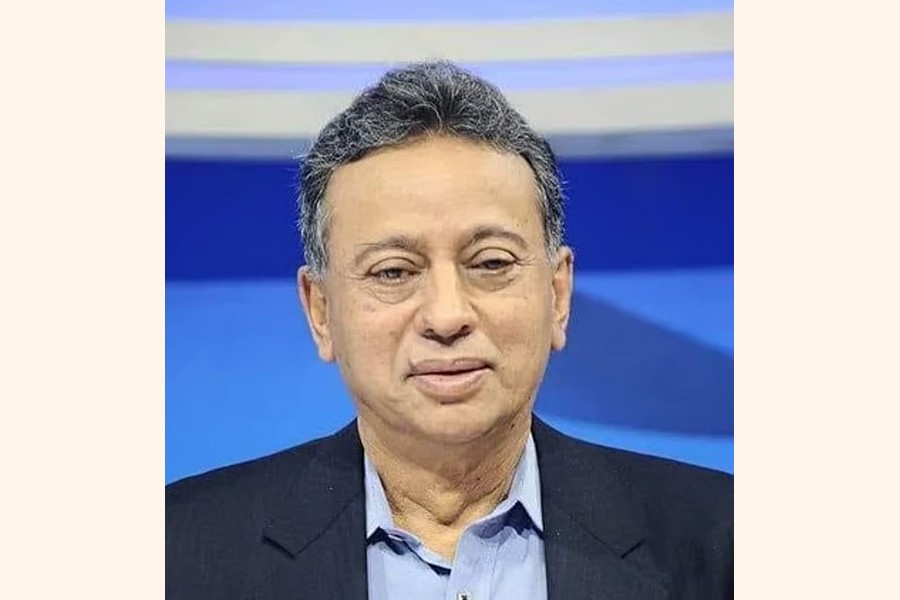
BNP Standing Committee Member Amir Khasru Mahmud Chowdhury has said going beyond the consensus will lead to division in politics and society, reports agencies.
The senior BNP leader stressed that the consensus reached after lengthy discussions should be accepted; otherwise it could be detrimental to democracy.
Amir Khasru Chowdhury made the remarks while speaking at the inauguration of the newly constructed Engineer Abdul Khalek Auditorium at the Chattogram Press Club on Friday.
Stressing the importance of political dialogue based on consensus for advancing democracy and society, he noted that over the past 15 years, there had been a lack of communication and participation in the democratic process, which must be addressed through
dialogue.
Regarding the vision of a new Bangladesh, Khasru underscored collective participation and responsibility in building a better future.
He said the country can progress only if everyone contributes positively from their respective positions.
As a special guest, City Mayor Dr. Shahadat Hossain praised Engineer Abdul Khalek as a visionary man who believed in the independence of the country through Daily Azadi.
The Editor of Daily Azadi, MA Malek, criticised the term 'Mofassal Patrika' used to describe newspapers published outside Dhaka, calling it discriminatory.
He explained that his father started Azadi to represent the joys and sorrows of the people of Chattogram to the government, rather than seeking recognition in Dhaka.
The auditorium has been renovated and redesigned with funding from Daily Azadi in honour of the late Engineer Abdul Khalek, the newspaper's founder, he added.
Zahidul Karim Kochi, Member Secretary of the Chattogram Press Club, presided over the function, while Golam Maula Murad, Interim Committee Member, moderated the programme.
Dainik Azadi Managing Editor Wahid Malek, Commonwealth Journalists Association (CJA) Bangladesh Chapter Chairman Osman Gani Mansur, Press Club Senior Member Moinuddin Qaderi Shawkat, Dainik Azadi Executive Editor Shihab Malek, Press Club Interim Committee Member Mustafa Naeem, BNP leader Abu Sufian, CMU General Secretary Sale Noman, Chattogram District Bar Association President Abdus Sattar, AEB President Jane Alam Selim and BSS Special Correspondent Meah Mohammed Arif, among others, addressed the function.
Meanwhile, BNP Senior Joint Secretary General Ruhul Kabir Rizvi has said the 1971 Liberation War did not bring freedom to the Bengali nation but only to the Awami League (AL).
"The freedom we achieved in 1971 through Victory Day was not the liberation of the nation. The Awami League was liberated there. The Jubo League and Chhatra League were liberated there. But the nation was not liberated. The nation was liberated on the 7th of November," he said.
Rizvi made the remark while inaugurating a photography exhibition marking National Revolution and Solidarity Day at Dhaka University's Battala on Friday afternoon.
He said the exhibition, featuring photographs of 'unforgettable moments,' was not merely a photo show but a 'living display of history'.
"Because on this day, we regained our independence," he said. "Those who formed the government after independence did not consider anyone else as part of the nation except themselves."
Criticising the ruling Awami League, the BNP leader said: "They did not want anyone else to speak except for themselves. Yet they could not be fearless. They shut down all political parties, stopped the freedom to write, read newspapers, and express opinions. Then there was a series of conspiracies."
Rizvi claimed those who took power after the assassination of Bangabandhu Sheikh Mujibur Rahman in 1975 were also part of his government.
"In this conflict, people found a man on the 7th of November as their guide for liberation, just as they did in 1971," he said, referring to BNP founder Ziaur Rahman.
Rizvi also said that after independence, the country faced a crisis over its national identity.
"The nationality they spoke about was controversial. It can be considered regional in scope, but a nationality that does not have representation of territory, a nationality that does not have representation of my separate identity and flag cannot be a nationality. Ziaur Rahman resolved that crisis," he added.
At the event, Chhatra Dal President Rakibul Islam Rakib said: "On the 7th of November, 1975, Ziaur Rahman united the nation and built nationalism. The public aspiration that arose after the 2024 upheaval remains unfulfilled."
He added, "In 1975, Ziaur Rahman was there. Now Tarique Rahman is there. Just as in 1975, people were united, the Chhatra Dal will also unite under Tarique Rahman to build the Bangladesh of the future."
After the discussion, Rizvi and other BNP leaders formally inaugurated the photo exhibition.