
Govt plans five climate-resilient bridges in Mymensingh, Netrokona
JAHIDUL ISLAM | Sunday, 29 March 2026
The government plans to build five climate-resilient bridges over key rivers in the border areas of Mymensingh and Netrokona, aiming to strengthen regional connectivity and unlock economic potential in the country's north-eastern districts.
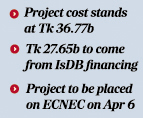
The Roads and Highways Division (RTHD) has proposed the project, estimated to cost Tk 36.77 billion, with significant financing support from the Islamic Development Bank (IsDB), officials at the Planning Commission said.
The project is expected to be placed before the Executive Committee of the National Economic Council (ECNEC) at its first meeting under the new government on April 6.
Of the total cost, Tk 27.65 billion will come from IsDB financing.
Bangladesh signed a loan agreement worth US$241.3 million with the development lender during its annual meeting in Algiers last year, which was later approved by the government's non-concessional loan committee.
Titled "Construction of Five Climate Resilient Bridges in Mymensingh Division", the project will be implemented by the Roads and Highways Department (RHD) by January 2031.
Officials said the initiative aims to improve connectivity between remote upazilas in Mymensingh and Netrokona and their adjoining districts, including Sunamganj, Sherpur and Jamalpur, while reducing travel time and boosting trade and tourism.
The project includes the construction of two extradosed bridges with a combined length of 1,320 metres and three arch bridges spanning 568 metres.
It will also involve building 2,922.8 metres of viaducts, 6.05 kilometres of approach roads, 1.77 kilometres of service roads, and extensive riverbank protection works covering 2,390 metres.
In addition, 16.08 kilometres of drainage systems, 863 metres of retaining walls, four toll plazas and bridge lighting systems will be installed under the scheme.
The proposed bridges include the Mahadev Bridge over the Mahadev River and the Ganeshwari Bridge over the Ganeshwari River in Netrokona's Kalmakanda and Durgapur upazilas.
The Someshwari-3 Bridge will be constructed over the Someshwari River, linking Durgapur in Netrokona with Haluaghat in Mymensingh.
Another structure, the Nitai Bridge, will connect Dhobaura and Haluaghat upazilas in Mymensingh.
A new Someshwari-2 Bridge will also be built adjacent to the existing narrow and deteriorating Someshwari Bridge in Durgapur to ensure safer and uninterrupted movement of passengers and goods.
Once completed, the bridges are expected to provide seamless connectivity between Kalmakanda and Durgapur in Netrokona and Haluaghat and Dhobaura in Mymensingh.
The project will directly benefit around 1.1 million people in four upazilas, while nearly 3.5 million people in surrounding districts are expected to benefit indirectly through improved transport links.
Officials said the initiative would also help tap the economic potential of the Bijoypur white clay deposits in Durgapur, one of the country's richest mineral resources, estimated at 2.47 million metric tonnes.
Improved connectivity is expected to facilitate commercial use of the deposits, reduce transport costs and integrate the resource with national markets.
The region also holds significant tourism potential, with natural attractions such as lakes, forested white clay hills and cultural heritage sites, including settlements of the Garo ethnic community.
Authorities believe better road infrastructure will promote eco- and cultural tourism, create employment opportunities and support rural livelihoods, particularly for women and small entrepreneurs.
The bridges are being designed with climate resilience in mind, featuring elevated decks and longer spans to allow uninterrupted flow of floodwaters.
This is expected to reduce risks of riverbed erosion and sedimentation, ensuring long-term structural stability.
A feasibility study indicates that the project could cut travel time between Netrokona and Mymensingh by around 40 per cent and reduce vehicle operating costs by a similar margin.
Freight movement in the region is projected to increase by more than 200 per cent, providing a significant boost to trade and economic activity once the project is completed.
jahid.rn@gmail.com