
Green development agenda for the upcoming G20 summit
Mushfiqur Rahman | Friday, 1 September 2023
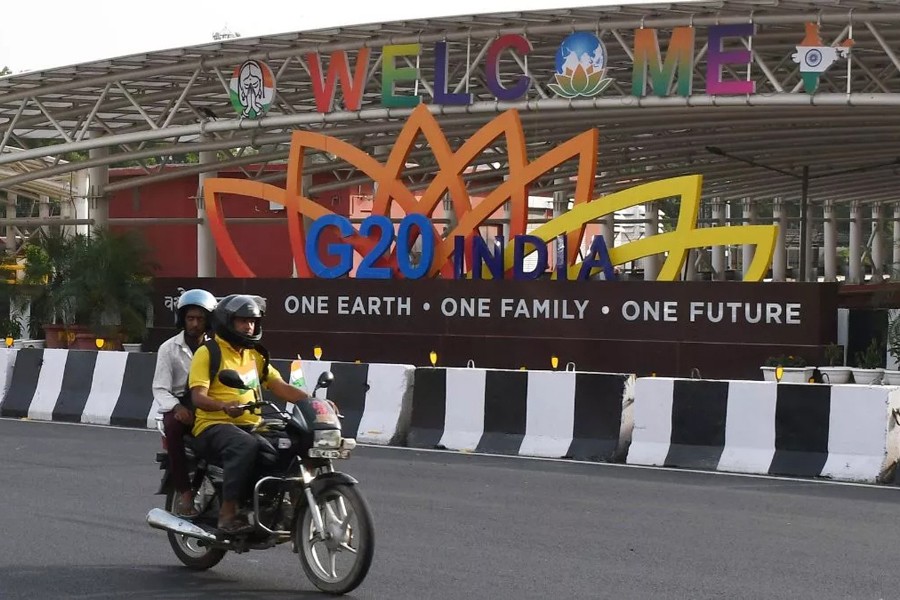
'Green Development, Climate Finance & Life' is the priority agenda for the upcoming G20 Summit of the World leaders. The 18th gathering of the G20 leaders is scheduled to take place on September 9 and 10, 2023 in New Delhi, India. The ongoing Indian presidency for G20 confirmed the main theme for the meeting of the state leaders of G20 countries as 'One Earth-One family-One Future. The theme has been drawn from the 'Upanishad' text and highlights the value of all life and their interconnections on the planet earth and in the wider universe.
G20 countries are home to two thirds of the world's population and account for 85 per cent of global GDP and 75 per cent of international trade. G20 countries also account for world's approximately 45 per cent coastlines. G20 summit will play a crucial role in global climate discussions for securing the better future of the world. G20 country leaders have rightly recognised and put forward the environment and climate sustainability as the key agenda for their meeting next month.
In 2009, G20 leaders agreed to phase out inefficient fossil fuel subsidies 'over the medium term', which was subsequently agreed by the leaders of the world community at the COP26 climate summit in Glasgow, UK in 2021. At the Glasgow Summit, United Nations Climate Conference (COP26) commitments were made for reducing the use of coal, Green House Gas emission and for ensuring more climate financing for developing countries to adapt to global climate impacts.
The Guardian (UK) published a report (August 23, 2023) that revealed that in 2022, the world's biggest 20 economies (G20) poured a record $1.4 trillion US dollars of public money into fossil fuels (coal, gas and oil). The International Institute for Sustainable Development (IISD), a think-tank commented that 'these figures are a stark reminder of the massive amounts of public money G20 governments continue to pour into fossil fuels - despite the increasingly devastating impacts of climate change.' The International Energy Agency (IEA) findings suggest that in 2022 fossil fuels received subsidies at a rate of $13 million a minute. And oil, gas and coal industries benefited 7 trillion dollars support in the same year.
Researchers have been repeatedly reminding us that the fossil fuels release pollutants in the atmosphere, make the air dirty and heat the planet earth when they are burned and make the weather extreme and violent. Fossil fuel burning also releases various toxins that make not only the environment dirty but also cause serious human health problems and death of millions of people every year.
However, the Covid-19 pandemic and Ukraine crisis globally have challenged economic growth. People's cost of living have been rising sharply. Energy commodity supply disruptions and prices surge have contributed to cost escalation of electric energy worldwide. IEA estimates that oil subsidies have increased by around 85 per cent and subsidies for natural gas and electricity have doubled in 2022. The governments at their respective countries have been compelled to take various measures to minimise hardship of the people due to energy price hikes. The actions included among others, increasing subsidies to support the energy supply at a relatively affordable costs for the greater sections of the consumers. The government measures included among others exemptions from various taxes and charges and compensations for different groups of consumers, putting moratoriums on disconnections for nonpayment of utility bills. Energy intensive industries have been continuing to receive various supports on fuel cost related supports and at some cases additional financial and administrative supports for managing their industries. These measures also have impacts on slowing down the efforts to attain targets for energy efficient industries growth. On the other hand, the World Bank studies indicate that due to the policies in support of increased subsidies and underpricing of the fossil fuels, governments encourage overuse of fossil fuel and inefficient and polluting technology. Increased emission of Green House Gases ultimately increases the global atmospheric temperature. Because of increased subsidy support, the low emission energy alternatives have been facing challenges for their growth and competitiveness.
Interesting enough to observe that the industrially developed nations have been advocating for attaining net zero in energy systems target within 2050. The G7 wealthy nations club wants to accelerate the 'phase out of unabated fossil fuels use so as to achieve net zero in energy systems by 2050 the latest'. They also advocate for early phasing out of coal use and favour natural gas as transition fuel until the cleaner non fossil fuel options become technologically and commercially viable. But China and India, the major economies within G20, have been advocating for building consensus within the group to avoid a deadline setting to end fossil fuel use and are less interested to attain net zero target for energy systems within 2050. Earlier the G20 countries discussed the proposals for global emission reductions by 60 per cent by the year 2035 (from the 2019 baseline). Climate scientists have been suggesting that if the global hope for meeting 1.5 degrees celsius atmospheric temperature target is to be kept alive, the world community needs to cut emissions of Green House Gases by approximately 45 per cent (from 2019 levels) within 2023.
The two major coal users (India and China) of the world (India depends on coal use for supporting three forths of its annual electricity generation) have been favouring policies that support 'multiple energy pathways' for energy transition. By choosing the options of multiple energy pathways, India and China (and the emerging economies of the world) are keen to keep open for them the choice for energy resources (including coal) use and set no deadline to end fossil fuel use at this stage.
The G20 upcoming summit in September 2023, therefore, will carefully be monitored by all concerned to understand how the climate change challenges and development agendas including for energy subsidies of the industrially developed wealthy nations and emerging economies may negotiate.
Mushfiqur Rahman is a mining engineer and writes on energy and environment issues. mushfiq41@yahoo.com