
GSP suspension—swallowing bitter pills
Hafiz G. A. Siddiqi | Sunday, 30 November 2014
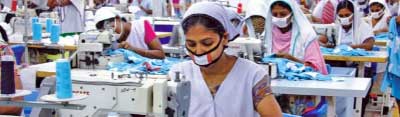
The Generalised System of Preference (GSP) is a system through which the World Trade Organisation (WTO) permits granting preferential treatment in the form of duty-free status or reduced tariff rate by developed countries to eligible products imported from developing counties and the Least Developed Countries (LDCs). This is an exception to WTO rules and designed to help LDCs. The USA, a developed country, has granted GSP facilities to many LDCs exporting Ready-made Garments (RMG) and other products to its markets. These countries export RMG to the US markets duty-free. But the US has not granted GSP privileges for RMG exported from Bangladesh. Therefore, when Bangladesh exports RMG to the US markers it pays import duty. The US did not grant Bangladeshi RMG duty-free status because the same is on its sensitive list. However, US has provided Bangladesh a list of eligible 5000 products. Bangladesh could, until the recent GSP suspension, export to US markets any of the goods included in this list duty-free. Due to the GSP suspension Bangladesh is now required to pay import duty on the non-RMG products as well. When one talks about reinstatement of GSP, one means withdrawal of import duty from non-RMG products. Gaining duty-free access for RMG to US market is a different issue.
Suspension of GSP has come as a serious challenge to Bangladesh. Bangladesh does not have any choice but to overcome it. However, past records of RMG industry indicate that Bangladesh can overcome it. The entrepreneurs of the RMG industry had faced many challenges in the past. In mid-1990s, it faced a major challenge when US government informed the Bangladesh government and the RMG manufacturers that US retailers would not buy garments produced by factories using child labour. Therefore, the US wanted Bangladesh to eliminate child labour. Accordingly, Bangladesh eliminated child labour from its RMG factories by the year 1995. Another great challenge came when MFA was phased out depriving Bangladesh of quota advantages. At that time most people predicted that Bangladesh would not be able to compete in quota-free market, therefore, would lose the US market. But, Bangladesh, quite successfully, responded to the challenges, and beating the powerful competitors emerged as a powerful winner in the US market. Then came the crisis of Rana Plaza in April 2013 that tarnished the image of Bangladesh very badly. Most people feared that due to Rana Plaza disaster RMG exports from Bangladesh would plummet. But, thanks to prudent economic diplomacy of Bangladesh, the RMG exports from Bangladesh actually increased substantially, increasing its share in the global market from 4.7% in 2012 to 5.1% in 2014. These success episodes should work as encouraging factors for Bangladesh RMG factory owners. They should be prudent enough to face the warnings given by Senator Robert Menendez and overcome the current crises.
Thereafter came the biggest crisis -- the suspension of GSP prompted by Rana Plaza disaster and followed by a warning from Senator Menendez. The whole world blamed Bangladesh for inhuman treatment of the factory workers. The suspension temporarily withdrew duty-free privileges granted earlier for non-garment products exported from Bangladesh. The US government told Bangladesh that suspension would be reinstated if and when Bangladesh and its RMG manufacturers comply with all the conditions stated in Bangladesh Action Plan 2013 handed over to Bangladesh government. The US senate through United States Trade Representative (USTR) made it clear that these conditions are non-negotiable.
The US government, Bangladesh government, major retailers from the US and the EU, BGMEA, ILO and labour leaders of Bangladesh joined together to bring Bangladesh out of this crisis. US buyers formed a consortium of 22 retailers, called "Alliance for Bangladesh Worker Safety". Similarly, the EU retailers formed an 87 member consortium called "Accord on Fire and Building Safety in Bangladesh." It was thought that like Rana Plaza which housed 9 factories, hundreds of the several thousand factory buildings in which almost 4 million workers worked might be unfit for housing RMG factories. According to the Alliance, the safety record of Bangladesh factories is unacceptable and requires the collective effort of vendors, Bangladesh government, buyers, workers and international organisations to make the industry safe for the workers. It was decided that the Alliance and Accord should inspect the fire protection system of the Bangladesh RMG industry and structures of all the factory buildings the industry consists of, and recommend remedial measures. It is to be noted that on this recommendation would depend if the US would reinstate GSP privileges or not. Beside, whether the EU would cancel GSP or not will depend the recommendation of Accord.
The crisis has been caused by carelessness and non-compliant behaviour of some factory owners. Both US buyers and US government had expressed their displeasure in the past. The Rana Plaza episode changed displeasure into anger, resulting in GSP suspension. When foreign buyers looked at the disasters of Tazreen Fashions, Rana Plaza and Aswad Garment Factory they blamed and rightly so, the Bangladeshi factory owners. These crises have created at least three new challenges for Bangladesh. These are: (1) how to meet the non-negotiable conditions of Bangladesh Action Plan 2013 and regain GSP privileges for non-RMG products from the USA, (2) how to pacify the EU through Accord so that it does not cancel GSP privileges it has already granted for Bangladeshi RMG products, and (3) how to strengthen, given the present bad image of Bangladesh, the economic diplomacy with a view to gaining GSP privileges in future for RMG exported from Bangladesh to the US markets.
The Action Plan includes many tasks. I do not discuss most of them. Here I focus only on workers' safety from fire hazard and building collapses while they work in the factories. Beside, I briefly mention limitation of unionisation. Since factory inspection is the major tool for responding to Action Plan, my discussion evolves around this.
My presentation is limited to the inspection of the fire protection and fire-fighting systems in each building, and inspection of building structures of about 600 factories by Alliance and 1,500 by Accord. The government is responsible for inspecting rest of the factories. Inspection process is highly technical and involves minute details. Complications sometimes arose in interpreting the structural defects in the buildings and designing of fire protection system. For example, in the past, a disagreement arose between the Accord and the BUET engineers. "My way of doing things is the best way of doing" approach of the Accord required long time to come to an acceptable solution. This delayed the progress of inspection. Another disagreement occurred between Alliance and Accord. According to NewAge (August 17, 2014) "a rift between Alliance and Accord over faulty inspection surfaced when Accord declined to accept inspection of any factory by an individual retailer like Walmart under Alliance. Accord alleged that Alliance was lenient in inspection. As per the new stance of Accord, more than 200 factories will have to be inspected again even after inspection by Walmart-appointed consultants. There are around 340 factories which are common suppliers to the US and the EU retailers. Accord has listed 1600 including common 340 factories for inspection." Re-inspection, if done, will result in using extra time and cost. Bangladesh should not be blamed for consequent delay in compliance.
The performances of the Alliance and the Accord, of the latter in particular, have become a matter of concern. The Accord imposes tougher conditions. According to a media report, RMG factory owners would have to get approval for designs of fire-escape doors, fire alarms, sprinkler system and auto-hydrent from the Accord before installing the systems in their factories. The Accord permission would also be necessary before entering into a contract with any firm to conduct detailed engineering assessment of their factory buildings. If it is true, it would be a matter of concern for factory owners. To ease the situation, Accord could provide design of the doors at the time of approving building construction/ reconstruction design. Local RMG producers could have procured them without needing additional approval. If the Accord sticks to its stance, some kind of bitterness may emerge between the Accord and the local factory owners.
During inspection, structural integrity of 17 buildings was found below acceptable level and the Accord recommended temporary evacuation of the buildings. This figure 17 as a percentage of the total number of buildings the industry consists of is not as high as it was thought to be. The Bangladesh commerce minister revealed that the Accord and the Alliance inspected about 1800 garment factories in the country and found structural faults in less than 2% of the factories. This finding does not put Bangladesh in an embarrassing situation. The percentage of global vulnerable factories is also 2%. (NewAge). This indicates that Bangladesh safety condition is not as bad it is publicised. If this is the case, it is not justified to point fingers at Bangladesh.
The case of making all factories unionised deserves reconsideration. It is not a realistic assumption that to establish workers rights fully all factories must be unionised. If one looks at the history of Bangladesh labour union, one would find that the benefits of the workers do not stand out. Action Plan wants all the factories of RMG industry be unionised. This is much more than international standard. In the USA only 9% of the factories in the private sector are unionised. Therefore, it is somewhat unfair to demand that 100% of the factories in Bangladesh be made unionised. To be sure, I do not mean that workers' rights can be ignored. Some alternatives to protect workers' rights must be worked out.
When all the conditions of the Action Plan will be complied with, cost of relocation and reconstruction of factories, improved medical services, new hygienic services, particularly wage hikes with supplementary benefits,, etc. will increase, therefore profits in this sector will decrease unless productivity or operational efficiency or price of RMG or all of these increase. If labour costs increase too high, Bangladesh will lose its trump card -- low labour cost. Eventually, Bangladesh RMG industry will cease to be attractive. Investors will tend to move to more profitable sectors. Bangladeshi factory owners may even start looking for other countries where they can utilise their experiences and expertise. Such investors might be welcome in several African countries that enjoy duty-free status in the US market. At least one Bangladeshi RMG factory has already planned to move to Ethiopia. I do not know what actually motivated them to take such an action.
The above discussions indicate that Bangladesh does not have much choice. The conditions of the Action Plan on RMG are non-negotiable. Either Bangladesh complies with Action Plan or let the economic security of Bangladesh (RMG industry) be at high risk. However, there is some good message in it. Although the imposition of the Alliance and the Accord seem to be bitter pills, it may eventually prove to be a good medicine for recovery and pave the way for Bangladesh RMG industry to rise to another new height.
.......................................
Dr Hafiz G. A. Siddiqi is Professor Emeritus & former Vice Chancellor, North South University