
Has poetry lost its lustre in the modern world?
MAHDIA BINTE ZAMAN | Wednesday, 3 September 2025
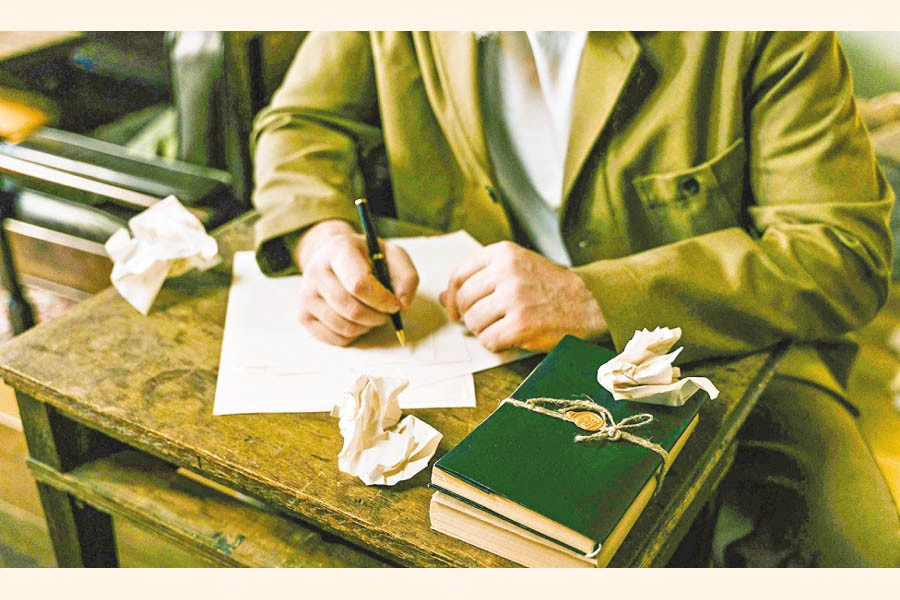
Have you ever wondered, poetry, which once reigned as a luminous thread weaving through the hearts of lovers, the battle cries of revolutionaries, and the solemn decrees of warriors, has become a niche hobby that most people skip?
So what has gone wrong? Why is poetry such a minority sport? Is there something wrong with the way poetry is taught in schools that turns people off? Is it about the way it is marketed and sold? Or is it such an acquired taste that it simply does not speak to anyone who hasn't studied it in depth? And what about the poets? Are we taking care of them as our society's treasure?
Once upon a time, poetry was like the heartbeat of human emotion. Think of Shakespeare's sonnets that make hearts skip a beat or Tagore's verses that spark hope. Poetry wasn't just words; it was alive, recited at gatherings, memorised by kids, and shared like today's viral reels. But now? It's like poetry's been shoved into a dusty corner, ignored while we binge reels and doom scroll. People no longer appreciate literature like they once did.
Technology has overshadowed the originality of literature. With the development and increasing pace of technological reproduction comes the theory that society is lazy.
People are so blinded by their technological toys that they cannot recognise, nor do they want, any outlets of emotional creativity. The gradual involvement with Artificial intelligence is also seen everywhere.
Muzakkir Rifat, a modern-day poet with over a thousand poems to his name, believes that people become restless and frustrated in this world, which motivates them to write poetry.
"People are confined within reels. Patrón's poetry is a few now.  Artificial intelligence hasn't really harmed poetry as much as people think. Poetry is a high form of art, and a reader of poetry must be a mature reader. The real issue is that reading habits have declined."
Part of the problem lies in how poetry is taught. Decades ago, kids learned poems by reciting them, letting the words roll off their tongues like a song.
But in the 1900s, teachers started treating poetry like a math problem. Instead of enjoying the flow, students had to pick apart every line, hunting for hidden meanings or fancy terms like 'metaphor' or 'alliteration' just for the sake of getting marks on exams.
What was once a spark of creativity became an exercise in analysis. Today, with schools pushing math and science over the arts, poetry feels like an old, boring puzzle.
Why spend time decoding a poem when you can watch a 15-second reel that makes you laugh?
Yet another challenge lies in the evolution of poetry itself. The dominance of free verse liberated poets from rhyme and meter but also left many readers without the familiar musicality that made poems easy to remember.
University student and poetry enthusiast Imran Hosen notes that "Rhyme often makes poetry catchy and easier to connect with, but for others, free verse feels more real and closer to natural speech."
Similarly, another avid poetry writer, Mesbah, points out that, "While some readers cling to rhyme because it shaped their early exposure to poetry, I find free verse easier to connect with, as long as the lines carry depth and meaning".
Together, their perspectives reveal poetry's fractured identity, what draws one reader in may leave another feeling detached.
This complexity often gives rise to a sense of elitism. As Imran notes, "Poetry feels rare these days, and rare things are often treated as exclusive, valued, yes, but also distanced from ordinary audiences who crave relatability rather than riddles".
Mesbah takes this notion further, arguing that "While poetry belongs to everyone, centuries of academic gatekeeping and literary circles have made it feel inaccessible, especially to rural and marginalised voices. Once, poetry echoed in song lyrics, protest banners, and the daily lives of farmers and workers; now, it is largely confined to urban experiences and insular conversations among poets themselves".
He adds another layer to this reflection. Growing up, both of his parents wrote poetry and embraced it with passion. But as life unfolded with responsibilities piling up and time slipping away, poetry gradually shifted from a cherished practice to a hobby that became almost impossible to sustain. "They didn't actually find time to sit, think, and make space for themselves to write poems," he recalls. For many, then, poetry hasn't just been walled off by elitism; the weight of modern life has also squeezed it out.
Social media hasn't helped in this regard either. Anyone can post a 'poem' on Instagram or short, sappy lines with a heart emoji that get tons of likes. It's less about craft and more about going viral. Again, the question arises: can poetry make a comeback?
Muzakkir says, "Poetry has always survived, and it will continue to survive in every era. To say that poetry's time will never return isn't true either. Poetry is one of the oldest forms of art. The fact that it still exists means it will endure." Right now, there isn't much mass engagement with poetry, but through creating new forms of language on social media, poetry can be kept alive. We could even start a new poetry movement here," he adds.
Poetry is not dead; it's just waiting to get noticed again. It's still there, hiding between the reels and tweets, ready to spark love, rage, or hope if given a chance. So, next time you're scrolling, pause for a poem. It might hit harder than you expect.
mahdiabzaman@gmail.com