
Heat-related diseases rise in Gulf migrants
FE REPORT | Sunday, 25 June 2023
Heat-related health complications are increasing among migrant workers, including Bangladeshis, in Gulf countries because of climate-induced rising temperatures, reads a report of Vital Signs.
This is alarming given the well-established link between extremely high temperatures and increased rates of death, according to the report.
However, there is almost no data on the impact of killer heat on migrant workers in the Gulf.
None of the six Gulf Cooperation Council (GCC) states has any law that adequately mitigates the risk posed to outdoor workers by their extremely harsh climate.
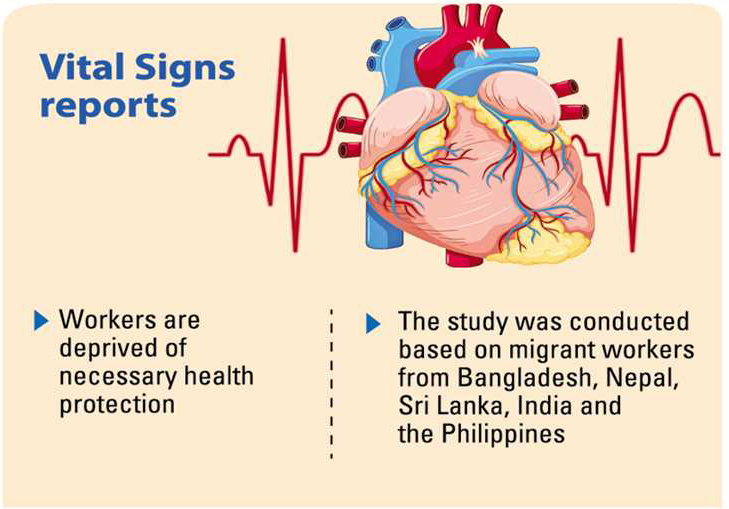
The third report of Vital Signs styled 'Impact of killer heat on migrant workers in the Gulf states' was presented at a discussion in Dhaka city on Saturday. The study was conducted based on migrant workers from Bangladesh, Nepal, Sri Lanka, India and the Philippines.
Health experts and rights activists at the event said Bangladeshis returning from the Gulf with symptoms of diseases like kidney or heart diseases due to extreme heat often get sick for inadequate health care at home.
This means that these workers are deprived of necessary health protection in both home and employing countries, according to the experts.
Dr Md Dilder Hossain Badal, a nephrologist at Dhaka Medical College Hospital, said he received many patients with kidney problems working in Gulf countries.
He blamed the disease on exposure to heat and not drinking enough water.
Besides, the report said global concern is growing regarding the development of kidney injury and chronic kidney disease (CKD) in people who frequently perform physically demanding work in the heat.
CKD is a fatal, progressive loss of kidney function. New climate change projections for the region shows Gulf states are set to experience hugely significant increases in the number of extremely hot days even if global warming is kept at 1.5º Celsius.
And the countries may experience potentially catastrophic increases if global warming reaches 3ºC. Bangladesh Parliamentarians' Caucus on Migration and Development, and Refugee and Migratory Movements Research Unit (RMMRU), one of the members of Vital Signs Partnership, co-hosted the programme.
RMMRU executive director Prof CR Abrar moderated the event where representative from different organisations spoke on the issue.
Vital Signs, RMMRU and the caucus have called for ambitious action, including much stricter protective measures in the workplace, and workers' access to adequate accommodation, nutrition and healthcare. They also sought appropriate, adequate and accessible medicare facilities for all migrant workers for free.
arafataradhaka@gmail.com