
High time to make preparations to face earthquake challenges
Sabber Ahamed | Thursday, 21 May 2015
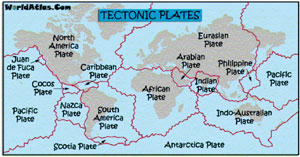
If we want to see the risk of earthquake in Bangladesh we need to look at its geological settings. Bangladesh is a major part of Bengal Basin, which is known as the largest sedimentary basins in the world. Being a sedimentary basin Bangladesh has its potential for commercial natural resources. Apart from the economic potentiality, Bangladesh is very much in danger because of local and regional tectonic anomalies.
Tectonically Bangladesh lies at the junction of three plates: the Indian Plate, the Eurasian Plate and the Burma Plate. The Indian plate and the Burma plate cover its western and eastern boundaries, respectively. The Shillong Plateau having an average elevation of one kilometer (km) marks one of the major structural features to the basin's northern portion.
The one of the striking tectonic elements of the region is E-W trending Dauki fault, which separates the Shillong plateau to the north from the Bengal basin to the south, plays a major role in the stress distribution and regional deformation.
As Bangladesh is entirely made of sediments, which is one of the reasons for Bangladesh being a high earthquake prone area. In the event of an earthquake, this kind of sedimentary basin tends to amplify the ground motion and thereby increases the extent of destruction.
Seismic activities in and around Bangladesh: Because of unique location of Bangladesh close to the plate margins of Indian and Eurasian plates, is susceptible to earthquakes. The northward movement of Indian plate at the rate of 40-45 mm/year and collision with the overriding Eurasian plate is the major cause of frequent earthquakes in the region especially in Bangladesh and its neighboring countries-- India, Nepal and Myanmar. Recent Nepal 7.8 earthquake is one of the examples. Across the Indo-Burma Ranges, another large compressed zone the Chittagong-Tripura fold belt remains a major threat to Bangladesh. Earth observatory of Singapore mentioned that the Chittagong-Tripura fold belt poses a further concern because it extends offshore.
A large thrust event occurring offshore could potentially produce a regionally important tsunami with very little warning time for coastal residents. Historically Bangladesh has been affected by many mediums to large magnitude earthquakes. Among those, the mighty 8+ magnitude of 1897 Great Indian earthquake in Shillong, Assam had an epicentral distance of about 230 km from Dhaka. That earthquake caused extensive damages to masonry buildings in many parts of Bangladesh including Dhaka. It should be noted that large earthquakes in the vicinity of Bangladesh especially in the Shillong plateau area have not been occurring for quite a long time; hence the possibility of a major earthquake occurring is pretty high. Recently we see clusters of earthquakes around the Meghna estuary and couple of earthquakes parallel to Padma River. Since 2010 4/5 earthquakes has been recorded magnitude ranging from 4.2 to 5.1. Among them in 2010, magnitude 5.1 earthquake was felt in and around Dhaka. From the above discussion it is apparently clear that Bangladesh is at risk due of being seriously affected by earthquake.
What should be done: It is now a big question how prepared we are as a nation to face the consequences of earthquake like the big one that has recently struck Nepal. To reduce casualties and economic loss first we need to know the high-risk zones of Bangladesh. So we need to prepare a hazard map of Bangladesh incorporating all the recent earthquakes and identifying hidden faults.
In order to face this we have to deploy lots of seismic stations and record events. I know it is not an easy task. However, we cannot sit idle. Even if we need help we should not hesitate to ask for help from people and organisations involved in research on earthquake. We also have to have earthquake seismologists of our own and manpower skilled enough to handle post-earthquake situations. We have only couple of universities where geology is taught, we need to introduce seismology in those schools and promote seismological research based on Bangladesh.
Earthquake safety preparedness: To reduce the casualties and economic loss we need to educate people what to do and what not to do when an earthquake strikes. Recently we saw that many people got injured because of rushing out from buildings. This proves again we are not aware of preparedness. I enumerated couple of earthquake safety instructions prepared by US Federal Emergency Management Agency:
Dos and don'ts if you are indoors during an earthquake:
1. Take cover under a sturdy desk, table, or bench, or against an inside wall, and hold on. If there is no desk or table near you, cover your face and head with your arms and crouch in an inside corner of the building.
2. Do not use elevators.
3. Stay away from glass, windows, outside doors and walls, and anything that could fall, such as lighting fixtures and furniture.
4. If you are in bed when the earthquake strikes, stay there. Hold on and protect your head with a pillow, unless you are under a heavy light fixture that could fall. In that case, move to the nearest safe place.
5. Stay inside until the shaking stops and it is safe to go outside. Most injuries during earthquakes are caused by falling objects. People are usually get injured while entering or leaving buildings.
6. Be aware that electricity may go out or that sprinkler systems or fire alarms may turn on.
If you are outdoors:
1. Stay there.
2. Move away from buildings, trees, streetlights, and utility wires.
If you are in a car:
1. Stop as quickly as safety permits, pull to the side of the road, and stay in the car.
2. Use a GPS tracking device or satellite messenger to send an emergency assistance request if there is a severe medical emergency.
3. Avoid stopping near or under buildings, trees, overpasses, and utility wires.
4. Do not attempt to drive across bridges or overpasses that have been damaged.
5. Proceed cautiously after the earthquake has stopped, watching for road and bridge damage.
If you are trapped under debris
1. Do not light a match.
2. Cover your mouth with a handkerchief or clothing. Do not move about or kick up dust.
The author of the article is a Graduate Research Assistant, Centre for Earthquake Research and Information (CERI), The University of Memphis, Memphis, CN USA.
He can be reached at msahamed@memphis.edu