
Higher pvt investment hinges on good governance, stability: CMCCI director
Kamrun Nahar | Saturday, 24 May 2014
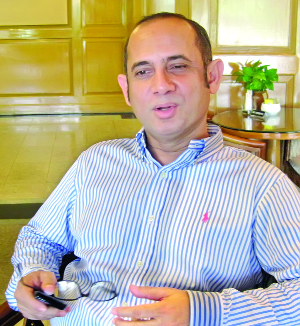
Good governance, rule of law and political stability are needed to speed up private investment in the country, a port city business leader said.
Syed Nurul Islam, a director of the Chittagong Metropolitan Chamber of Commerce and Industry (CMCCI) said that Bangladesh needs to boost private investment to help jack up the economic output-investment ratio, which is as low as 25 per cent.
"If Bangladesh wants to become a middle-income country, the ratio should be more than 30 per cent and it could happen only through increased private investment," he told the FE in a recent interview.
"Even public investment has been increasing by only 1.0 per cent," Mr Islam, also chief executive officer of Well Group, said.
Mr Islam emphasised on infrastructure development, provision of utility services, investment guarantee, political stability, good governance and political consensus to boost private investment.
Mr Islam, who served as the immediate past president of the Bangladesh-Malaysia Chamber of Commerce and Industry (BMCCI), noted that the main problem with governance issue is that the state does not act properly and impartially when crime occurs.
While challenges in this age of globalisation to business are good, he said obstacles are bad.
"Right now, the main challenge for our readymade garment sector is compliance. The future of the sector depends on the assessment of Accord and Alliance. If they give clearance to 90 per cent factories, then we will be unbeatable in garment export," said Mr Islam, who exports readymade garment items worth about US$ 100 million a year.
"If Bangladesh wants to become a middle-income country, it has to focus on power sector. There should be a plan for the next five years to raise electricity production from the present 10,000 megawatt (MW) to 20,000MW," said Mr Islam, also CEO of Well Food Ltd.
He is hopeful about overall infrastructure development plans and programmes undertaken by the government. He thinks infrastructure in Bangladesh will take a shape over the next two years.
Mr Islam suggested upgradation of the infrastructure to an international standard by expediting the Dhaka-Chittagong four-lane project, elevated expressway, Dhaka-Mymensigh road, Padma Bridge, development of water, rail and air communication.
According to Mr Islam, the main problem with bureaucracy in the field of investment is that they do not work with latest information and data.
"Now we have a 13 per cent export growth. What will be the export volume in next 10 years and what type of infrastructure will we need? I don't think our bureaucrats are properly working on that," Mr Islam observed. "We do not work in a planned way rather we try to work in a scattered manner."
About the ensuing budget, Mr Islam said he wants a budget which will ensure people's welfare.
He does not want subsidy, but what he wants to see in it is increased allocation for education, health, employment generation and food safety net.
Syed Nurul Islam advocates for a cut in corporate tax and has advised the tax collectors not to fix tax module keeping in mind the business community only. Rather they should consider bringing a greater section of people leading a luxurious life, using costly phones, cars and LED TVs under tax net.
"It is the weakness of our bureaucracy that the larger section of people is still out of tax net. The tax collectors must be free from forceful tax collection and they should establish tax as a public deposit with the government which will be used for their benefit. This will encourage people to pay tax," Mr Islam suggested.