
FROM CANVAS TO CODE
How digital technology redefining global art - and whither Bangladesh
Radia Dewan | Monday, 1 December 2025
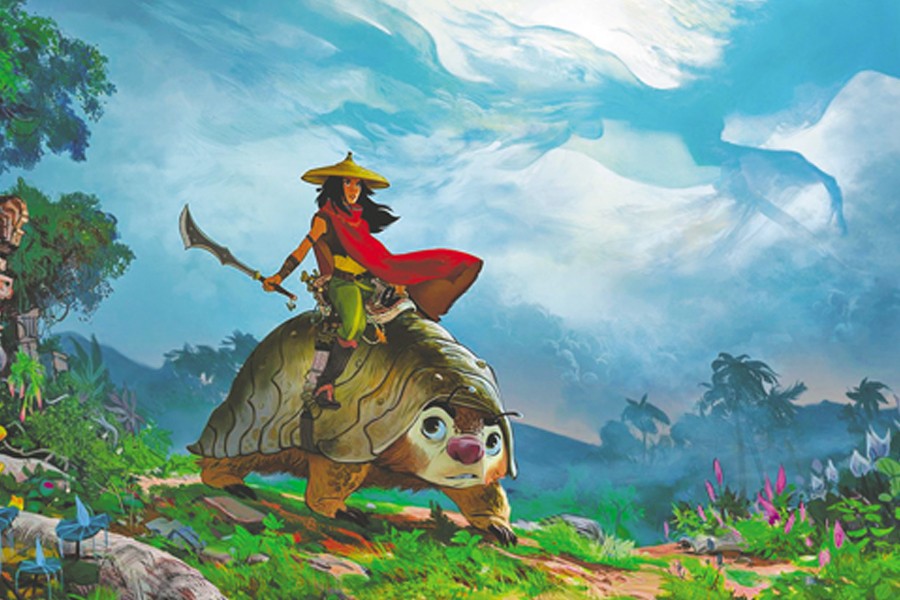
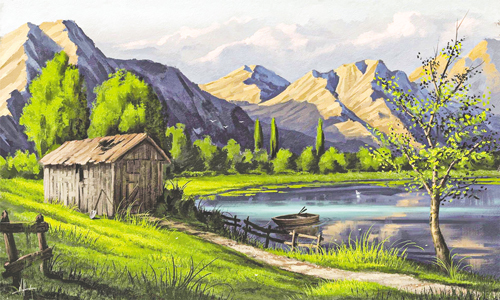 Across the globe, the definition of an 'artist' is being rewritten not by critics but by lines of code. In studios from Los Angeles to Berlin, the scent of oil paint and the hum of analogue equipment have given way to the glow of LED screens and the precision of algorithms. From NFTs selling for millions to AI composing music in seconds, technology has reshaped how humanity creates, consumes, and commercialises art. This digital renaissance is no longer confined to the West. Its pulse is increasingly strong in Bangladesh, too, where heritage and hyper-modernity are converging in exciting new ways.
The global shift meets local heritage: The democratisation of creative tools worldwide has found eager adopters in Bangladesh. In music, the shift from physical distribution-cassettes from New Market or CDs along Elephant Road-to platforms like Spotify, Apple Music, and YouTube has enabled a new wave of experimentation. Productions such as Coke Studio Bangla blend the rustic, spiritual tones of Baul and Bhatiali with electronic synthesisers, creating a contemporary sound that holds global appeal while remaining anchored in local tradition. Visual arts are evolving just as rapidly. The brushwork that defined Renaissance Europe or the bold strokes of Zainul Abedin have given way to digital canvases. Young artists in Dhaka are using graphic tablets, 3D modelling software, and digital illustration tools to reinterpret traditional motifs-such as the vibrancy of Rickshaw art-into sleek designs suited for global media and commercial platforms.
The economic engine: data and freelance boom: The convergence of art and technology has also become an economic force. The Creator Economy continues to expand, and Bangladesh has emerged as one of its major contributors. According to Oxford Internet Institute, the country is the second-largest supplier of online labour worldwide, with around 650,000 active freelancers. Many of them are creative professionals-graphic designers, editors, animators, and storytellers-who now work directly with clients across continents. A motion graphics artist in Sylhet can collaborate on projects in London or Berlin, bypassing traditional constraints and participating fully in the global digital marketplace.
Advantages: preservation and accessibility: Technology has broadened the reach and durability of Bangladeshi creativity. A Charukola student's painting can now be seen instantly by millions through platforms like Instagram, TikTok, or Behance, offering exposure that previous generations could only imagine. At the same time, fragile palm-leaf manuscripts, ancient motifs, and terracotta patterns are being digitised to safeguard them from decay, ensuring that the country's cultural heritage survives in a more permanent form. Disadvantages: the shadow of AI: Yet the transformation comes with significant concerns. Generative AI tools such as Midjourney and Stable Diffusion have stirred anxiety in Bangladesh's creative circles. If a machine can produce a "Bengali village landscape in the style of SM Sultan" in seconds, the livelihood of illustrators who have spent years honing their craft may be at risk. There is also a fear that digital representations cannot fully capture the tactile soul of certain art forms. The imperfect rhythm of a Nakshi Kantha stitch or the raw sound of a street musician carries a depth that algorithms cannot easily replicate.
The future: a phygital horizon: The next chapter of creativity-both globally and in Bangladesh-appears increasingly "phygital," blending digital innovation with physical experience. AR-enabled galleries may soon allow Liberation War paintings to come alive with sound and motion, while VR tourism could enable members of the diaspora to virtually explore Sonargaon's heritage sites or wander along the Shitalakshya from abroad. These emerging avenues signal new cultural experiences and fresh economic possibilities.
Conclusion from the analyses draws a blend of digital and physical, virtual and actual super reality in artworks in keeping with the fast-moving human progress.Technology has handed artists a new brush, not a new hand. From cave walls to computer screens, the core of artistic expression has always adapted to the tools of its time. For Bangladesh, the task is to harness these global tools to tell stories that are unmistakably local. As long as technology remains an instrument rather than an authority, the future of creativity will remain vibrant, diverse, and profoundly human.