
LIVING ROOMS TO FEEDS
How Eid became social media-centric
FATEMA AKTAR | Wednesday, 18 March 2026
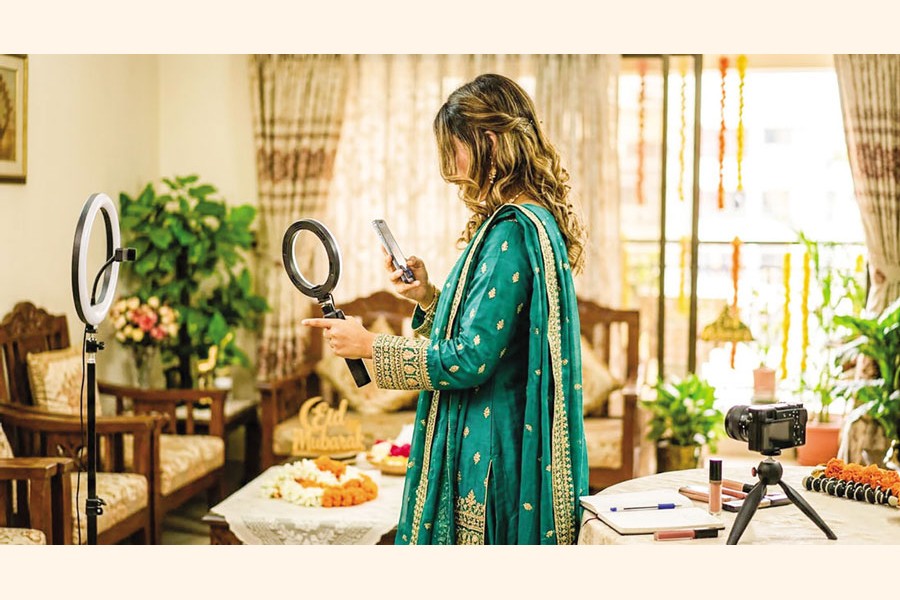
Shaila Amzad, a youngster in her twenties, barely has time to catch her breath after returning from an afternoon of Eid shopping. Dropping her bags on the bed, she quickly sets up her ring light and positions her iPhone on a tripod. Before unpacking her new outfits, she needs to film something first - an 'Eid shopping vlog' for Instagram.
Scenes like this showcase a digital ritual that has quietly become part of modern Eid throughout the years of social media. The culture of documenting celebrations online did not appear overnight, yet it feels relatively new.
A decade ago, in 2016, the landscape looked very different. Eid fashion back then was still largely shaped by Indian outfits such as Anarkali and dresses inspired by Indian serials.
The trendy camel-hump hairstyles paired with low side ponytails had only recently begun to fade from popularity. In the case of social media in the country, a hierarchy exists there as well. While Facebook dominated online life in Bangladesh, platforms such as Instagram and Snapchat were only beginning to build a significant user base.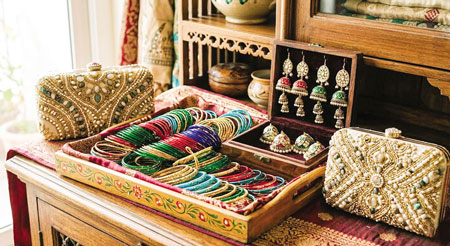 In 2026, however, Instagram has emerged as a dominant platform among both the influencers and the influenced. During occasions such as Eid and Ramadan, new online trends appear each year, often beginning with short Ramadan days videos, iftar prep, shopping vlogs, and 'get ready with me' reels that quickly circulate across the platform. Thus emerges the 'Ramadan vibe.'
Sadia Parveen Aurpa, an honours student, believes Instagram contributes differently to shaping these trends. According to her, the platform fosters a more active influencer culture than Facebook and other social media platforms. "Most Eid-related trends start there," she explains. "Influencers share shopping vlogs, Ramadan routines, iftar party moments, and different Eid aesthetics. Later, those same contents appear on other platforms too."
Although Facebook was Aurpa's first social media platform, she now spends more time on Instagram because of its visual focus and content style.
Part of this difference lies in how various platforms encourage users to communicate. On Facebook, users share a mix of photos, videos, and text-based updates, ranging from describing daily life to initiating large political discussions.
Another popular platform, WhatsApp, gained popularity for its direct messaging and conversation features. Meanwhile, TikTok- the entertainment-driven platform focuses on popularised short videos built around music, voiceovers, and humour.
Instagram, however, grows around visual storytelling. Instead of lengthy status updates, the platform encourages users to share carefully framed images and videos.
During Eid, this frequently manifests as carefully selected content. The outfit showcases beautifully arranged photographs of iftar and suhoor, and reels that document the festivities gain constant circulation.
Kashmiri bangles aesthetics
Bangles made of glass, painted in colourful palettes and paired with gold or silver embellishments resembling raindrops, along with a golden or silver bangle within the set, are dominating the Eid fashion trend this year, widely known as 'Kashmiri churi.' The beauty of these bangles sparks aestheticism on Instagram as Eid fashion goals and as an expected gift from partners. The bangles complement the gorgeous Pakistani silhouettes quite well as elegant fashion.
Insta accounts of Pakistani actresses and fashion
After the COVID-19 pandemic, Bangladesh saw a huge growth in the popularity of Pakistani outfits as Pakistani dramas started to dominate female viewers' preferences, much like Indian serials once did.
Through the Instagram accounts of Pakistani actresses, the market became flooded with Pakistani-inspired outfits and original pre-ordered pieces. The Instagram algorithm thus became heavier with the Pakistani drama heroine trend.
Aesthetic places for suhoor and iftar
Influencers, as always, forecasted a large number of series featuring nice places in Dhaka and other locations for sehri and iftar parties, focusing on ambience suitable for family-oriented gatherings as well as hangouts with friends. The places that succeeded in holding a proper environment for the 'khoshamded' vibe attained hype through Instagram collage photo albums.
Insta editing culture
A subtle feature of Instagram culture lies in its visual style. Many posts on the platform carry a soft, dreamy tone, often with warm golden lighting or pinkish hues that resemble springtime colours.
This aesthetic look is partly shaped by Instagram's long-standing filter culture and the popularity of 'golden hour' photography among influencers.
Compared to Facebook, where photos are often shared more casually, Instagram images frequently appear more polished and curated.
Girls in traditional outfits in beige or earthy shades, ranging from nude to maroon, add this fuzzy filter, often hiding faces with hair while adding sparkles to earrings, bangles, and accessories that give a royal 90s vibe. Fairuz, a student in her twenties, says, "The trend became visible to me after Sajal Aly's Instagram photoshoot in a gorgeous red bridal look. She really looked like a Mughal princess." Thus, the platform gained certain users who are deeply dedicated to beauty amid aestheticism.
This emphasis on visuals, however, can create a subtle pressure to present celebrations in aesthetically pleasing ways. Rather than posting random yet original moments, users often select and stage the ones that look visually appealing. As a result, online Eid celebrations sometimes feel more like carefully crafted events. Even candid moments often carry a sense of artistry.
Another distinctive feature is Instagram's profile grid. When users visit a public profile, they see a gallery of posts arranged in a visual grid. Many influencers consciously maintain colour themes or aesthetic patterns across this grid, turning their profiles into curated visual portfolios of lifestyle content.
With these trends and features shaping the platform, many younger users have grown accustomed to an Eid that looks good on screens, says Afsana Zebin. "The excitement often revolves around capturing candids for Instagram rather than simply living through the moment behind the lens," she explains.
As Eid continues to evolve alongside the platforms people use, the celebration now unfolds in two parallel spaces, the living room and the digital feed.
For many young users, moments of laughter, food, and family gatherings are no longer just memories to be recalled later. They are also frames to be captured, edited, and shared with an audience watching from the other side of the screen.
While the ways of celebrating Eid may have changed over the decades, shaped by technology and shifting social habits, the anticipation that surrounds the festival remains unchanged. The excitement of waiting for the 'Chand raat,' the smell of new clothes, and the warmth of gathering with loved ones still live quietly in the hearts of the younger generation, just as they did before the age of screens.
fatemaaktarhellbound@gmail.com