
How unplanned urbanisation trashes Dhaka every monsoon
MALIHA TASNIM | Wednesday, 10 June 2026
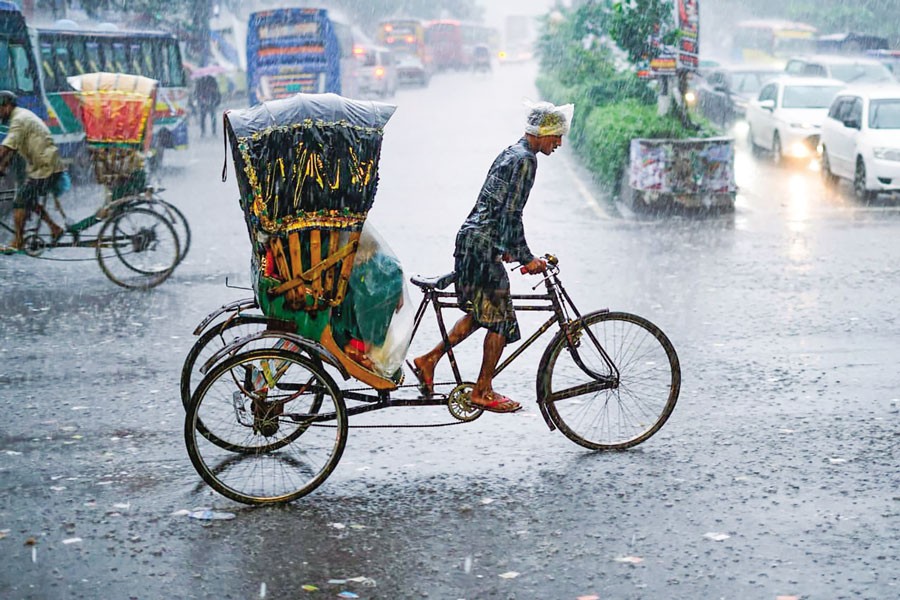
Imagine waking up on the day of your semester final exam. You step out of your hall to find a rickshaw and head to university. But the road outside is underwater. There is no vehicle in sight, but your exam starts in twenty minutes. With no other option, you lift your clothes and walk through the water. This is the story shared by Asia Akhter, studying at Dhaka University. During the monsoon, this is how her regular day looks living in Bangladesh-Kuwait Maitree Hall.
But it is not only the story of Asia. It's the story of every other person living in Dhaka. Every year, after a few hours of rain, many roads go underwater. People struggle to get to work, schools, universities, hospitals, and markets. Plans are delayed, journeys become difficult. Monsoon comes every year. Yet flooding on city roads remains a regular problem. Many residents question why the capital still cannot handle seasonal rainfall.
Dhaka has expanded rapidly over the last few decades. More people move to the city every year for work, education, and better opportunities. Many areas were developed without proper planning. Buildings were constructed on low-lying land. Water bodies were filled to create space for housing and businesses. Natural canals that once carried rainwater have become narrower or disappeared completely. As a result, rainwater now has fewer places to go.
During heavy rainfall, water often remains trapped on roads for hours. Residents of areas such as Mirpur, Mohammadpur, Rampura, Basundhara and parts of Old Dhaka regularly face waterlogging.
Johura Akter Bristy shared the struggles of living in Old Dhaka. During heavy rain, dirty water floods the streets and footpaths. The foul smell is enough to make people sick. She said waterlogging also increases the risk of dengue every year.
People often share photos and videos of flooded streets on social media. Motorcycles stop working. Cars move slowly. Rickshaws become difficult to find. For office workers, reaching work on time becomes a challenge. Street vendors are also affected. The road in front of Nurjahan Market is a familiar example of Dhaka's waterlogging problem. After heavy rain, the area often goes underwater. People who come to shop can find themselves stuck for hours, waiting for the water to recede before they can return home.
One major reason behind waterlogging is the condition of the drainage system. Plastic bags, bottles, food packaging, and other waste often block drains.
In some places, drains are too small for the amount of water they receive. In others, maintenance is irregular.
Dhaka once had many canals, ponds, wetlands, and open spaces. Over the years, many of these places have been filled for construction, leading to the disappearance of wetlands.
Flooded water can also create health concerns. Standing water may mix with waste from drains and sewers. People walking through it can face skin problems and other illnesses. For low-income communities, the impact is often greater. Homes in low-lying areas may remain flooded for long periods after heavy rainfall.
Experts often point out that there is no single solution. Several steps need to work together.
First, drainage systems need regular cleaning and maintenance. Second, canals and wetlands should be protected, and existing waterways need to be restored.
Third, new buildings and roads should consider how rainwater will flow through an area. Coordination among city authorities is important. Different agencies often work on related issues, but long-term solutions require them to work together.
Monsoon is a natural part of life in Bangladesh. The challenge is not stopping the rain. The challenge is building a city that can live with it.
malihatasnim02215@gmail.com