
A CLOSE LOOK
Human relations have become a casualty courtesy of modern gadgets
Nilratan Halder | Saturday, 19 July 2025

 Relations between and among people are increasingly getting unstable and even strained. Social scientists may explain this trend of human relations in general terms under different categories. But each individual is a complete unit of complex dispositions, mind and mentality different from the next one. Yet some common traits people acquire courtesy of social norms and, lately, possession of unprecedented powerful and self-gratifying gadgets. Family and social tradition, customs, norms and values have come under intense pressure because of these gadgets that connect one with the wider world only to turn the same person into a selfish loner.
Human bonds people once cultivated are slackening in the process with each individual weaving an impervious cocoon around him or her. Online opportunity for opening the world to people has actually ended up isolating them from face-to-face interpersonal communication. These are the generations that are taking over from the people still clutching to old value system of protecting family and friendly relations. Actually the last generation of senior citizens is handing over the baton to a completely different and unfamiliar band of young people. 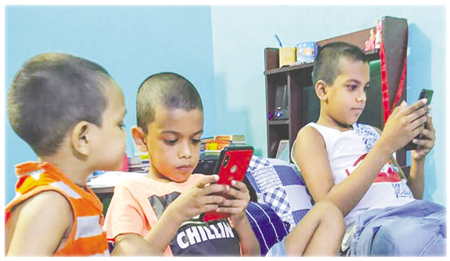 Those making space are the ones who mostly enjoyed lavish freedom to roam in groups, played some outdoor games without fail. Or if they did not, they jumped into waters of ponds, canals and rivers in a group, swam long enough to make their guardians concerned, threw stones at mangoes green or ripe, also practised similar aims at beehives, competed in stone-throwing or skilfully sent shards of earthen pots that flew over the surface of water bodies at times lightly touching water and next floating over the air in succession. Then there were chummy friends who would look for the nests of dove, parrot, myna and jungle myna in order to steal chicks for taking those as pets. There were many such outdoor expeditions this last generation embarked on at times without informing their parents and then returning home late with trepidation lest they met with an unwelcome reception. Then there were kite flying, a regular pastime for some in the summer.
Some were wild expeditions, some were for innocent fun. But it was the picnic time in the winter when everyone in the village would know that some of their vegetables in the garden would be missing anyhow much as they posted vigil. Even fish from small water bodies or ponds would be stolen by the picnickers. They did not mind much because it was none other than their young ones who were engaged in this annual ritual of theft but at other times they would not do so. Usually, the full-moon night in Poush or Magh was scheduled for this nightly picnic in open space away from home. An extempore hut was used to be built for the night and the roof of which was made with long straws of paddy of that time.
Similarly, friends in a group went to visit village fairs---a series of which were arranged throughout the month of Baishakh--- of their own village or in neighbouring villages. There they visited different stalls but a competition of eating the sweetmeat was a must. The taste of those genuine milk products was excellent. However, the hygiene issue might have been compromised. Another such expedition was to visit a circus that made yearly rounds in some of the villages. The thrilling and magical experience of circus kept them spell-bound. Again, jatra or village opera was another form of absorbing entertainment.
The fact is, friends were genuine friends then. Of course, they misunderstood each other at times but their bonds with rare exception lasted lifelong. They had no hesitation to share meals at a friend's home at any time without invitation. No prior notice was needed to visit a friend's home and if it was time for lunch or dinner invariably the host and the visitor took meals together. Even no one did mind if the visitor asked the auntie to get ready a dish for him.
Yes, those boys and girls in the late forties, fifties and even sixties and seventies were not privileged to know about computers, smartphones, tabs and the likes. They did not have the world at their finger tips like today's young ones do but they definitely cared for relations not only with the members of their families but also with neighbours and friends. Today's young generation has access to the world but at the cost of an enriching bond with everyone around. Even in families, their belongingness is suspect. Self-centred and hardly responsible, some of them are so addicted to screens that they are growing like robots or morons. Their intelligence is blunted when it comes to the practical world. Human relations have become a casualty in the process. It would not be easy to cure the malaise unless versatility of life and diverse interests in art, culture, sports are regenerated.