
Hybrid cars fail to ease Pakistan\\\'s gas woes
Monday, 20 January 2014
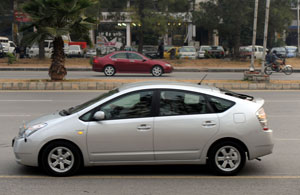
ISLAMABAD, Jan 19 (AFP) : Pakistan last year announced measures to boost the hybrid car market, hoping they might help wean the country off its costly addiction to imported fuels, but seven months on the plan looks to have stalled.
Hybrid vehicles, which use a combination of an electric motor and regular fuel combustion, are touted in many countries as the environmentally friendly future of motoring.
But in Pakistan, the government hoped they might also address a more immediate concern-crushing winter gas shortages.
Compressed natural gas (CNG) is widely used as fuel by Pakistani motorists as a cheaper alternative to petrol, but demand far outstrips supply in winter.
The result is gas shortages that mean people cannot cook or heat their homes and which damage the economy by halting industrial work.
Last June, a month after winning the general election, the government of Prime Minister Nawaz Sharif said it would slash import duties on hybrids.
"Use of imported POL (petroleum, oils and lubricants) products as a major source of energy has not only led to high import bill(s), but has also created a negative environmental impact," Finance Minister Ishaq Dar said in his budget speech in June.
"Therefore, use of alternate energy efficient Hybrid Electric Vehicles (HEVs) needs to be encouraged."
Hybrids up to 1200 cc were to be exempted from all duties and taxes, while models up to 1800 cc would get 50 per cent relief and up to 2500 cc, 25 per cent.
But there has been little impact on sales, dealers say, and the queues at the CNG filling stations-on the rare days the authorities allow them to open-stretch for hundreds of metres.
Umar Bilal Sindhu, owner of Pak Japan Motors and leading Islamabad-based car importer and dealer, told AFP the customs duty change had had a "negligible impact".
For Mujtaba Abbas, the government incentives made little difference, as he bought a Toyota Prius second hand, but with fuel prices moving ever higher, he has been delighted with the car's lower running costs.
"When it comes to fuel-saving, the Prius is great as it runs up to 24 kilometres (15 miles) on one litre of petrol, while I was getting up to 11 kilometres from a 1.3 litre hatchback," the 24-year-old environmental engineer told AFP.
But this efficiency comes at a cost, and observers such as Baber Kaleem Khan, editor of Pakistan's largest auto-enthusiast website PakWheels.com, say forecourt prices are deterring potential buyers.
A new Toyota Prius, imported through the company's Pakistan arm Indus Motors, costs around 4.5 million rupees ($45,000), while Honda's CR-Z goes for $35,000.
"The same cars can be bought for 2-3 million rupees from the used imported car dealers," he told AFP.