
IDRA moves to liquidate distressed insurers' assets to settle claims
FE REPORT | Friday, 17 July 2026
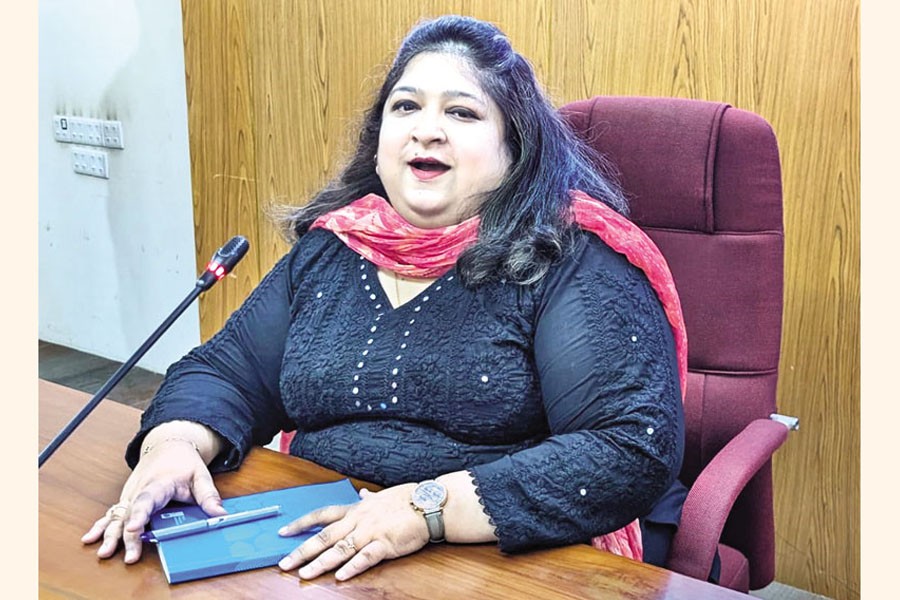
Quick settlement of long-pending insurance claims is one of the top priorities of the Insurance Development and Regulatory Authority (IDRA) in attempts to restore public trust in the insurance sector, says the newly appointed chief.
The regulator has moved to liquidate assets of financially distressed insurers to repay policyholders' claims. It is simultaneously striving to stop illegal commission practices, introduce risk-based supervision and enforce mandatory unique policyholder IDs.
Speaking at a view exchange meeting with journalists on Thursday, IDRA chief Mir Nadia Nivin said trust in the insurance sector would gradually return once policyholders began receiving their long-overdue claim payments. Ms Nivin, who joined IDRA as chairman last month, said a handful of insurers were undermining the credibility of the entire insurance sector. Their failure to settle policyholders' claims on time eroded public trust across the industry.
According to the chairman, the insurance sector (both general and life insurance) currently has around Tk 70 billion in outstanding claims, of which nearly Tk 45 billion is concentrated in just seven life insurers.
"The initial reform drive will therefore focus on these firms," she said.
The seven insurers are Fareast Islami Life Insurance, Padma Islami Life Insurance, Golden Life Insurance, Homeland Life Insurance, Sunflower Life Insurance, Baira Life Insurance and Swadesh Islami Life Insurance, sources said.
The IDRA chairman said the regulator had already held separate meetings over the past two weeks with the owners and chief executive officers of these financially distressed insurance companies. The regulator reviewed their assets, investments and financial positions, while ordering fresh valuations where asset values appeared questionable.
"The first priority is to start settling pending claims as quickly as possible. Once policyholders begin receiving their dues, confidence in the sector will gradually return, making it easier to stabilise the industry," she said.
IDRA has identified four major sources for recovering funds to settle claims: fixed deposits with financially sound banks, government treasury bonds, marketable land and other investments. Deposits stuck in troubled banks will be addressed in consultation with Bangladesh Bank, she said.
Under the recovery plan, proceeds from the sale of land, government treasury bonds, investments and other assets will be deposited into separate bank accounts for each company under auditor supervision. Claims will then be settled on a first-in, first-out (FIFO) basis, ensuring that the oldest claims are paid first, said the IDRA chief.
Crackdown on hidden commissions
The insurance regulator also intends to eliminate unlawful commission payments, which continue despite existing restrictions.
In January this year, the regulator abolished the provision of paying commissions and suspended all individual agent licences in the non-life insurance sector.
Despite the suspension, allegations have arisen that several insurers continued to provide financial incentives to intermediaries and business generators through various arrangements.
"The commissions are often disguised as salaries or paid through various contractual arrangements. IDRA is working on mechanisms to detect and prevent such practices, with visible enforcement measures expected within a month," said the IDRA chief.
Commission-driven competition has long been one of the key challenges facing the industry. In many cases, insurers have competed for business by offering high commissions or incentives, often eroding underwriting standards and affecting profitability.
Risk-based supervision
The IDRA is moving away from its traditional compliance-based regulatory framework to a risk-based supervision model aligned with international standards.
The chairman said financial reports submitted to the regulator were often outdated, making it difficult to assess insurers' actual conditions.
"Under the new framework, companies will be monitored using more frequent and up-to-date financial information, allowing regulators to identify risks and intervene at an earlier stage," she said.
Successful implementation of risk-based supervision could improve capital management, enhance transparency, strengthen consumer protection and boost investor confidence in the insurance market.
Mandatory unique policyholder ID
To strengthen consumer protection, IDRA plans to introduce a mandatory unique policyholder identification system.
Every valid insurance policy will generate a unique ID sent directly to the policyholder's registered mobile phone. The regulator also plans to run campaigns nationwide, advising customers not to pay premiums if they do not receive the verification ID, she said.
Legal reforms under consideration
Asked whether fines imposed on weak insurance companies could be recovered from directors, the chairman said the existing law did not permit such action, although policy discussions on the issue were ongoing.
Regarding allegations of fund embezzlement, she said IDRA would first focus on settling policyholders' claims and stabilising the sector. Legal action would then be taken wherever evidence of financial fraud or misappropriation is established, alongside efforts to recover misused funds.
Tougher verification of executives' credentials
Responding to allegations of fake academic credentials among senior insurance executives, the chairman said IDRA would tighten verification procedures.
Future checks may include verification through universities, international databases, Bangladesh Bank and credit information sources before approving senior appointments.
Staffing shortage remains a challenge
The chairman acknowledged that manpower shortages remain a major obstacle for the regulator. Although measures were taken to expand the workforce, government recruitment restrictions have limited progress.
IDRA is therefore exploring alternative ways to strengthen inspections and field-level supervision.
She stressed that restoring discipline in the insurance sector would require coordinated efforts from the regulator, the government, other supervisory agencies, insurance companies and the media.
"The immediate objective is to restore policyholders' confidence. Once that is achieved, broader reforms will follow to ensure a healthy and disciplined insurance sector," Ms Nivin added.
babulfexpress@gmail.com