
Import grows in H1 as cos ramp up capital machinery purchase
Siddique Islam | Thursday, 2 February 2017
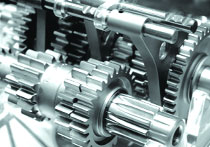
The country's imports grew by 11.25 per cent or US$2.28 billion in the first-half (H1) of the current fiscal year (FY), driven by robust procurement of capital machinery, officials said.
The actual import in terms of settlement of letters of credit (LCs) rose to $22.59 billion in the July-December period of FY 2016-17 from $20.30 billion in the same period of the previous fiscal, according to the central bank's latest statistics.
In contrast, opening of LCs, generally known as import orders, increased by 9.30 per cent or $1.96 billion to $ 23.02 billion in the first six months of FY'17 from $21.06 billion a year ago.
"Higher imports of capital machinery along with intermediate goods have pushed up the country's overall imports in the period (H1)," a senior official of the Bangladesh Bank (BB) told the FE Tuesday.
Import of capital machinery or industrial equipment used for production rose by 60 per cent to $2.87 billion in the H1 of this fiscal year against $1.69 billion of the same period of FY 16.
Higher import, particularly for energy and power sectors, contributed to the rise in overall capital machinery import, the central banker noted.
During the period under review, the import of capital machinery for power and energy sectors jumped by nearly 250 per cent to $1.08 billion from $309.83 million at the same time of the FY'16.
The capital machinery imports for the apparel, pharmaceuticals, food processing and shipbuilding industries increased significantly in the H1 of FY 17, according to the BB official.
"We expect that the upward trend of imports may continue in the coming months for implementation of the different infrastructure development projects across the country," he noted.
Meanwhile, import of industrial raw materials grew by 4.92 per cent to $8.04 billion during the period under review from $7.66 billion in the same period of the FY'16.
During the period, import of machinery for miscellaneous industries witnessed a 7.11 per cent growth to $2.35 billion from $2.19 billion in the same period of the previous fiscal.
On the other hand, import of intermediate goods, like coal, hard coke, clinker and scrap vessels, increased by 9.82 per cent to $1.83 billion in the first six months of this fiscal from $1.67 billion in the same period of the FY 16.
However, import of petroleum products dropped by 19.63 per cent to $1.16 billion during the July-December period of FY 17 from $1.44 billion in the same period of the previous fiscal.
Talking to the FE, another BB official said the import of petroleum products fell during the in terms of value, not quantity due to lower prices of the fuel oils on the international market.
Import of consumer goods increased by 2.36 per cent to $2.39 billion during the H1 of this fiscal from $2.33 billion in the same period of the FY'16, the BB data showed.
Food grain imports, particularly of rice and wheat, declined by nearly 7.0 per cent to $581.53 million during the period of the FY'17 from $625.18 million in the same period of the previous fiscal.
Echoing the BB's official, Managing Director and Chief Executive Officer (CEO) of the National Credit and Commerce (NCC) Bank Limited Golam Hafiz Ahmed said the overall capital machinery imports might increase further in the near future after the implementation of mega projects in Bangladesh.
Currently, the government is implementing nine projects under a Fast Track Project Monitoring Committee, headed by Prime Minister Sheikh Hasina.
"Import of capital machinery increases as apparel firms are moving toward hi-tech to reduce their production costs," Mr. Ahmed explained.
siddique.islam@gmail.com