
Inclusive dialogue key to effective migration policy
Speakers tell national consultation
FE REPORT | Tuesday, 7 April 2026
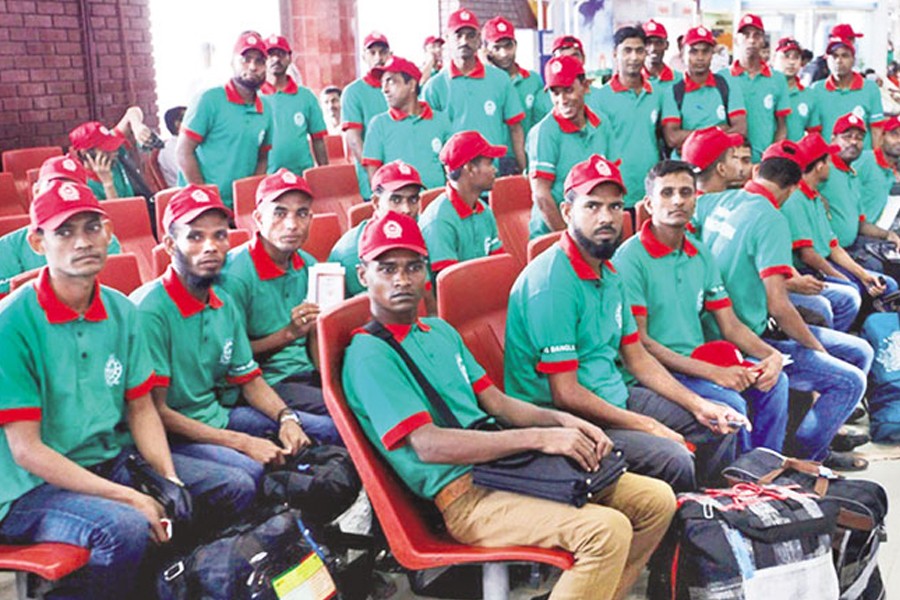
Speakers at a national consultation emphasised the importance of inclusive dialogue in shaping effective migration policies, stressing the need for continued collaboration and innovation to address evolving migration challenges.
They made the observation at a national preparatory consultation at a city hotel on Monday.
The Government of Bangladesh organised the event, in collaboration with the International Organization for Migration (IOM) - which serves as the coordinator and secretariat of the Bangladesh United Nations Network on Migration (BDUNNM) - and with support from the European Union (EU).
It was held ahead of the International Migration Review Forum (IMRF) 2026, scheduled to be held at the United Nations Headquarters in New York, the US, on May 4-8.
Co-chaired by the Bangladesh Migration Compact Taskforce, the consultation aimed to assess the country's progress in implementing the Global Compact for Safe, Orderly and Regular Migration (GCM) as well as to identify key priorities for the coming years.
Adopted in 2018, the GCM provides a comprehensive framework for international cooperation on migration, while the IMRF serves as the global platform to review its implementation. Bangladesh has demonstrated strong commitment to the GCM through sustained policy engagement and multi-stakeholder collaboration.
The recent soft adoption of the National Action Plan for GCM (2026-2030) marks a significant step towards aligning national migration governance with global commitments. Besides, notable progress has been made in areas such as labour migration, migrant protection, reintegration, and addressing the diverse drivers of migration.
The consultation featured thematic breakout sessions on safe and regular migration pathways, rights-based border governance, migrant protection and integration, and evidence-based policymaking and public discourse. Participants shared good practices, lessons learned, and emerging priorities.
Addressing the discussion, State Minister for Foreign Affairs Shama Obaed Islam, MP, said the consultation offered an opportunity to reflect on both the achievements and remaining challenges in implementing the GCM in Bangladesh.
"Today's consultation provides a valuable opportunity to reflect collectively on the progress achieved and the challenges that remain. I hope our discussions will generate practical recommendations to further strengthen policies and institutional frameworks."
"Our shared objective remains clear - to ensure that migration is governed in a manner that upholds the dignity, protection and rights of people on the move, while maximising mutual benefits for the countries of origin, transit and destination."
State Minister for Expatriates' Welfare and Overseas Employment Md. Nurul Hoque, MP, said the platform brought together the government institutions, civil society, and development partners to review progress and set future priorities.
"Through inclusive dialogue and coordinated action, we aim to ensure that migration continues to contribute to the well-being of the migrant workers and sustainable development of the country," he added.
Among others, Foreign Affairs Secretary Asad Alam Siam, Expatriates' Welfare Secretary Md Mokhtar Ahmed, IOM Bangladesh Chief of Mission (a.i.) and BDUNNM Coordinator Giuseppe Loprete, EU Counsellor and Team Leader (Human Capital Development) Jurate Smalskyte Merville, Migration Expert at Embassy of Italy Giuseppe Di Giovanni, and WARBE DF Chairman Syed Saiful Haque also spoke at the event.
newsmanjasi@gmail.com