
India seeks G20 consensus as Ukraine war shadow looms
Saturday, 9 September 2023
India has turned the G20 into a diplomatic spectacle that has never been seen before.
After 200 meetings held in 60 Indian cities through the year, the campaign to turn India's G20 presidency into a global triumph has reached fever pitch in the run-up to the leaders' summit this weekend, reports BBC.
Delhi has been adorned with huge billboards and posters - displaying Prime Minister Narendra Modi's image alongside a message welcoming delegates - signifying India's readiness to embrace the world.
And all of this effort will finally come down to the leaders' summit and their ability to release a joint declaration that signals broader agreement on issues of global concern.
India has been pushing hard for a declaration - if this summit ends without one, it will be a first. But that's not going to be easy with a G20 that is divided on many issues, the biggest being the Ukraine war.
The war also loomed large over last year's G20 summit in Indonesia, but the group was able to put together a hurried declaration that noted the differences within the G20 over Ukraine.
But positions have hardened since then - Russia and China may not agree to give such concessions and the West, led by the US, will also not accept anything less than a clear condemnation of the war.
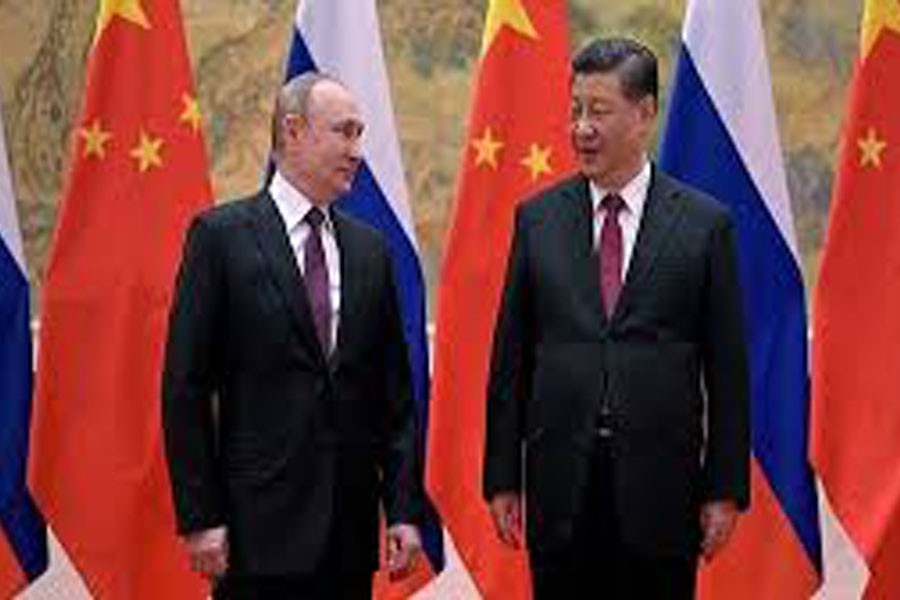
Russian President Vladimir Putin and his Chinese counterpart Xi Jinping are not attending and that might make decision-making a little harder. Russia's Foreign Minister Sergey Lavrov and China's Premier Li Qiang will represent their countries instead, but they may not have the political heft to make last-minute concessions without consulting their leaders.
The G20 foreign and finance ministers' meetings also ended without a joint declaration earlier this year. But India will still hope that the Ukraine issue doesn't derail the concerns of the Global South - developing countries - that it wants to discuss.
The G20 countries account for 85 per cent of the world's economic output and 75 per cent of world trade. They contain two-thirds of the global population. India has repeatedly said the group has a responsibility towards countries not present in the G20, and in doing so, has established itself as the voice of the Global South.
The African Union's presence at the G20 has further bolstered India's position on the needs of the developing world.
"The issues like debt, rising food and energy prices have been exacerbated by the war and the pandemic. India and other developing countries in the G20 would want industrialised economies to contribute capital to resolve these issues," says Tanvi Madan, senior fellow at the Brookings Institution.
This has put many countries at risk of default, exacerbating poverty and skyrocketing food and energy prices. China's lending practices have been often described as predatory by Western officials - an allegation Beijing rejects.
Ms Madan adds that developing countries "need their creditors to help them restructure their timelines" and in some cases "help them with more financing".
"We don't know what will come out of this meeting yet, but the idea has been to reach some sort of compromise," she adds.
G20 nations agreed on a Common Framework (CF) for debt restructuring of poor countries in 2020, but progress has been slow. The West has blamed China for dragging its feet, which it denies.
But India, which has ongoing border tensions with China, will want to get more commitment from rich countries - it has advocated extending the CF to more Global South nations (including middle-income countries), a move the EU has also endorsed in the past.
But if the West insists on blaming China for the debt crisis, it could become a roadblock.
India also wants global regulation on cryptocurrencies and an overhaul of institutions like the World Bank and the IMF - these issues are likely to be less fractious.
Climate change is another issue that Delhi has repeatedly raised, saying that some of the poorest countries are the most vulnerable due to extreme weather events.
Mr Modi on Thursday wrote in an article that "ambitions for climate action must be matched with actions on climate finance and transfer of technology". His words reflect the divisions within the group over climate change financing. Developing countries don't want to sign up to ambitious targets to cut greenhouse gases, fearing it would halt their growth. Instead, they blame industrialised countries for the crisis and demand that they take on a bigger share of the burden and commit money, technology and infrastructure to help them cut emissions.
Happymon Jacob, a professor of foreign policy at Delhi's Jawaharlal Nehru University, says that he doesn't expect a decisive breakthrough on climate change.