
India\\\'s push to save cows deprives consumers of beef
Saturday, 4 July 2015
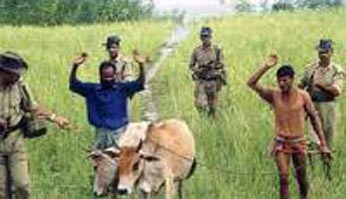
Some 30,000 Indian soldiers guarding the border with Bangladesh have a new mandate under Prime Minister Narendra Modi's government this year - stop cattle from crossing illegally into Bangladesh. Roughly every other night, troops armed with bamboo sticks and ropes wade through jute and paddy fields and swim across ponds to chase ageing bovines, and smugglers, headed for markets in Bangladesh. The crackdown is one of the clearest signs yet of how Indian policies, increasingly influenced by Hindu nationalist ideology, are having an economic impact on neighbouring countries as well as the sizeable Muslim minority at home. Nationalist BJP, which came to power with the help of the Hindu revivalist Rashtriya Swayamsevak Sangh (RSS), wants to put an end to it. Interior Minister Rajnath Singh travelled this spring to the frontier with Bangladesh, the Border Security Force to halt cattle smuggling completely so that the "people of Bangladesh give up eating beef", media reported at the time. "Killing or smuggling a cow is equivalent to raping a Hindu girl or destroying a Hindu temple," said Jishnu Basu, an RSS spokesman in West Bengal, which shares a 2,216 km (1,375 miles) border with Bangladesh.
Beef prices up, exports down
So far this year, BSF soldiers have seized 90,000 cattle and caught 400 Indian and Bangladeshi smugglers. Bangladeshi traders who operate auctions to facilitate the sale of cattle to slaughter houses, beef processing units, tanneries and bone crushing factories estimate the industry contributed 3 per cent to the country's $200 billion economy. The hit to GDP from India's policies is not yet known. But HT Imam, a political adviser to Bangladesh Prime Minister Sheikh Hasina, said there was "absolutely no doubt" that the beef trade and leather industry were suffering. Syed Hasan Habib of Bengal Meat, Bangladesh's top beef exporter, said it had to cut international orders by 75 per cent. The company exports 125 tonnes of beef a year to Gulf countries. He said the price of cows had gone up by 40 per cent over the past 6 months because of India's move, and they had been forced to close two processing units. Habib plans to import cows from Nepal, Bhutan and Myanmar to meet domestic demand, but he said Indian cows had better quality meat and raw hide. Bangladesh Tanners Association president Shaheen Ahmed said 30 of 190 tanneries had suspended work due to lack of hides, and about 4,000 workers were jobless. A senior official in India's home ministry said Bangladesh should find new sources of beef because India would stick to its stance, according to bdnews24.com.