
Inflation battle faces fresh hurdles
Mir Mostafizur Rahaman | Tuesday, 30 September 2025
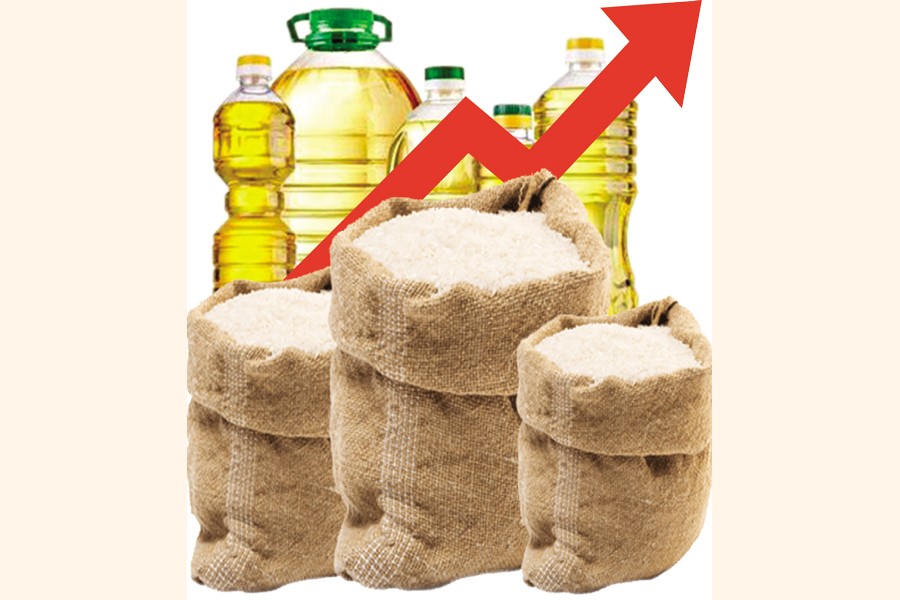
Managing inflation remains the thorn in the interim government's side. Just when there were signs of respite a couple of months ago, consumer prices have surged again-this time driven by the twin shocks of rising rice and vegetable prices. To compound matters, edible oil markets are beginning to become unstable. What began as a steady climb in the prices of brinjal, chillies and other vegetables following heavy rainfall has now been aggravated by external and internal shocks in the rice and oil markets. Taken together, these developments point to the risk of renewed inflationary pressures, threatening to hit the country's fixed- and low-income groups hardest.
If external regulations and corporate manipulation explain the pressures on rice and oil, the story of vegetables is more straightforward but equally worrying. Heavy rainfall has disrupted supply chains and damaged crops. Prices have shot up: brinjal now sells for over Tk 100 per kilogram, while green chillies have crossed Tk 200. For urban households already squeezed by rent, transport and utility bills, such spikes are devastating.
For Bangladesh, rice is not just another commodity; it is the central pillar of household consumption. Any shift in its price reverberates across the economy. In this context, India's decision last week to impose new restrictions on rice exports has set alarm bells ringing.
The order, issued by India's Directorate General of Foreign Trade (DGFT), requires exporters of all non-Basmati rice varieties to obtain approval from the Agricultural and Processed Food Products Export Development Authority (APEDA) before shipping. For Bangladesh, which relies on India as its primary source of rice imports, this additional bureaucratic step will likely cause delays and increase costs. Importers say that while consignments already under letters of credit (LCs) will be exempt, any new LC will now face the hurdle of APEDA clearance.
In practice, this means slower shipments, additional demurrage charges as trucks sit idle at borders, and higher transaction costs. When added to the existing volatility of Indian rice prices and potential new taxes, the likely outcome is a price rise in Bangladeshi markets. For a country where rice remains the most critical food item, such an increase risks fuelling inflation far beyond the confines of the grain market.
Bangladesh has made impressive strides toward self-sufficiency in rice production. But to keep public reserves comfortable and ensure food security, the government allows periodic imports. That safety valve is now threatened. If imports become more expensive and cumbersome, the government will face intense pressure to intervene-either by subsidising imports, opening up alternative sources, or deploying its reserve stocks more aggressively.
The storm clouds are not limited to rice. Soybean and palm oil-the two most consumed edible oils-are caught in a different kind of turmoil. On one level, international prices have been rising. Soybean oil has touched USD 1,200 per tonne, up nearly 20 per cent in recent months, with palm oil showing similar upward momentum. Traders argue that this justifies a domestic price adjustment.
On the other hand, allegations of manipulation in the local market have deepened public frustration. The Bangladesh Vegetable Oil Refiners and Vanaspati Manufacturers Association recently proposed a Tk 10 per litre price hike. The Ministry of Commerce, after consulting the Bangladesh Trade and Tariff Commission, agreed only to a Tk 1 rise. Dissatisfied, refiners reportedly began spreading news of impending price hikes and deliberately tightening supply to wholesalers, creating an artificial shortage. Within days, loose soybean and palm oil prices rose by Tk 5 per litre in the market.
The companies deny wrongdoing, pointing instead to international trends. But the pattern-of traders lobbying for higher prices, facing regulatory resistance, and then engineering a squeeze in supply-fits a familiar playbook in Bangladesh's commodity markets. The consequence is always the same: ordinary consumers pay the price.
The National Board of Revenue's decision earlier this month to impose a 1 per cent withholding tax on edible oil imports has added fuel to the fire. Though modest, this tax is passed directly to consumers, amplifying the upward pressure. Fixed retail prices-Tk 189 per litre for bottled soybean, Tk 169 for loose soybean, and Tk 150 for palm oil-are increasingly out of step with market realities. Unless the government can enforce its controls or expand subsidies, further hikes seem inevitable.
Here lies a broader truth. Inflation in Bangladesh is not driven by one or two commodities alone. It is the convergence of multiple shocks-climate-induced disruptions in vegetables production, external restrictions on rice, opportunistic manipulation in oils-that together create an environment where prices keep climbing.
For the interim government, the stakes could not be higher. Inflation is not just an economic metric; it is a political fault line. High prices erode trust in government, fuel discontent among the middle class, and deepen hardship for the poor.
The government's dilemma is understandable. It cannot ignore traders' arguments about global price hike. Yet it also cannot allow rent-seeking practices to dominate the domestic market. The tools at its disposal-price ceilings, subsidies, tax adjustments, release of public stocks, and import diversification-each carry fiscal or political costs. Subsidies drain scarce resources. Strict enforcement of price caps risks antagonising powerful business lobbies. Import diversification takes time and diplomatic capital.
Still, inaction is not an option. If inflation spirals, it will undermine the credibility of the very reforms the interim government has pledged to pursue.
Bangladesh's predicament is not unique. Across South Asia, governments are struggling with similar pressures. India itself has imposed export controls partly to contain its domestic inflation. Global supply chains for grains and oils remain fragile, buffeted by climate shocks, geopolitical tensions, and speculative trading. For a country like Bangladesh, heavily reliant on imports of certain staples, external shocks translate rapidly into domestic crises.
This underscores the importance of building stronger regional mechanisms. South Asian nations share vulnerabilities in food security. Yet their responses remain fragmented, often protectionist. A more cooperative approach-such as regional food reserves or coordinated trade policies-could cushion the impact of such shocks. Without it, smaller economies like Bangladesh will continue to bear the brunt of decisions taken by their larger neighbours.
To address these challenges transparency in the edible oil market is urgent. Allegations of manipulation cannot be just brushed aside. First, regulators must investigate supply practices and enforce anti-hoarding measures. Traders cannot be allowed to weaponise shortage of the item to make both government and consumers suffer.
Second, the government must explore alternative rice import sources-whether from Vietnam, Thailand or elsewhere-to reduce dependence on India. Diversification is not easy, given the logistical costs and trade terms, but the risks of over reliance are now clear.
Third, targeted subsidies and safety nets for low-income households must be strengthened. Blanket subsidies may not be fiscally sustainable but vulnerable groups cannot be left at the mercy of market volatility. Expanding open market sales (OMS) of rice and edible oils, as well as cash transfers to the poorest, could offer immediate relief.
Fourth, climate-resilient investment in agriculture must be accelerated. The surge in vegetable prices after heavy rains is a reminder that food inflation in Bangladesh is deeply tied to weather patterns. Better irrigation, storage and supply-chain infrastructure could help reduce the vulnerability of vegetables and other perishable goods to climate shocks.
Finally, information dissemination matters. Governments often exacerbate inflationary expectations by failing to reassure citizens. Clear messaging, timely disclosure of reserves and imports, and visible enforcement of rules can temper panic and speculation.
The interim government faces no easy choices. It must act decisively. For ordinary Bangladeshis, inflation is not an abstract economic debate. It is more of a daily reality. And, they are learning to live with it.
mirmostafiz@yahoo.com