
Inflation sees slight fall in July
FE REPORT | Thursday, 4 August 2022
 The rate of inflation fell marginally in July from the previous month, according to official statistics released on Wednesday.
It stood at 7.5 per cent in July, declining from a nine-year high of 7.6 per cent in June last, according to the Bangladesh Bureau of Statistics (BBS), thanks to food prices that witnessed a slight fall.
Food inflation, consisting of a large basket of food items, dropped to 8.2 per cent in the first month of the fiscal year from 8.4 per cent in June last.
Non-food prices or the core inflation, however, increased by 6.4 per cent in July from 6.3 per cent in the previous month, according to the national statistical organisation.
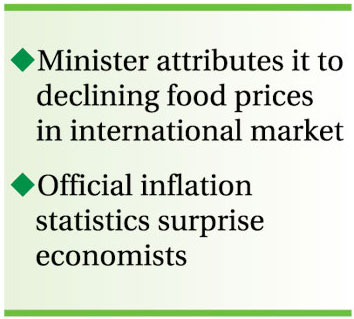
Planning Minister MA Mannan at a briefing at the Ministry of Planning said that the decline in the rate of inflation is a reflection of fall in the prices of commodities in the international market.
The inflation, which erodes the real income of the people, will ease further this month (August), he said. "Inflation may decline further this month [August]."
Economists, however, viewed that the inflation might rather rise in the coming months as a result of the huge depreciation of the local currency against the US dollar during the last couple of months (June and July).
The local currency BDT had around 10 per cent depreciation in June and July.
"To my mind, the impact of devaluation will be reflected in the prices of commodities in the local market in the coming months," said Dr. M. Masrur Reaz, chairman at the Policy Exchange of Bangladesh, a privately-owned think tank.
He said the importers who opened letters of credit (L/Cs) in June and July will get the goods delivered two to three months later and added that the impact of currency depreciation will take time.
The imports become expensive when the local currency weakens against the greenback as the importers have to pay more for procuring goods from abroad.
He said that the percentage point changes in the rate of inflation are nothing. "Actually, it remained almost the same in July."
Dr. Masrur, however, pointed out that the government has taken some austerity measures to tame inflation which might have some impacts on the prices.
He also noted that consumer spending declined following an increase in the prices of commodities. "There is still no sigh of relief as the inflation remains too high."
Dr. Zahid Hussain, a former lead economist of the World Bank, told the FE that there are some drops in the prices in the international market, but the impact should not be reflected so quickly. He said there were some falls in the prices of fuel oils. "Our fuel prices are administered. So, it remained the same for a long."
There is no impact of falling prices of fuel oil in the international market on the economy as the market price is administered by Bangladesh Petroleum Corporation (BPC).
Mr. Hussian expressed his surprise to see the official statistics of inflation that showed almost a stable rate and raised a question how it remained stable at a time when the local currency weakened much.
"Is there no impact of the depreciation of local currency on the inflation?" he said, "Why then we're crying for the higher dollar prices."
jasimharoon@yahoo.com